Pink Jasmine: Your Complete Growing & Care Guide for Heavenly Fragrance
Getting started
Quick Guide
- So, What Exactly Is This Pink Jasmine Plant?
- Planting Your Pink Jasmine: Getting It Right From Day One
- The Real Talk Pink Jasmine Care Guide
- Oh No, What's Wrong With My Pink Jasmine? (Troubleshooting)
- Design Ideas: Where to Put This Fragrant Powerhouse
- Beyond the Basic Pink Jasmine: Other Jasminum to Know
- Your Pink Jasmine Questions, Answered
Let's talk about pink jasmine. You've probably smelled it before you even saw it. That heavy, sweet, almost intoxicating scent that floats on a warm evening breeze. It stops you in your tracks. You sniff the air, look around, and there it is – a wall or a fence covered in a cascade of dark green leaves and tiny, star-shaped white flowers. That's it. That's the plant so many people fall in love with.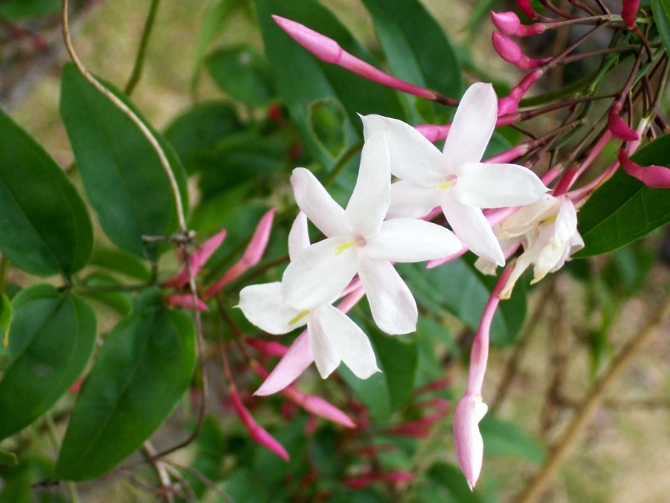
I remember the first time I planted one. I was naive. I thought, "how hard can it be? It's just a vine." I stuck it in a semi-shady corner with mediocre soil and expected it to perform like the photos. It didn't. It sulked. It gave me a few pathetic blooms and then just… existed. That was my lesson. Pink jasmine, or Jasminum polyanthum if we're being formal, has its own set of rules. It's not diva-level difficult, but it knows what it likes. Get it right, and it rewards you with a performance that's absolutely spectacular. Get it wrong, and well, you get my first attempt.
So, What Exactly Is This Pink Jasmine Plant?
Think of it as a vigorous, twining climber. It's not a plant that will politely stay in one spot. It wants to explore. It sends out long, pliable stems that will wrap around anything they touch – a trellis, a wire frame, the leg of your garden chair if you leave it too close. Originating from China and Myanmar, it's adapted to put on a massive show in late winter to spring, which is a godsend when most of the garden is still sleeping.
Here’s the breakdown of what you’re signing up for:
- The Look: Glossy, dark green pinnate leaves (made up of several smaller leaflets). A dense, lush curtain of green.
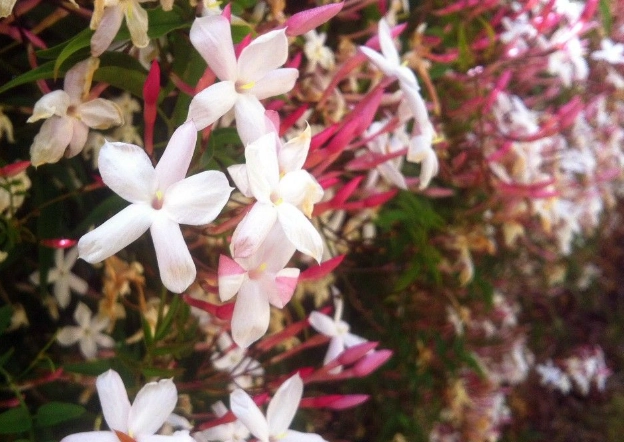
- The Show: Clusters of long-tubed, pinwheel-shaped flowers. The buds are a dramatic deep pink to red. The opened flowers are a crisp, clean white. The contrast is stunning.
- The Perfume: Powerful, sweet, and pervasive. It’s the main event. On a warm, still evening, the scent can fill an entire small garden or patio.
- The Habit: Fast-growing when happy. Can easily reach 15-20 feet. It’s semi-evergreen to evergreen in milder climates (USDA zones 8-10). In cooler areas, it might lose leaves in a hard frost but often springs back.
Is pink jasmine invasive? That's a common worry. In places like California, New Zealand, and parts of Australia, Jasminum polyanthum has indeed escaped gardens and naturalized in wild areas, where it can smother native plants. The California Invasive Plant Council lists it as an invasive species to watch. This doesn't mean you can't grow it, but it does mean you need to be a responsible gardener. Don't plant it near wild, open spaces, and be prepared to manage its growth. In a controlled urban garden with regular pruning, it's perfectly manageable.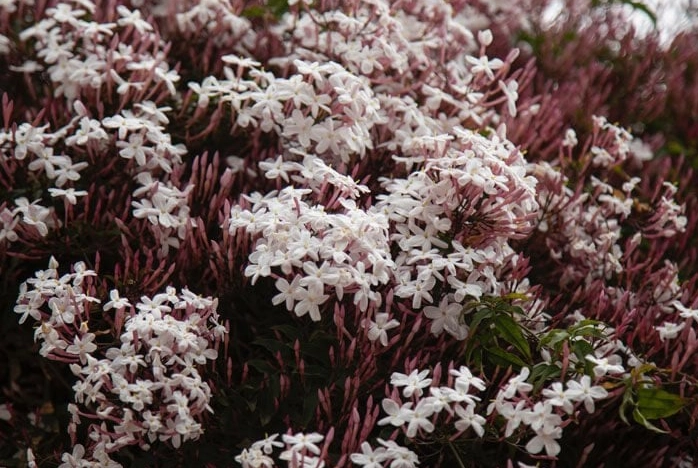
Planting Your Pink Jasmine: Getting It Right From Day One
This is where you avoid my early mistake. Location is everything with this vine.
The Non-Negotiables: Sun and Soil
Pink jasmine loves the sun. I mean, it really loves it. For the most prolific blooming, give it at least 4-6 hours of direct sunlight. More is better. That semi-shady spot I tried? That's why it sulked. It will grow in partial shade, but the flower production will be disappointing. You'll get a nice green vine and wonder what all the fuss is about.
Soil is the second big factor. It must be well-draining. This plant hates, and I mean hates, having soggy feet. Heavy, clay soil that holds water will lead to root rot faster than you can say "why are the leaves turning yellow?" If you have clay soil, you must amend it. Dig a much wider hole than the root ball and mix in a generous amount of compost, well-rotted manure, or even some coarse sand or perlite to open up the structure. Think light, fluffy, and fertile.
When planting, dig a hole just as deep as the root ball but twice as wide. Gently tease out any circling roots, place it in the hole, and backfill with your improved soil. Water it in deeply to settle everything. A layer of mulch around the base (but not touching the stem) will help retain moisture and keep roots cool.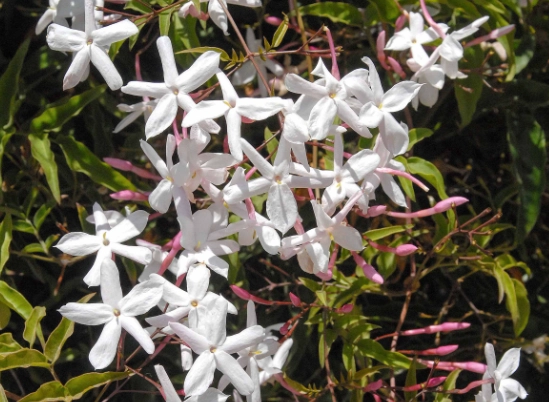
Container Growing: A Great Option for Control
If you're worried about invasiveness or have limited space, growing pink jasmine in a pot is a brilliant idea. It allows you to control the soil perfectly and contain the roots. Use a large, sturdy pot with excellent drainage holes. A high-quality potting mix is key – don't skimp and use garden soil. A trellis or obelisk placed in the pot gives it something to climb. The bonus? You can move it to prime scent-enjoying spots on your patio or deck when it's in bloom.
The Real Talk Pink Jasmine Care Guide
Okay, it's planted. Now, how do you keep it thriving? It's not complicated, but there are a few rhythms to learn.
| Task | How-To & Timing | Pro Tip / Warning |
|---|---|---|
| Watering | Deeply and regularly during the first growing season. Once established, it's fairly drought-tolerant. Water when the top 1-2 inches of soil feel dry. | The #1 killer is overwatering. Yellow, dropping leaves are a classic sign. In pots, let the pot feel light before watering again. |
| Feeding | Feed in early spring as growth starts, and again in mid-summer. Use a balanced, slow-release fertilizer (like a 10-10-10) or a fertilizer higher in potassium to promote blooms. | Don't over-fertilize with high-nitrogen food. You'll get a giant green bush with few flowers. |
| Pruning | MAJOR PRUNE: Right after the main spring bloom finishes. You can cut it back hard – by up to half or more – to control size and shape. LIGHT PRUNE: Throughout summer to tidy wayward shoots. |
If you prune in late summer or fall, you're cutting off the flowering wood for next year. Post-bloom is the golden rule. |
| Winter Care | In zones 8+, little needed. In zone 7 or colder pots, mulch heavily at the base or move pots to a sheltered, cool but frost-free place (like a garage). | It can die back to the ground in a hard freeze but may resprout from roots in spring. Don't give up on it too quickly. |
Pruning deserves its own spotlight. This plant is vigorous. If you let it go, it can become a tangled, woody mess at the bottom with all the growth and flowers way up high where you can't smell them. The post-bloom hard prune is essential. It encourages fresh, new growth from lower down, which will bear next year's flowers and keep the plant looking full and lush from top to bottom. Don't be scared. It's tougher than it looks.
Oh No, What's Wrong With My Pink Jasmine? (Troubleshooting)
Even with good care, things can happen. Here’s a quick diagnostic guide based on the problems I've either had or seen in gardening forums a hundred times.
- Yellow Leaves Falling Off: Almost always overwatering or poor drainage. Check your soil. Let it dry out more between waterings.
- Lots of Green Growth, No Flowers: Not enough sun. Or, you're using a high-nitrogen fertilizer. Or, you pruned at the wrong time (late season). Move it if you can, or accept a less floriferous vine.
- Brown Leaf Tips/Edges: Could be underwatering (check soil), or more commonly, fertilizer salt buildup (especially in pots). Flush the soil with plenty of plain water to leach out excess salts.
- Powdery White Coating on Leaves: That's powdery mildew. It happens in humid conditions with poor air circulation. Improve airflow by thinning some stems. Neem oil or a baking soda solution can help. The University of Minnesota Extension has excellent, science-backed guides on managing this common fungal issue.
- Sticky Leaves & Black Sooty Mold: Look for tiny aphids, whiteflies, or scale insects. They suck sap and excrete a sticky "honeydew" that molds grow on. A strong blast of water can dislodge them, or use insecticidal soap.
Design Ideas: Where to Put This Fragrant Powerhouse
You don't just stick a pink jasmine anywhere. You use it as a living design element.
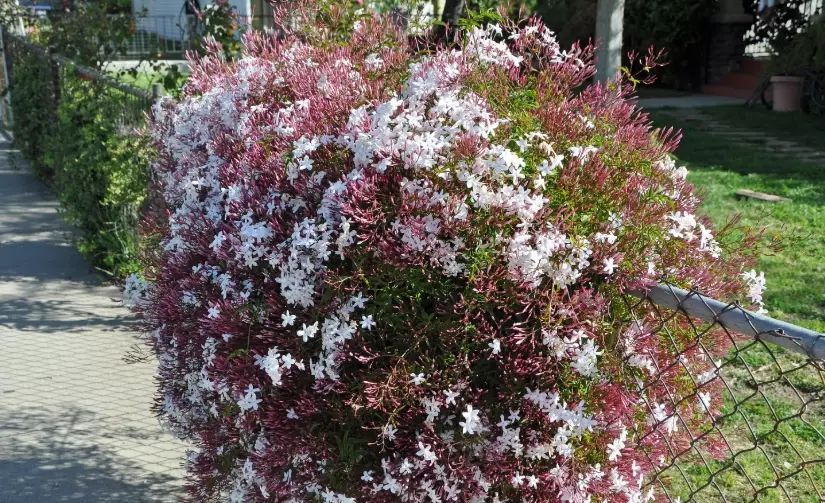
My favorite use is over an arch or pergola at an entrance. Walking through a cloud of that scent coming home is pure magic. Training it along a sunny fence or wall is a classic and effective way to create a living screen. It provides privacy and a stunning backdrop. In a pot, let it climb a tall, decorative obelisk to create a fragrant focal point on a patio. You can even grow it in a hanging basket and let the long stems trail down, though you'll need to prune more often to keep it looking neat.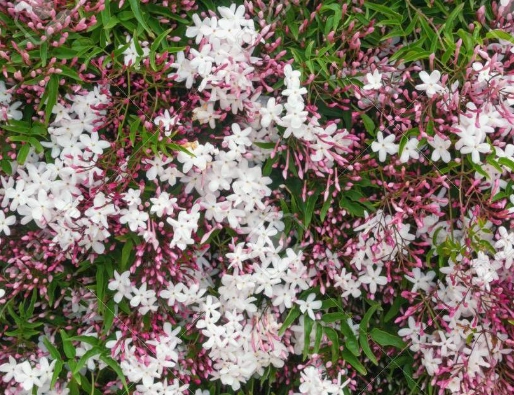
Companion plants? Pair it with other sun-lovers that bloom at different times. Spring bulbs like daffodils at its feet. Later, drought-tolerant perennials like lavender, catmint, or salvia can complement it without competing too much for water.
Beyond the Basic Pink Jasmine: Other Jasminum to Know
While Jasminum polyanthum is the star here, the jasmine family is big. If you love the idea but need something different, consider:
- Common Jasmine (Jasminum officinale): The classic. Deciduous, incredibly fragrant white summer flowers. Hardier (to zone 7). More restrained growth habit.
- Arabian Jasmine (Jasminum sambac): The one used for jasmine tea. Tender, with smaller, intensely fragrant white flowers that can be used fresh. Often grown as a houseplant or annual in cool climates.
- Winter Jasmine (Jasminum nudiflorum): Not fragrant, but a powerhouse of bright yellow flowers on bare green stems in the dead of winter. A completely different look for cheer.
Each has its own charm, but for that iconic pink bud/white flower/scent combo in late winter, the pink jasmine vine is still my top pick.
Your Pink Jasmine Questions, Answered
So, is pink jasmine right for you? If you have a sunny spot, well-draining soil, and don't mind giving it an annual haircut, the answer is a resounding yes. It's a plant that gives so much more than it asks for – months of breathtaking beauty and an unforgettable fragrance that turns a simple garden into a sensory experience. Just learn from my first failure: give it the sun it craves. Everything else follows from there.