Bougainvillea Tree: The Ultimate Guide to Care, Pruning, and Stunning Blooms
Popular plants
Quick Guide
- What Exactly Is a Bougainvillea Tree, Anyway?
- Why Go Through the Trouble? The Case for a Tree.
- Picking Your Champion: Bougainvillea Varieties That Make Great Trees
- The Non-Negotiables: How to Make Your Bougainvillea Tree Thrive
- The Secret Sauce: Pruning and Training Your Bougainvillea Tree
- The Overwintering Dilemma
- Solving the "Why Won't It Bloom?" Mystery (The Common Problems)
- Bougainvillea Tree FAQs: Quick, Honest Answers
- Final Thoughts: Is a Bougainvillea Tree Right for You?
Let's talk about the bougainvillea tree. You've seen them, right? Those explosive bursts of color on a sturdy trunk, looking like something from a tropical dream. Maybe you're scrolling through Instagram, feeling a pang of garden envy. Or perhaps you've just moved to a warmer zone and think, "Yeah, I need one of those." I get it. I was there too.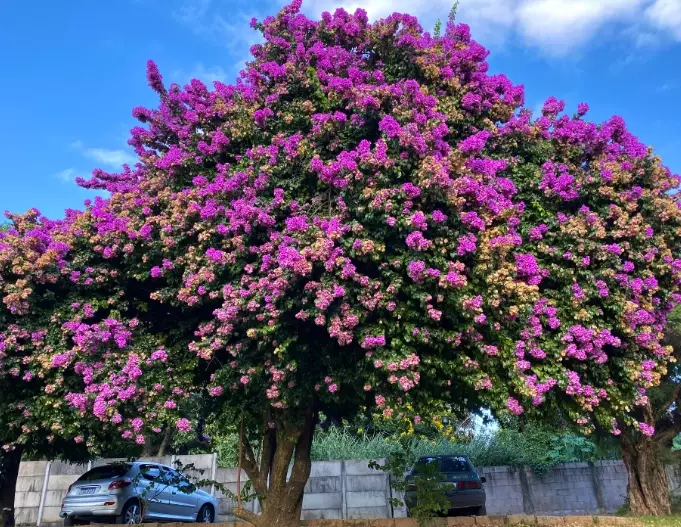
But here's the thing nobody tells you upfront: a bougainvillea tree isn't just a plant you stick in the ground and forget. It's a relationship. Sometimes a prickly one (literally). It can be the most stunning focal point in your garden, or it can be a leggy, bloom-less disappointment. The difference between those two outcomes? It's all in the know-how.
This guide isn't a dry list of botanical facts. It's everything I've learned—often the hard way—over years of growing, killing (sorry, little guys), and finally succeeding with these magnificent plants. We'll cut through the noise and get to what actually works.
What Exactly Is a Bougainvillea Tree, Anyway?
First, a little myth-busting. A "bougainvillea tree" isn't a specific species you buy at the nursery. Surprised? Most people are. In nature, bougainvilleas are vigorous, scrambling vines or large shrubs. They want to spread out and climb. The tree form is something we humans create through training and pruning.
You're essentially taking a vining plant and convincing it to grow a single, strong trunk with a rounded canopy of flowers on top. It's like bonsai, but with more attitude and color. The "flowers" we all adore aren't actually flowers at all. Those vivid pink, purple, red, or orange parts are modified leaves called bracts. The tiny, white, trumpet-shaped things in the center? Those are the true flowers. The bracts are just incredibly flashy wrapping paper.
This is key to understanding your bougainvillea tree. It's a sun-worshipping, drought-tolerant, slightly dramatic performer that puts all its energy into those brilliant bracts.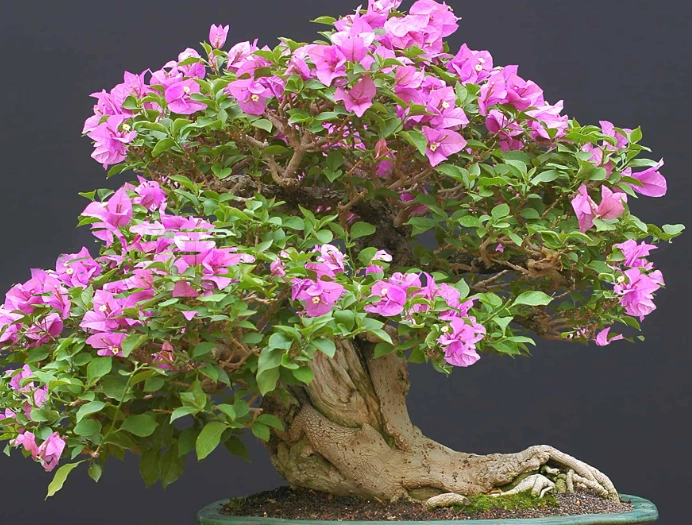
The tree form is a masterpiece of human horticultural persuasion. You're not fighting the plant's nature, but guiding its incredible energy into a stunning, manageable sculpture.
Why Go Through the Trouble? The Case for a Tree.
Why not just let it be a vine or a bush? Fair question. I've grown them all ways. The tree form, or "standard" as gardeners call it, offers some unique wins:
- Space Saver: It grows upwards, not just outwards. Perfect for smaller patios, courtyards, or lining a driveway without swallowing it whole.
- Visual Impact: It's a living sculpture. The clear trunk elevates the cloud of color, making it a dramatic focal point. It just looks... intentional and elegant.
- Practicality: Easier to walk under, easier to garden around. No more getting snagged by thorns at ankle level.
- Healthier Plant: Better air circulation through the canopy can mean fewer fungal issues compared to a dense, ground-hugging shrub.
But it's not all roses—or rather, bracts. The main downside is that it requires a bit more initial work and ongoing attention to maintain that shape. The bougainvillea's default setting is "wild vine," and it will constantly try to revert. Your job is to be the gentle but firm director.
Picking Your Champion: Bougainvillea Varieties That Make Great Trees
Not all bougainvilleas are equally suited for tree life. Some are too weakly stemmed, others too monstrously large. You want a variety with strong, somewhat rigid growth habits. Here are my top picks, based on pure performance and reliability.
My personal favorite for a reliable, jaw-dropping bougainvillea tree is 'Barbara Karst'. Its bracts are a deep, vibrant crimson-red that just doesn't quit. It's vigorous, has decently strong wood for a trunk, and is relatively forgiving. A classic for a reason.
But maybe red isn't your thing. Let's break down the contenders.
| Variety Name | Color | Key Traits for Tree Form | My Notes / Hardiness |
|---|---|---|---|
| 'Barbara Karst' | Deep Crimson Red | Vigorous, strong grower, prolific bloomer. | The workhorse. Can get large. Tolerates light frost once established. My top recommendation for beginners. |
| 'Singapore White' or 'Miss Alice' | Pure White | Less thorny, semi-dwarf habit, repeat bloomer. | Excellent for smaller spaces. 'Miss Alice' is a sterile variety, often sold as a "thornless" option. A gentler giant. |
| 'Royal Purple' | Rich Purple | Compact growth, stunning deep color. | Makes a very elegant, slightly smaller tree. Color is incredibly saturated. |
| 'California Gold' | Golden Yellow | Vigorous, large bracts. | Sunlight makes this one glow. Needs full, unfiltered sun to prevent bracts from fading to a cream color. |
| 'Raspberry Ice' | Magenta Pink | Variegated green & white leaves, pink bracts. | Adds foliage interest even when not in peak bloom. Grows a bit slower, which can be easier to manage. |
A quick word on buying: You can buy a pre-trained bougainvillea tree from a good nursery. It's more expensive, but it saves you 2-3 years of training work. If you're impatient (like I usually am), it's worth the investment. Just check that the graft union (if it's grafted) or the trunk is nice and straight and sturdy.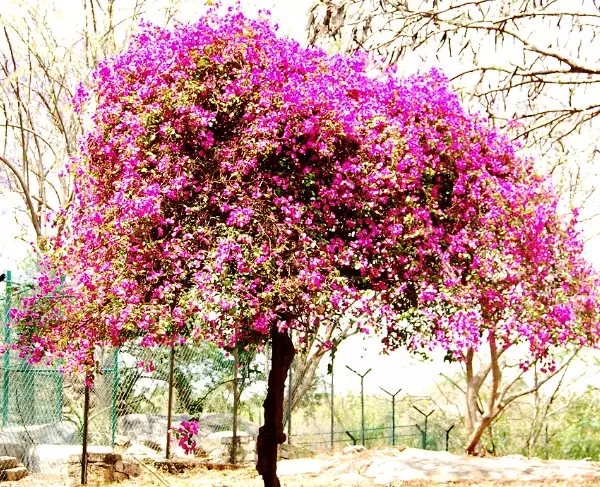
The Non-Negotiables: How to Make Your Bougainvillea Tree Thrive
Okay, you've got your plant. Now, how do you keep it alive and blooming its head off? This is where most people go wrong. They treat it like a rose or a hydrangea. Big mistake.
Sunlight: The #1 Rule
This is non-negotiable. Think of sunlight as the fuel for the color factory. Absolute minimum: 6 hours of direct, blazing sun. Aim for 8+ hours. More is better. If it's in dappled shade or gets sun only in the morning, it will grow leaves but be stingy with blooms. I made this error with my first one, placing it where the house cast shade in the afternoon. It sulked for a year until I moved it.
Watering: The Art of Tough Love
This is the second most common killer (after lack of sun). Bougainvilleas are drought-tolerant Mediterranean plants. Their roots hate soggy soil. Overwatering leads to root rot, a flood of green leaves, and zero flowers.
Here's my method: Water deeply, then let it get dry. I mean, really dry. Stick your finger into the soil up to the second knuckle. If it feels moist, walk away. If it's dry, give it a long, slow soak until water runs out the drainage holes. Then ignore it again. In the heat of summer, this might be once or twice a week. In spring and fall, it could be every 10-14 days. In winter, maybe once a month.
Plants in the ground are more forgiving than potted ones. But the principle is the same. A little stress from dryness actually triggers flowering. Coddling it with constant water makes it lazy and leafy.
Soil and Feeding: Less is More
They need excellent drainage. If planting in the ground, amend heavy clay soil with plenty of gravel, pumice, or coarse sand. For pots, a standard cactus/succulent mix is perfect, or add perlite to regular potting soil.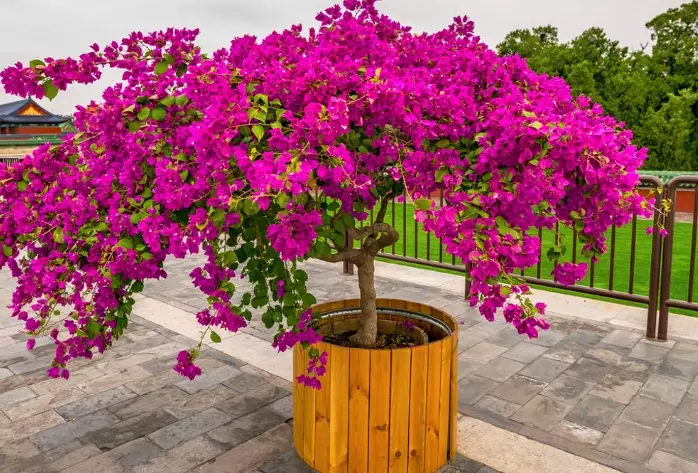
Fertilizer? Yes, but not the high-nitrogen stuff you use for your lawn. Nitrogen makes leaves, not blooms. You want a fertilizer with a higher middle number (Phosphorus) to promote flowering. Look for a "Bloom Booster" formula (like a 10-30-10) or a balanced, slow-release fertilizer. I use a half-strength liquid bloom fertilizer every 4-6 weeks during the growing season (spring to fall). In winter, I stop completely.
The Secret Sauce: Pruning and Training Your Bougainvillea Tree
This is what separates a tree from a messy shrub. Pruning is not just about size control; it's the primary way you force those spectacular blooms. Bougainvilleas bloom on new growth.
Initial Training (If Starting from a Vine)
If you're a masochist like me and want to start from a 1-gallon vine, here's the gist:
- Choose the strongest, straightest central stem. That's your future trunk.
- Stake it firmly with a sturdy rod (bamboo, metal). Tie it loosely but securely every 6-8 inches as it grows.
- Relentlessly pinch or prune off all side shoots and suckers growing from the base. All energy must go up that main stem.
- Once it reaches your desired trunk height (usually 3-5 feet), pinch off the very tip. This forces it to branch out at the top.
- Now, let those top branches grow 6-12 inches, then pinch their tips. Keep pinching the tips of new growth to encourage a bushy, rounded canopy. It takes time and patience.
Maintenance Pruning for Blooms
For an established bougainvillea tree, you have two main pruning seasons:
1. The Major Shape-Up (Late Winter / Early Spring): Just before the spring growth surge. This is when you do any heavy cutting to reshape the canopy, remove dead wood, or cut back long, leggy branches. Don't be scared. Bougainvilleas are tough. You can cut a branch back by half or more, and it will respond with vigorous new growth—which will then bloom. The University of California's Agriculture and Natural Resources department notes that severe pruning is often necessary to maintain form and encourage flowering in overgrown plants. (UC IPM Bougainvillea Page).
2. The Light Touch (After Each Bloom Cycle): After a big flush of color fades, give the entire canopy a light trim. Cut back each flowered branch by a few inches, just to a point where you see small buds or leaves. This immediately encourages the next round of new growth and flowers. If you just deadhead the old bracts, you'll get new flowers closer to the existing stems. If you cut back a bit more, you get longer new branches and a fuller canopy.
What about the suckers? You'll always get them. Those fast-growing, vertical shoots coming from the base or the trunk below the canopy. Prune them off as soon as you see them. They drain energy and ruin the tree form.
The shears are your best friend and your plant's personal trainer. Strategic cuts tell it where to grow and, more importantly, where to put on a show.
The Overwintering Dilemma
Bougainvilleas are tropical to semi-tropical. Most varieties are hardy in USDA zones 9b-11. A light frost might nip the leaves, but a hard freeze (below 30°F / -1°C for extended periods) can kill the plant back to the roots or kill it entirely.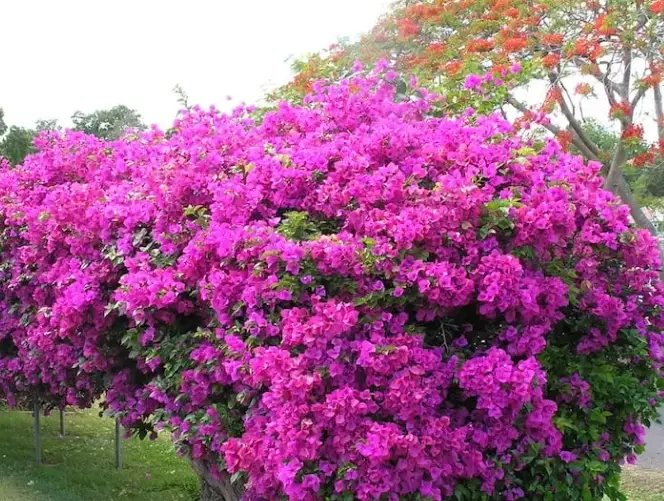
If you're in a marginal zone (like parts of zone 9a or 8b):
- Potted Trees: This is the big advantage. Bring it into a garage, shed, or bright room when temperatures threaten to drop below freezing. It will likely go dormant and lose leaves. Water it sparingly (once a month) until spring.
- In-Ground Trees: It's a gamble. Mulch heavily around the base to protect the roots. If the top dies back, don't panic. Wait until late spring to see if it resprouts from the base. You may have to retrain a new trunk, which is a pain.
I'm in a zone 9b/10a border. My in-ground 'Barbara Karst' has seen 28°F (-2°C) for a few hours. The leaves and young stems fried, but it came roaring back from thicker wood in late April. It didn't bloom until much later that summer, though.
Solving the "Why Won't It Bloom?" Mystery (The Common Problems)
Let's troubleshoot. Your bougainvillea tree is alive and green but looks more like a small, thorny tree than a firework. Why?
- Not Enough Sun: The #1 culprit. Revisit the sunlight section. Can you move it? If not, can you prune surrounding plants to let more light in?
- Too Much Nitrogen / Over-Fertilizing: Are you using a general-purpose plant food? Switch to a low-nitrogen, high-phosphorus fertilizer or stop feeding for a few months.
- Overwatering: Constantly wet feet promote root activity and leafy growth at the expense of blooms. Let it get good and dry between waterings.
- Pot Too Big: Bougainvilleas often bloom best when slightly root-bound. If it's in a huge pot with lots of wet soil it can't use, it will focus on roots, not flowers.
- Pruning at the Wrong Time: If you give it a hard prune in summer, you're cutting off the wood that would have bloomed. Do major pruning in late winter/early spring.
Other issues? Leaf drop is often due to a sudden change—moving it, a temperature swing, or a shift in watering. It's usually a stress response, and it will recover. Yellow leaves can be overwatering or sometimes a nutrient deficiency (try a bit of chelated iron if your soil is alkaline).
Bougainvillea Tree FAQs: Quick, Honest Answers
Final Thoughts: Is a Bougainvillea Tree Right for You?
Look, a bougainvillea tree isn't a low-maintenance plant like a cactus. It demands specific things: brutal sun, a disciplined watering can, and a willingness to wield pruners. If you can provide that, the reward is unmatched. There's no other plant that delivers such a long season of intense, joyful color with such architectural presence.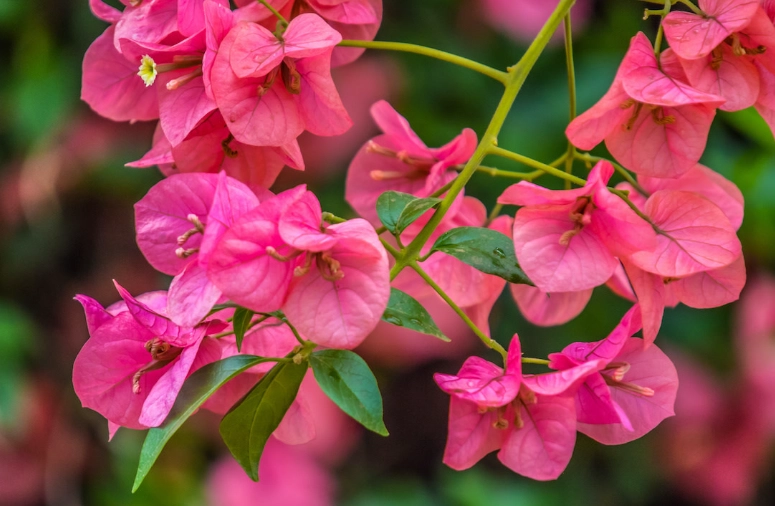
It teaches you to be a more observant gardener. You learn to read its leaves, to respect its need for a dry period, to celebrate the tiny new growth that promises the next blast of color.
Start with a healthy plant, put it in the sunniest spot you own, forget to water it now and then, and don't be shy with the shears. Do that, and you won't just have a plant. You'll have a living, breathing piece of art that makes your neighbors stop and stare. And honestly, that's half the fun.
Got a specific problem I didn't cover? Drop a comment below (well, if this were a real blog!). I've probably been through it, and there's always a solution. Happy gardening!