Philodendron Birkin Plant Care: Your Ultimate Guide to Growing the Stripey Beauty
Houseplant care
So, you've brought home a Philodendron Birkin, or maybe you're thinking about it. Those creamy white pinstripes on dark green leaves are just show-stoppers, aren't they? I remember the first time I saw one at a local nursery – it looked almost unreal, like someone had carefully painted each leaf. I had to have it. But then I got it home and the questions started. How much light does it really need? Why is that leaf turning yellow? Is it supposed to grow that slowly?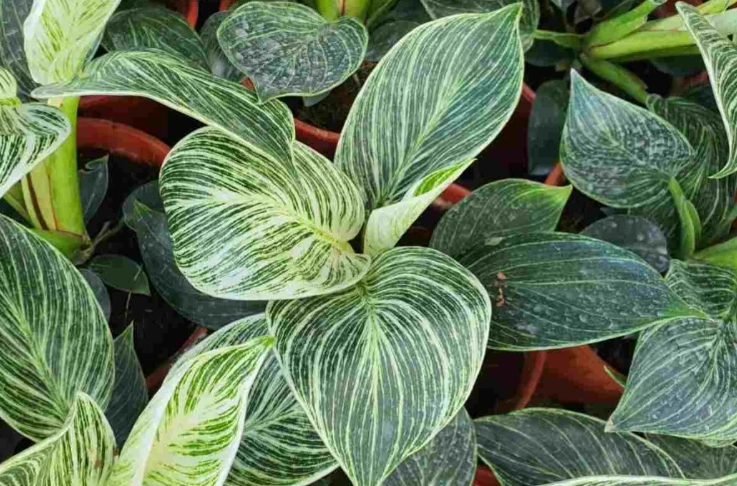
If that sounds familiar, you're in the right place. This isn't just another generic plant care sheet. This is the guide I wish I'd had when I started my journey with this fantastic plant. We're going to dig deep into everything about the Philodendron Birkin plant, from its quirky origins to the nitty-gritty of keeping it happy (and striped).
Meet the Philodendron Birkin
Let's get acquainted. The Philodendron Birkin is a bit of a mystery child in the plant world. It's not a species you'll find growing wild in a rainforest. Instead, it's a cultivated sport – a spontaneous genetic mutation – that popped up from the Philodendron 'Rojo Congo'. Think of it as a happy accident. A Rojo Congo decided to ditch some of its red coloring and start producing these incredible white or cream-colored streaks on new leaves. Growers noticed, thought it was gorgeous, and started propagating it. And thus, the Philodendron Birkin plant was born.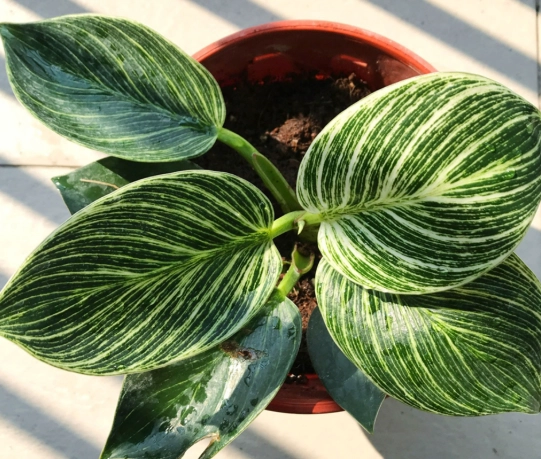
What makes it so special is that variegation. Unlike some plants where variegation is stable, the Birkin's stripes can be unpredictable. Each new leaf is a surprise. Sometimes you get heavy, bold stripes. Sometimes they're fine and delicate. Occasionally, a leaf might come out almost entirely white (which is stunning but can be problematic – more on that later). This chameleon-like quality is a big part of the fun.
It's also a relatively compact grower. Don't expect it to vine and trail like a Heartleaf Philodendron. The Birkin tends to grow upright, with new leaves unfurling from the center. It's perfect for a shelf, a desk, or a side table where you can admire those patterns up close.
The Complete Care Guide for Your Philodendron Birkin
Okay, let's talk about keeping this beauty alive and thriving. The good news? The Philodendron Birkin care routine isn't too complicated. It's often labeled as "low-maintenance," and for the most part, that's true. But there are a few key things it's really picky about. Get these right, and you'll have a happy plant.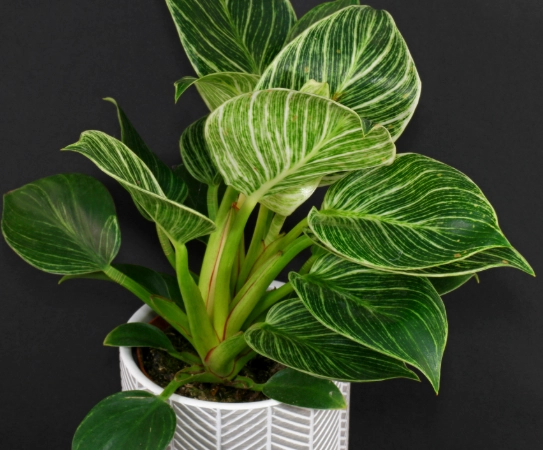
Light: The Golden Key to Those Stripes
This is the most important factor, hands down. Light directly fuels the variegation in your Philodendron Birkin plant.
- Ideal Spot: Bright, indirect light. Think near an east-facing window where it gets gentle morning sun, or a few feet back from a south or west window filtered by a sheer curtain.
- What Happens with Too Little Light? The plant will struggle. Growth will become leggy (long stems with wide gaps between leaves). The stunning white variegation will start to fade, and new leaves may revert to mostly green as the plant tries to produce more chlorophyll to survive in the dim conditions. It's the number one reason people lose those beautiful stripes.
- What About Direct Sun? Be careful. Those delicate white parts of the leaf have no chlorophyll to protect them from the sun's intensity. Prolonged direct sun, especially harsh afternoon sun, can scorch the leaves, leaving crispy brown or yellow patches. It's not a sunbather.
I have mine about four feet from a large south-east window. It gets a couple of hours of very soft, filtered direct light in the early morning, and bright indirect light the rest of the day. The variegation has been consistently strong there.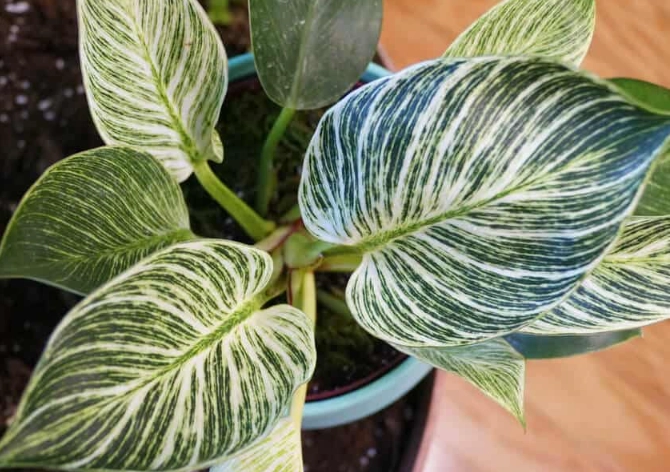
Watering: The Fine Line Between Love and Drowning
Overwatering is the fastest way to kill almost any houseplant, and the Birkin is no exception. Its roots need oxygen as much as they need water.
Here's the method that hasn't failed me yet:
- Check the soil: Stick your finger about 2 inches into the potting mix. Is it dry? Not just surface dry, but dry at your fingertip?
- If yes, water thoroughly: Take the plant to the sink and water slowly until you see water running freely out of the drainage holes. This ensures the entire root ball gets moistened.
- Let it drain completely: Leave it in the sink or on a drain rack for 10-15 minutes. Never let it sit in a saucer full of water. Soggy bottoms lead to root rot.
Signs you're overwatering: Yellowing lower leaves, consistently wet soil, a musty smell from the pot, or black, mushy stems.
Signs you're underwatering: Drooping leaves, crispy brown leaf edges (especially on the white parts), and soil pulling away from the edges of the pot.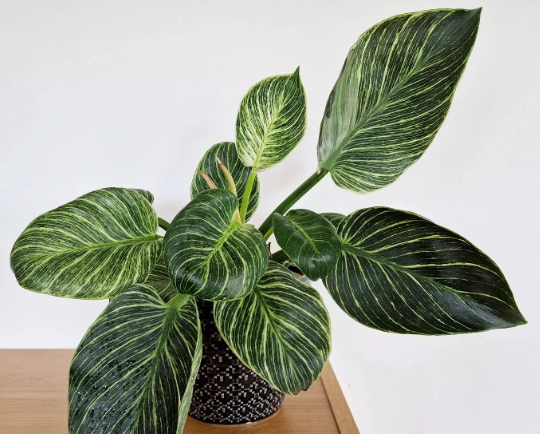
Soil & Potting: Building a Comfy Home
You want a mix that's airy and well-draining but can still retain some moisture. A standard, dense potting soil straight from the bag is a recipe for trouble – it holds too much water for too long.
A great DIY mix for your Philodendron Birkin plant is:
- 50% high-quality all-purpose potting mix
- 30% perlite or pumice (for aeration and drainage)
- 20% orchid bark or coconut coir (for chunkiness and moisture retention)
This creates a fluffy, breathable environment that mimics the loose, organic matter it would find on a forest floor.
When to Repot? Only when it's rootbound. These plants don't mind being a little snug. You'll know it's time when roots are circling the bottom of the pot or growing out of the drainage holes, or when the plant dries out suspiciously fast. Typically, this is every 1-2 years. When you do repot, only go up one pot size (about 1-2 inches wider in diameter). A pot that's too large holds excess soil that stays wet and can cause root issues.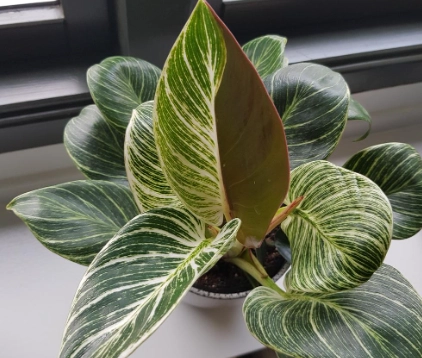
Humidity & Temperature: Creating a Tropical Vibe
As a tropical plant, it appreciates humidity. Average home humidity (around 40-50%) is often fine, but if you see the leaf tips getting consistently brown and crispy, low humidity is likely the culprit.
Ways to boost humidity:
- Pebble Tray: Simple and effective. Fill a shallow tray with pebbles and water, and place the pot on top (ensuring the pot isn't sitting *in* the water).
- Grouping Plants: Plants create their own microclimate. Cluster your humidity-loving plants together.
- Humidifier: The gold standard, especially in dry winter months.
Misting? I'm not a huge fan. It only raises humidity for a few minutes and can promote fungal issues on the leaves if they stay wet too often.
Temperature: Keep it in a comfortable room temperature range, between 65°F and 80°F (18°C - 27°C). Avoid cold drafts from windows or doors in winter, and keep it away from hot air vents and radiators.
Fertilizing: A Light Snack, Not a Feast
During the active growing season (spring and summer), you can feed your Philodendron Birkin plant to support its growth. Use a balanced, water-soluble fertilizer (look for an N-P-K ratio like 10-10-10 or 20-20-20).
Pruning & Cleaning
Pruning is mostly for aesthetics and health. Use clean, sharp scissors to remove any leaves that are yellowing, heavily damaged, or completely brown. Cut the stem near the base. This encourages the plant to put energy into new growth.
Those big, beautiful leaves are dust magnets. Every month or so, I give mine a gentle shower in the sink or wipe each leaf with a damp, soft cloth. This not only makes it look spectacular but also allows it to photosynthesize more efficiently.
Birkin Care Quick Reference Table
| Aspect | What Your Birkin Wants | What to Avoid |
|---|---|---|
| Light | Bright, indirect light. East window is ideal. | Low light (causes loss of variegation) and harsh direct sun (causes leaf scorch). |
| Water | Water only when the top 2 inches of soil are dry. Soak thoroughly and drain. | Watering on a strict schedule. Letting it sit in water. |
| Soil | Light, airy, well-draining mix (add perlite & bark). | Heavy, dense, moisture-retentive potting soil. |
| Humidity | Prefers >40%. Appreciates pebble trays or humidifiers. | Very dry air (causes crispy brown tips). |
| Temperature | 65°F - 80°F (18°C - 27°C). Stable and warm. | Cold drafts, sudden temperature drops. |
| Fertilizer | Balanced, diluted liquid fertilizer monthly in spring/summer. | Over-fertilizing, fertilizing in fall/winter. |
Common Problems & How to Fix Them
Even with the best care, things can go a little sideways. Here's a troubleshooting guide for your Philodendron Birkin plant.
Yellow Leaves: This is the big one. First, figure out *which* leaves are yellowing. - Lower, older leaves yellowing gradually: This is often natural senescence. The plant is retiring an old leaf to put energy into new growth. Just pluck it off. - Multiple leaves yellowing, especially newer growth, with wet soil: Classic overwatering/root rot. Stop watering immediately. Check the roots. If they're brown and mushy, you may need to cut away the rot and repot in fresh, dry mix. - Yellow leaves with dry soil or crispy edges: Likely underwatering or very low humidity. Give it a good drink and check your humidity levels.
Brown Leaf Tips or Edges: Almost always a humidity issue, or sometimes a sign of fluoride/chlorine in tap water (the white variegated parts are extra sensitive). Use filtered water, rainwater, or let tap water sit out overnight before using. Increase humidity.
Loss of Variegation (Reverting to Green): Not enough light. The plant is compensating by producing more green chlorophyll. Gradually move it to a brighter location (but not into direct sun).
Pests: Keep an eye out for the usual suspects: mealybugs (look like tiny cotton balls), spider mites (fine webbing, stippled leaves), and scale (bumpy brown spots). Isolate any infected plant immediately. Wipe leaves with insecticidal soap or neem oil solution. Persistence is key.
How to Propagate Your Philodendron Birkin
Want more of these striped wonders? Propagating a Philodendron Birkin plant is rewarding and fairly straightforward. The best method is stem cuttings.
- Choose a healthy stem: Look for a section with at least one node (the little brown bump on the stem where leaves and roots emerge) and 1-2 leaves.
- Make the cut: Using sterilized scissors or a knife, cut about half an inch below a node.
- Rooting: You have two main options:
- Water: Place the cutting in a glass of water, ensuring the node is submerged but the leaf is not. Change the water every few days. Place in bright, indirect light. Roots should appear in 2-6 weeks.
- Moss/Perlite: Many swear by sphagnum moss or perlite for faster, stronger root development. Moisten the medium, place the cutting in it, and keep it in a humid environment (a plastic bag with holes works).
- Potting up: Once roots are at least an inch or two long, pot the cutting into a small pot with your well-draining soil mix. Treat it like a mature plant, but keep the soil slightly more moist for the first few weeks as it adjusts.
The Mystery of Reversion
This is a unique and sometimes frustrating aspect of the Philodendron Birkin plant. Since it originated from a mutation, it can be genetically unstable. This means it can sometimes "revert" – produce a stem or leaves that look exactly like its parent, the all-green Philodendron 'Rojo Congo'.
What does it look like? You might see a new stem growing that has solid green leaves, or a section of your plant starts putting out green leaves without stripes.
What to do if your Birkin reverts? If you want to maintain the striped look, you need to prune out the reverted growth. Cut the reverted stem back to its point of origin. If you don't, that green section will often grow more vigorously than the variegated parts (because it has more chlorophyll) and can eventually take over the plant.
On the flip side, some people find the mix of striped and solid green leaves interesting and choose to let it be. It's your plant, your choice!
Frequently Asked Questions (FAQs)
So, there you have it.
Caring for a Philodendron Birkin plant is a mix of understanding its basic needs and appreciating its unique personality. It asks for consistent light, cautious watering, and a bit of humidity. In return, it gives you a living piece of art, with each new leaf offering a surprise. Don't stress over perfection. Pay attention to what it's telling you – the leaves are great communicators. A little yellow? Check the water. Losing stripes? Find more light. Crispy tips? Boost the moisture in the air.
Start with the basics in this guide, observe your plant, and adjust as you go. Before long, you'll have a thriving, stripey companion that's the envy of every plant lover who sees it. Happy growing!