In This Guide
- What Exactly Is a Monstera Adansonii?
- The Non-Negotiable Care Guide
- Common Problems and How to Fix Them
- Propagation: Make More Plants for Free
- Supporting Your Vine: To Climb or To Trail?
- Varieties and Lookalikes
- Fertilizing: The Plant Food Lowdown
- Repotting: When and How
- Your Monstera Adansonii Questions, Answered
- Bringing It All Together
Let's talk about the Monstera adansonii. You've seen it everywhere, right? Instagram, Pinterest, that cool coffee shop downtown. Those iconic holes in the leaves, the trailing vines that just keep going. It's the plant that made "fenestration" a household word among plant people. But here's the thing – between the hype and the perfect pictures, a lot of us end up with a sad, yellowing vine wondering what we did wrong. I've been there. I killed my first one with too much love (read: water).
This isn't just another generic care sheet. We're going deep. We'll cut through the noise and get into what this plant actually needs, why it sometimes throws a fit, and how you can make it thrive, not just survive. Whether you're a new plant parent or you've got a jungle at home, there's always something new to learn with the Swiss Cheese Vine.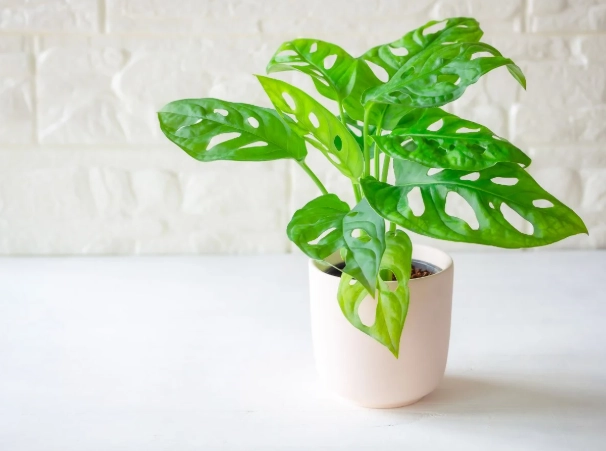
What Exactly Is a Monstera Adansonii?
First off, let's clear up the name. It's Monstera adansonii. You might also see it called Adanson's Monstera, Five Holes Plant, or, most commonly, the Swiss Cheese Vine. It's a tropical climber from the Araceae family, native to Central and South America. Think dense rainforests from southern Mexico down to Brazil. In the wild, it's an epiphyte, meaning it grows on other trees, using its aerial roots to cling and climb towards the light filtering through the canopy.
Those famous holes, the fenestrations, aren't just for looks. The leading theory is they allow heavy tropical rains and strong winds to pass through the leaf without tearing it apart. Smart, right? It's a survival adaptation that turned into a major aesthetic win. The Monstera adansonii is often confused with its bigger, more famous cousin, the Monstera deliciosa. The key difference? Size and leaf shape. Adansonii leaves are smaller, more elongated, and have more enclosed holes rather than deep splits. It's also a much more vigorous climber or trailer.
The Non-Negotiable Care Guide
Alright, let's get into the meat of it. How do you keep this beauty happy? It's not a cactus, but it's not a diva either. It's somewhere in the middle – a plant with clear preferences.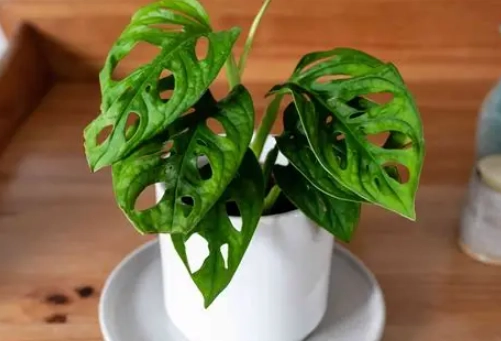
Light: The Golden Rule
This is the single most important factor. Your Monstera adansonii craves bright, indirect light. Picture the dappled sunlight on a forest floor. A spot near an east or north-facing window is often perfect. A few feet back from a south or west window (behind a sheer curtain) works too.
What happens if the light is wrong?
- Too low: This is the most common issue. The plant will become "leggy" – stretching out with long sections of stem between leaves. New leaves will be smaller, with fewer or no holes. Growth slows to a crawl. It's a slow, sad decline.
- Too direct: Scorched, crispy brown patches on the leaves. The vibrant green color fades to a pale, washed-out yellow. It looks fried because, well, it is.
See those long gaps between leaves? That's your plant screaming for more light.
Watering: The Balancing Act
Overwatering is the #1 killer of houseplants, and the Monstera adansonii is no exception. Those chunky aerial roots and stems can store some water, so it prefers to dry out a bit between drinks.
Forget the schedule. Don't water every Tuesday just because. The right method? Stick your finger about 2 inches into the soil. If it feels dry, it's time to water. If it's still damp, wait. In the warmer, brighter growing season (spring/summer), this might be once a week. In the darker winter months, it could be every two or three weeks. Your plant will tell you what it needs.
When you do water, do it thoroughly. Pour water evenly over the soil until it runs freely out of the drainage holes. Let it drain completely – never let the pot sit in a saucer of water. Root rot is a silent, smelly killer.
Soil and Potting
This ties directly to watering. You need a mix that holds moisture but drains excess water incredibly well. A standard potting soil is too dense on its own. It will compact and stay soggy.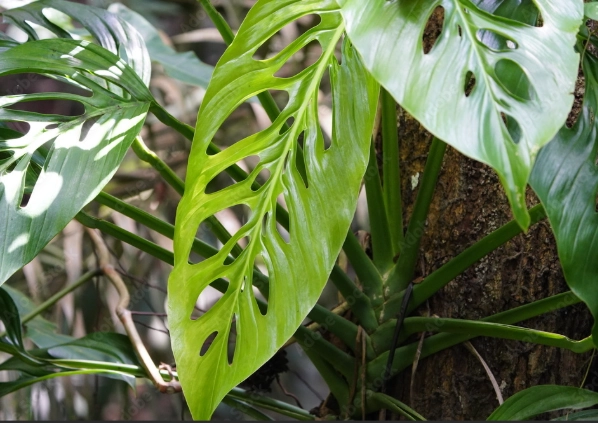
The ideal Monstera adansonii mix recipe:
- 2 parts high-quality all-purpose potting mix
- 1 part perlite (for aeration and drainage)
- 1 part orchid bark or coconut coir (for chunkiness and to mimic its epiphytic nature)
This creates an airy, fluffy environment that the roots love. As for the pot, drainage holes are non-negotiable. Terracotta pots are a great choice because they're porous and help wick away extra moisture.
Humidity and Temperature
Being a tropical plant, it appreciates humidity. Aim for 50% or higher. Does it need it to survive? Not necessarily. Many people grow them successfully in average home humidity (around 40%). But if you want those large, lush leaves with perfect fenestrations, higher humidity helps.
How to boost humidity? Group plants together, use a pebble tray with water, or run a humidifier. Misting? I find it does very little to raise overall humidity and can promote fungal spots on leaves if overdone.
Temperature is easy – standard room temperature is perfect. Keep it between 65-85°F (18-29°C). Avoid cold drafts from windows or doors in winter, and keep it away from hot air vents.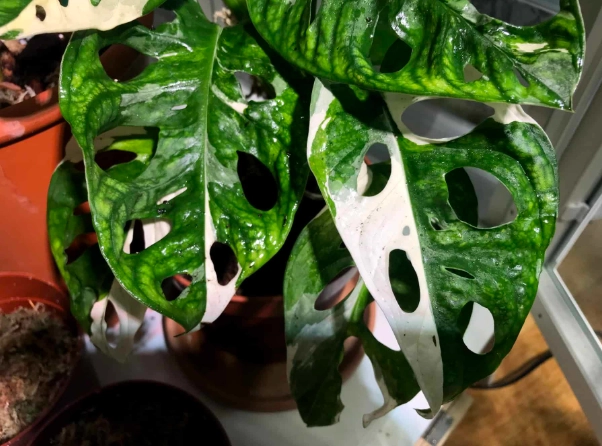
Common Problems and How to Fix Them
You're doing everything "right," but your plant looks off. Let's diagnose.
| Symptom | Likely Cause | How to Fix It |
|---|---|---|
| Yellowing leaves, especially lower ones | Overwatering. Soggy soil. | Check soil moisture. Let dry out more between waterings. Ensure pot has drainage. |
| Brown, crispy leaf edges | Low humidity or underwatering. | Check soil dryness. Increase ambient humidity with a humidifier or pebble tray. |
| Small leaves with no holes | Insufficient light. | Move to a brighter location with indirect light. |
| Leaves curling inwards | Underwatering, low humidity, or heat stress. | Water thoroughly, check environment. |
| Black spots on leaves | Fungal infection, often from misting or cold, wet leaves. | Stop misting. Improve air circulation. Remove affected leaves. |
| Pale, almost translucent leaves | Too much direct sun (sunburn). | Move to a shadier spot immediately. |
Pests can be an issue too. Keep an eye out for spider mites (fine webbing, stippled leaves), mealybugs (white cottony masses), and scale (brown bumps). A regular shower in the sink or wiping leaves with a damp cloth helps prevent them. For infestations, insecticidal soap or neem oil are good first steps. The University of Minnesota Extension's plant disease diagnostic tool is a fantastic resource if you're really stumped by a problem.
Propagation: Make More Plants for Free
This is the fun part! Propagating Monstera adansonii is incredibly easy and rewarding. You can share cuttings with friends or fill out your own plant.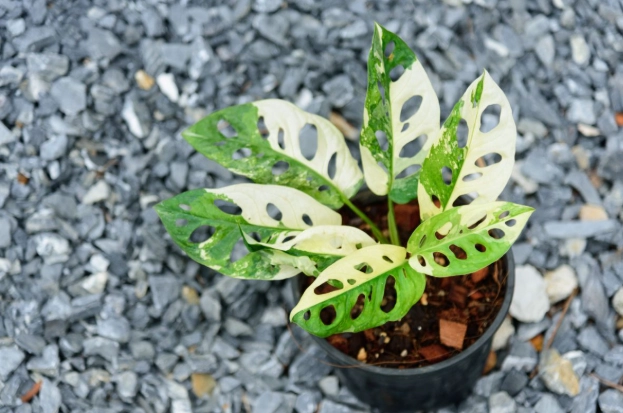
The Water Propagation Method (My Favorite):
- Find a healthy stem with at least one node (that brown, bumpy ring on the stem where leaves and roots emerge). This is crucial – no node, no roots.
- Using clean scissors or pruners, cut about a quarter-inch below the node.
- Place the cutting in a jar of room-temperature water, making sure the node is submerged. Remove any leaves that would sit under water.
- Place in a spot with bright, indirect light. Change the water every few days to keep it fresh.
- In 2-6 weeks, you'll see white roots sprouting from the node. Wait until they're a few inches long.
- Pot it up in that well-draining soil mix we talked about, water it well, and treat it like a mature plant.
You can also propagate directly in moist sphagnum moss or even straight into soil, but water propagation lets you see the progress, which is great for beginners.
Supporting Your Vine: To Climb or To Trail?
This is a vining plant by nature. In the wild, it climbs trees. In your home, you have choices.
Trailing: Let it cascade from a hanging basket or shelf. It creates a beautiful, lush curtain of greenery. This is low-maintenance and very popular.
Climbing: If you want larger leaves and a more controlled, upright shape, give it something to climb. As the Monstera adansonii climbs, the leaves often get larger and develop more pronounced fenestrations. You can use a moss pole, a coco coir pole, or even a simple trellis. Gently tie or use plant clips to attach the stems to the support. The aerial roots will eventually latch on. The Missouri Botanical Garden, a world-renowned authority, notes that providing aerial roots with a moist medium like a moss pole can significantly enhance growth.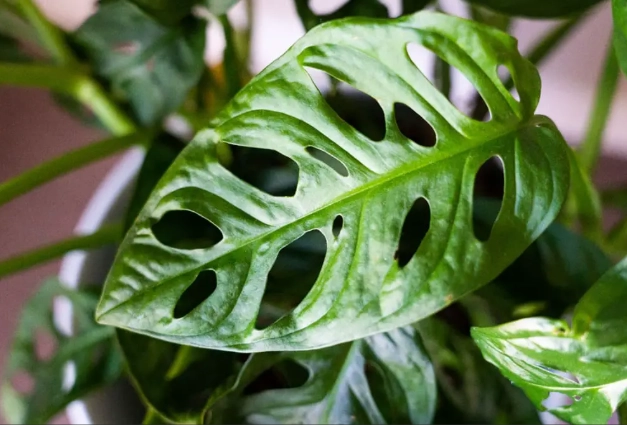
Varieties and Lookalikes
Not all Swiss Cheese Vines are the same! There are a few cultivated varieties (cultivars) you might encounter:
- Monstera adansonii var. laniata: Often has larger, slightly glossier leaves with more holes. The holes often extend to the leaf edge.
- 'Archipelago': A highly variegated form with stunning white or cream splashes. Much rarer and more expensive. Requires more light to maintain variegation.
Beware of imposters! Monstera obliqua is often confused with adansonii, but it's a different species entirely. True Obliqua is extremely rare in cultivation, with leaves that are much more hole than leaf. What's usually sold as "Obliqua" is actually an adansonii. For accurate plant identification, resources from institutions like the United States Botanic Garden are invaluable.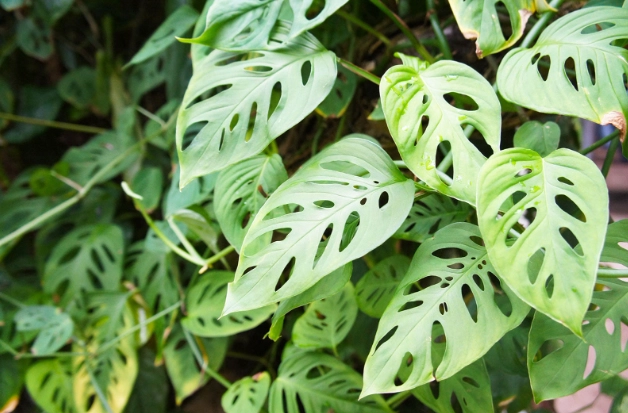
Fertilizing: The Plant Food Lowdown
During the active growing season (spring and summer), feeding your plant gives it a boost. Use a balanced, water-soluble houseplant fertilizer (look for an N-P-K ratio like 10-10-10 or 20-20-20).
My routine: I dilute the fertilizer to half the strength recommended on the bottle and apply it every 4-6 weeks during spring and summer. In fall and winter, I stop fertilizing completely. The plant isn't growing much, and unused fertilizer can build up and harm the roots.
Less is more. It's easier to fix under-fertilizing (slow growth, pale leaves) than over-fertilizing, which can cause fertilizer burn (brown leaf tips, crusty white residue on soil).
Repotting: When and How
Your Monstera adansonii will eventually need a new home. Signs it's time: roots growing out of the drainage holes, water running straight through without being absorbed, or the plant drying out extremely quickly.
Spring is the best time to repot. Choose a pot only 1-2 inches larger in diameter than the current one. Going too big means too much wet soil around the roots. Gently loosen the root ball, place it in the new pot with fresh soil mix, and water it in. It might sulk for a week or two as it adjusts.
Your Monstera Adansonii Questions, Answered
See? Most problems have a logical fix.
Bringing It All Together
So, what's the secret to a happy Monstera adansonii? It's not one big secret, but a few small, consistent habits.
Give it that bright, indirect light. Water it only when the top few inches of soil are dry – and then water it thoroughly. Pot it in a chunky, airy mix so its roots can breathe. Don't stress too much about humidity, but a little extra helps. And maybe give it a pole to climb if you want to see it really show off.
This plant has a reputation for being easy, and it can be. But "easy" doesn't mean "no rules." It just means the rules are simple once you understand them. Pay attention to what your plant is telling you. A little neglect (on the watering front) is often better than too much attention.
I love my Swiss Cheese Vine. Even after my early mishaps, there's something so satisfying about seeing a new, perfectly holey leaf unfurl. It's a living piece of art that grows with you. Start with the basics, don't overcomplicate it, and enjoy the process. Your jungle awaits.

Comments