Quick Navigation
- Light: The Number One Factor for Happy Syngoniums
- Watering: The Art of Not Drowning Your Friend
- Soil and Potting: Building a Good Foundation
- Humidity and Temperature: Creating a Tropical Vibe
- Feeding: A Little Food Goes a Long Way
- Pruning and Shaping: Keeping It Bushy, Not Leggy
- Propagation: Making More Plant Babies
- Common Problems and Solutions: The Troubleshooting Guide
- Popular Syngonium Varieties and Their Quirks
- Syngonium podophyllum 'White Butterfly'
- Syngonium Care Questions I Get Asked All The Time (FAQs)
- Putting It All Together: A Simple Weekly Check-in
Let's talk about Syngonium care. Honestly, it's one of those plants that gets a reputation for being "easy," and then you bring one home and suddenly it's throwing yellow leaves at you like confetti. I've been there. I killed my first one with kindness (read: overwatering) about five years ago. But after figuring them out, I can confidently say they're fantastic, forgiving plants that can adapt to a lot of our less-than-perfect home environments. This guide is everything I wish I'd known back then, boiled down from experience and a lot of reading from places like the Missouri Botanical Garden plant database.
Syngonium podophyllum, or the Arrowhead Vine, is a tropical climber native to places like Mexico and Brazil. It's part of the Araceae family, which means it's related to your Peace Lilies and Philodendrons. What makes it so popular? The leaves. They start out arrow-shaped (hence the name) and as the plant matures, they can develop into these beautiful, multi-lobed forms. The variety is insane—from deep, velvety greens to stunning pinks and almost-white variegation. Good Syngonium care unlocks that potential.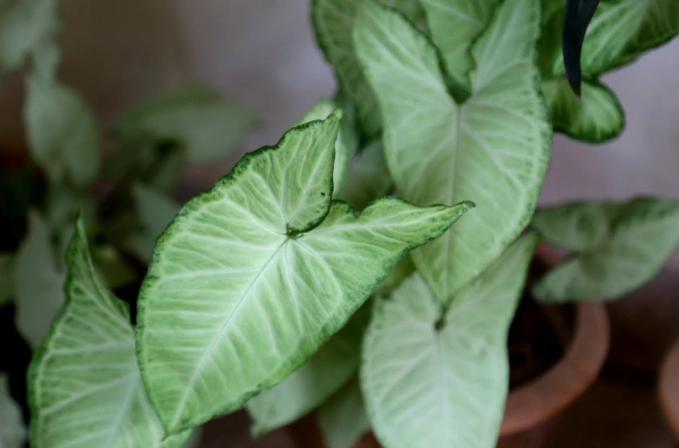
Light: The Number One Factor for Happy Syngoniums
This is where most people go wrong, in my opinion. The "low light" label is a bit of a trap. Sure, your Syngonium won't immediately die in a dim corner, but it won't thrive either. It'll become leggy, with longer spaces between leaves, and the growth will slow to a crawl. More importantly, for those gorgeous variegated varieties like the Syngonium 'Pink Allusion' or the stunning 'Albo-Variegatum', insufficient light means the plant will produce more green leaves to compensate for the lack of photosynthesis. You'll lose those beautiful patterns.
So what's the sweet spot?
Bright, indirect light is the absolute gold standard. Think near an east-facing window, or a few feet back from a south or west-facing window where the harsh midday sun won't scorch the leaves. A few hours of gentle morning sun is usually fantastic. If you only have a north-facing window, it might be enough for solid green varieties, but don't expect explosive growth.
I've had a Syngonium 'Neon Robusta' sitting about four feet from a south-west window for two years now, and it's a beast. It puts out new leaves constantly, and the pinkish hue is vibrant. Contrast that with a 'White Butterfly' I tried in a darker hallway—it survived, barely, and looked sad until I moved it.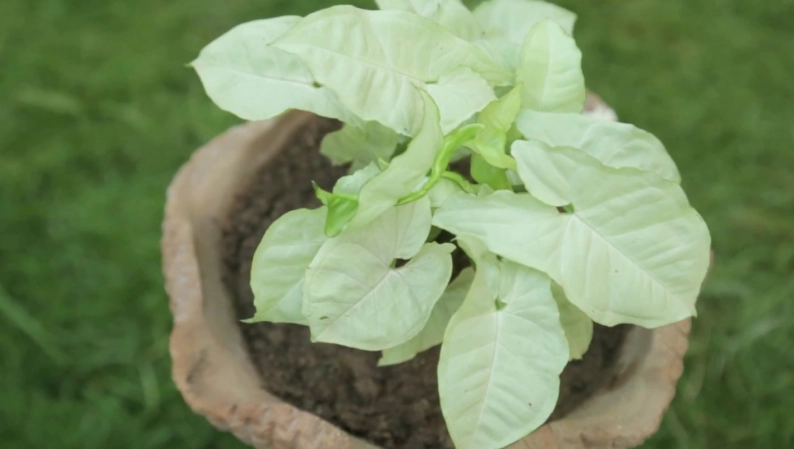
Watering: The Art of Not Drowning Your Friend
Overwatering is the single biggest killer of houseplants, and Syngoniums are no exception. Their roots need oxygen as much as they need water. Soggy soil leads to root rot, and that's a fast track to a dead plant.
Here’s my method, which has never failed me: the finger test. Stick your index finger into the soil, up to about the first knuckle (about an inch or 2.5 cm deep). If the soil feels dry at that depth, it's time to water. If it still feels cool or slightly damp, wait. In the winter, you might only need to do this every two or three weeks. In the summer, maybe once a week. It totally depends on your home's temperature, humidity, and light levels.
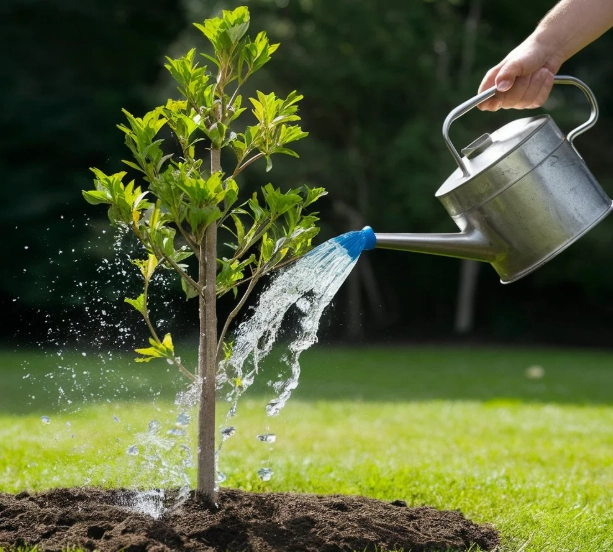
When you do water, do it thoroughly. Take the plant to the sink and water slowly until you see water running freely out of the drainage holes. Let it drain completely before putting it back in its decorative pot. Never let it sit in a saucer of water.
What about tap water? They're not super fussy, but they can be sensitive to the fluoride and chlorine in some tap water, which might cause brown tips on the leaves. If you notice that, switching to filtered water, rainwater, or even just leaving tap water out overnight can help. But honestly, I use tap water for most of mine and it's fine—it's one less thing to stress about.
Soil and Potting: Building a Good Foundation
You can have perfect light and water, but if your plant is sitting in the wrong soil, you're fighting an uphill battle. Syngoniums need a potting mix that holds some moisture but drains exceptionally well. The goal is damp, not wet.
A standard, high-quality houseplant potting mix is a good start, but I always amend it. My go-to recipe is:
2 parts houseplant potting mix + 1 part perlite + 1 part orchid bark (or coconut coir chips).
The perlite increases aeration, and the bark creates air pockets and improves drainage. This mix mimics the kind of loose, chunky, organic-rich soil they'd find on the forest floor. You can buy pre-mixed "aroid" soil, which is formulated for this plant family, but making your own is cheaper and lets you control the consistency.
When should you repot? Generally, every 1-2 years in spring or early summer. Don't just automatically size up—only go up 1-2 inches in pot diameter. A pot that's too big holds too much wet soil for the roots to use, leading to rot. Look for these signs:
- Roots are growing out of the drainage holes.
- The plant dries out incredibly fast (like in 2-3 days).
- Growth has stalled despite good conditions.
- The plant is top-heavy and constantly tipping over.
Repotting is also the perfect time to check the root health. Healthy roots are firm and white or light tan. Mushy, dark, or smelly roots need to be trimmed off with sterilized scissors.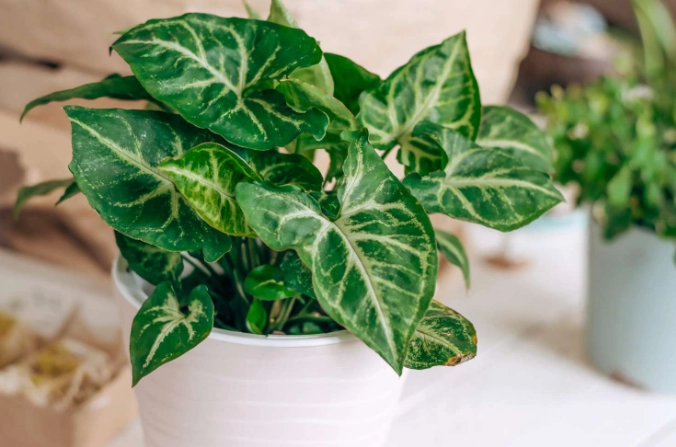
Humidity and Temperature: Creating a Tropical Vibe
Syngoniums are tropical plants, so they naturally love humidity. Can they survive in average home humidity (around 30-50%)? Yes, absolutely. But will they thrive? They'll do better with a boost.
Low humidity often shows up as crispy, brown leaf edges or tips. It's not a death sentence, just a cosmetic issue. If you want to prevent it, here are a few practical ways to increase humidity:
- Group plants together: As mentioned, it's the easiest, no-cost method.
- Pebble tray: Fill a shallow tray with pebbles and water, and place the pot on top (not in the water). As the water evaporates, it increases humidity right around the plant.
- Humidifier: The most effective method, especially for a whole plant collection.
- Bathroom or kitchen: These rooms often have naturally higher humidity.
As for temperature, aim for a comfortable room temperature between 60-80°F (15-27°C). Avoid cold drafts from windows or doors in winter, and keep them away from heating and air conditioning vents, which can blast them with dry air.
Feeding: A Little Food Goes a Long Way
Fertilizing isn't as scary as it seems. Syngoniums aren't heavy feeders, but they do appreciate nutrients during their active growing season (spring and summer).
I use a balanced, water-soluble fertilizer (look for an NPK ratio like 10-10-10 or 20-20-20) but I always dilute it to half the strength recommended on the bottle. It's better to under-fertilize than over-fertilize, which can burn the roots and cause leaf tip burn.
My schedule: I feed my plants every 4-6 weeks from April to September. I stop completely in the late fall and winter when growth naturally slows. If you're using a slow-release granular fertilizer, applying it once at the start of spring is often enough.
A common sign of over-fertilization is a white crust building up on the soil surface or the rim of the pot. If you see that, you can flush the soil by running a lot of water through it to leach out excess salts.
Pruning and Shaping: Keeping It Bushy, Not Leggy
Syngoniums have two growth habits: juvenile and mature. When young, they're bushy. As they age, especially if they have something to climb, they develop longer, vining stems with larger, divided leaves. This mature form is beautiful, but sometimes you want to keep a compact, bushy plant.
That's where pruning comes in. Don't be afraid to snip! Use clean, sharp scissors or pruning shears.
To encourage bushiness: Simply pinch or cut off the very tip of a stem (the apical meristem). This signals the plant to send out new growth points from the nodes lower down on the stem, resulting in a fuller plant.
To control size or remove ugly growth: You can cut a stem back to just above a leaf node (the small bump on the stem where a leaf attaches). New growth will emerge from that node.
What do you do with the cuttings? Don't throw them away! You can propagate them.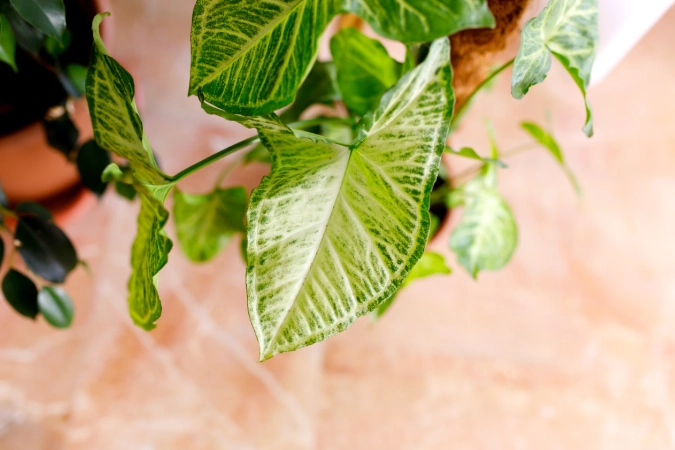
Propagation: Making More Plant Babies
This is one of the most rewarding parts of Syngonium care. They are incredibly easy to propagate in water, which makes them great for sharing with friends. Here’s how:
- Take a stem cutting that has at least one node (the bump where a leaf meets the stem) and preferably 1-2 leaves.
- Place the cutting in a jar or glass of water, making sure the node is submerged. The leaf should be above water.
- Put it in a spot with bright, indirect light.
- Change the water every few days to keep it fresh.
- In 2-4 weeks, you should see white roots sprouting from the node.
- Once the roots are an inch or two long, you can pot the cutting up in soil. Keep the soil slightly more moist than usual for the first couple of weeks as it adjusts.
You can also propagate directly in moist sphagnum moss or even directly into soil, but water propagation lets you see the progress, which is fun and reassuring for beginners.
Common Problems and Solutions: The Troubleshooting Guide
Even with the best Syngonium care, issues pop up. Here’s a quick-reference table for the most common problems.
| Problem | Likely Cause | How to Fix It |
|---|---|---|
| Yellowing Leaves | Most often overwatering. Can also be natural aging (lower, older leaves). | Check soil moisture. Let soil dry out more between waterings. Ensure pot has drainage. |
| Brown, Crispy Leaf Edges | Low humidity, underwatering, or fluoride in water. | Increase humidity. Check watering frequency. Try using filtered water. |
| Leggy, Stretched Growth | Not enough light. | Move plant to a brighter location (with indirect light). |
| Curling Leaves | Usually underwatering or low humidity. | Water thoroughly and consider humidity solutions. |
| Pale or Faded Leaves | Too much direct sun (bleaching) or lack of nutrients. | Move out of direct sun. Consider a diluted fertilizer during growing season. |
| No New Growth | Dormancy (winter), insufficient light, or needs repotting. | Be patient in winter. Otherwise, assess light and check if plant is root-bound. |
Popular Syngonium Varieties and Their Quirks
Part of the fun is collecting different types. Here are a few favorites and a tiny bit of special care they might need:
Syngonium podophyllum 'White Butterfly'
The classic. Creamy white and green leaves. Very adaptable. A perfect starter plant.
Syngonium 'Neon Robusta'
Stunning pinkish-green leaves. The color is best with bright, indirect light. In low light, it can revert to a more green color.
Syngonium 'Albo-Variegatum'
Highly sought-after for its dramatic white variegation. This one needs bright indirect light to maintain its pattern. It's also a slower grower and can be a bit more expensive.
Syngonium 'Maria Allusion'
Has beautiful, dark green leaves with pinkish veins. It tends to stay more compact and bushy, which is great for smaller spaces.
Syngonium 'Mojito'
A fun, speckled variety with green and chartreuse splashes. Its care is standard, but the variegation makes it a conversation piece.
Really, the core principles of Syngonium care apply to all of them. The variegated ones just need a bit more light to show off properly.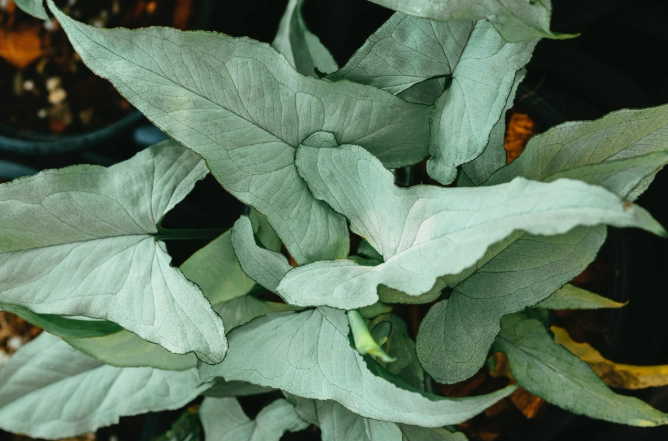
Syngonium Care Questions I Get Asked All The Time (FAQs)
Putting It All Together: A Simple Weekly Check-in
Syngonium care doesn't need to be a daily chore. Think of it as a weekly friend check. Here’s what I do every weekend:
- Look: Do the leaves look perky? Any yellow, brown, or pests?
- Feel: Do the finger test for soil moisture.
- Act: Water only if needed. Maybe wipe a leaf or two with a damp cloth to dust them (they breathe through their leaves!).
- Rotate: Give the pot a little turn for even growth.
That's it. It takes two minutes. The rest—the repotting, fertilizing, propagating—happens a few times a year. It's about consistent, attentive care, not constant intervention.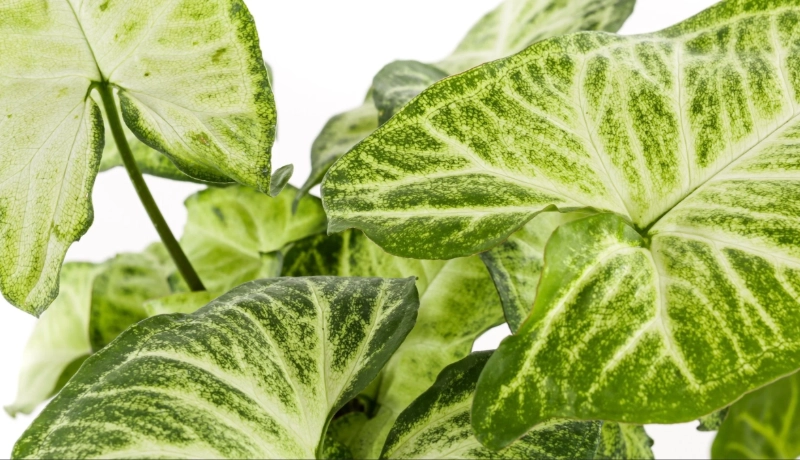

Comments