Quick Guide to Snake Plant Propagation
- Why Bother with Snake Plant Cuttings Anyway?
- Gearing Up: What You Actually Need
- The Step-by-Step: From Leaf to New Plant
- Water vs. Soil: A Head-to-Head Showdown
- Babying Your Baby: Care After Rooting
- When Things Go Wrong: Troubleshooting Your Cuttings
- Beyond the Basics: Creative Ideas for Your Propagations
- Some Honest Truths and Final Thoughts
Hey there. So you've got a snake plant – a Sansevieria, if we're being fancy – and it's doing a little too well. Maybe it's bursting out of its pot, or you just snapped a leaf while moving it (we've all been there). Suddenly, you're staring at a piece of a plant and thinking, "Can I make a whole new one from this?"
The answer is a resounding yes. And it's honestly one of the most satisfying things you can do in indoor gardening. Taking snake plant cuttings and turning them into full, independent plants feels like a little bit of magic you can do on your windowsill. It's free plants, it's easy, and it's a fantastic way to share with friends or fill your own space with more green.
But here's the thing. While it's simple in theory, there are a few tricks that make the difference between a cutting that roots in a few weeks and one that just... sits there. Or worse, turns to mush. I've done both. My first attempt at propagating snake plant cuttings ended in a soggy, rotten mess because I was too impatient to let the cut end callus over. Lesson learned the hard way.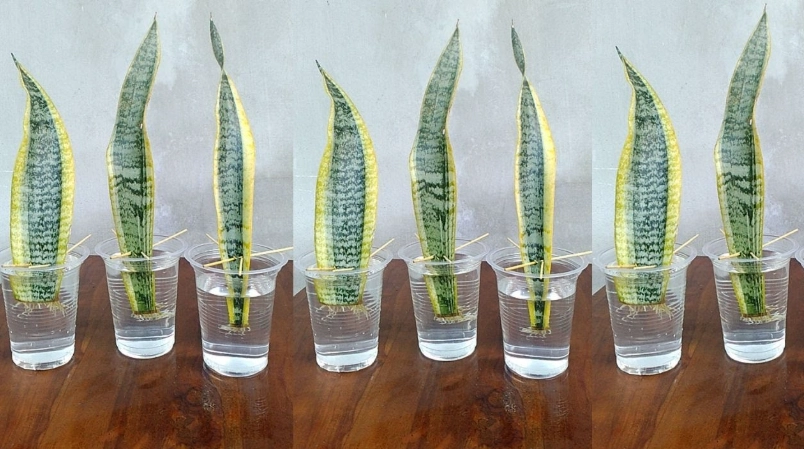
This guide is everything I wish I'd known back then. We're going to move past the basic "stick it in water" advice and dig into the hows and whys. We'll compare methods, troubleshoot the common headaches, and I'll even throw in some creative ideas for what to do with all your new baby snake plants.
Why Bother with Snake Plant Cuttings Anyway?
Let's be real. You can buy a small snake plant for like, ten bucks. So why go through the effort of propagation?
For me, it's never really been about the money. It's about the process. There's a unique joy in nurturing a piece of a plant you already love into a whole new entity. It's a connection. That new plant came from your plant. If your original snake plant is a cherished one – a gift, or one you've had for years – propagating it is a way to preserve and multiply that connection.
Then there's the practical side. Snake plants are famously resilient and great for improving indoor air quality (a claim popularized by the classic NASA Clean Air Study, though the real-world application in homes is debated). Having more of them scattered around your home or office is rarely a bad idea. They're the perfect low-drama roommate for a busy person.
And finally, it's just incredibly easy. Once you know the steps, propagating snake plant cuttings is almost foolproof. It's a perfect project for a gardening beginner to build confidence.
 Think of it as a slow-motion science experiment happening on your countertop.
Gearing Up: What You Actually Need
You don't need a fancy toolkit. Honestly, you probably have 90% of this stuff already.
- A Healthy Mother Plant: This is non-negotiable. Don't try to propagate from a sickly, struggling plant. Choose a leaf that's firm, upright, and a vibrant green (or whatever color your variety is supposed to be). Avoid leaves with soft spots, major browning, or pest damage.
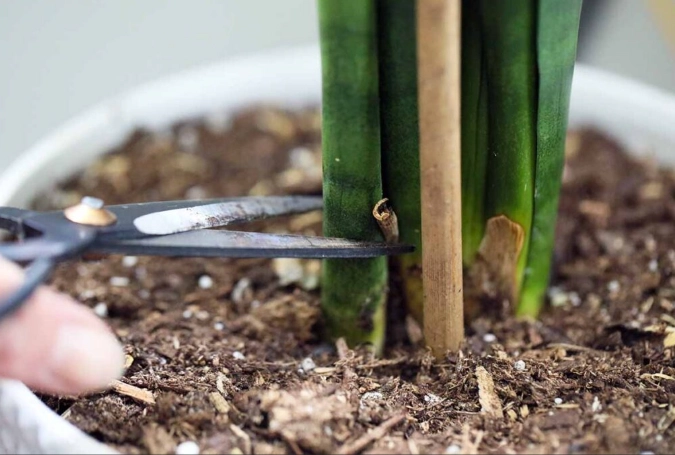
- A Sharp, Clean Cutting Tool: A sharp knife, razor blade, or pair of pruning shears. Clean it with rubbing alcohol first. A clean cut heals faster and reduces the risk of introducing disease. A ragged, crushed cut from dull scissors is an open invitation for rot.
- Your Rooting Medium: This is your big choice – water or soil. We'll get into the nitty-gritty of each in a bit. For water, any clean glass or jar will do. For soil, a well-draining mix is key. A standard cactus/succulent mix works great, or make your own with half potting soil and half perlite or coarse sand.
- Small Pots (for later): Once your snake plant cuttings have roots, they'll need a home. Terracotta pots are excellent because they're porous and help prevent overwatering.
- Optional but Helpful: Rooting hormone powder or gel. It's not necessary for snake plants, but it can give roots a slight boost and has antifungal properties. I use it sometimes, sometimes I don't. It's a cheap insurance policy.
The Step-by-Step: From Leaf to New Plant
Alright, let's get our hands dirty (figuratively, for now).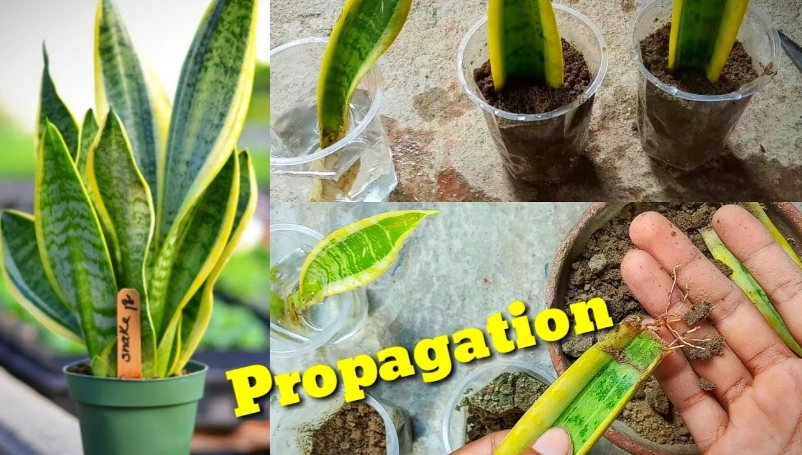
Step 1: Choosing and Cutting the Leaf
Pick an outer, mature leaf. Don't go for the tiny new ones in the center. Using your clean, sharp tool, cut the leaf off as close to the soil line as you can. You can cut the leaf into multiple sections – each one can become a new plant! This is called leaf section propagation.
If you're going the section route, cut the leaf into pieces about 3-4 inches long. Here's the most important tip you'll read today: Mark which end was the bottom. Seriously. Do it with a tiny dot from a marker, or just remember that the end that was closest to the soil is the bottom. Roots will only grow from the bottom cut end. If you plant it upside down, it will not grow. I learned this from a very confused two-month period where nothing happened.
Step 2: The Critical Callusing Period
This is the step everyone wants to skip, and it's the one that causes the most failures. Do not put your fresh snake plant cuttings directly into water or soil.
Place the cuttings on a paper towel or a plate in a spot with good air circulation, out of direct sun. Let the cut ends dry out and form a dry, calloused layer over the wound. This usually takes 2-5 days, depending on humidity. This callus acts like a scab, sealing the wound and preventing rot when it's introduced to moisture.
It feels like you're doing nothing, but this is active work for the plant. Patience here saves heartache later.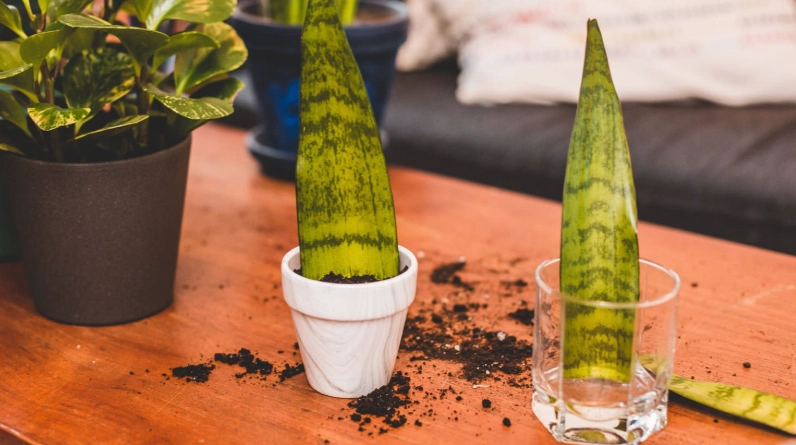
Step 3: The Big Decision – Water or Soil?
Now you have a choice. Both methods work, but they offer different experiences.
Water Propagation: The Show-and-Tell Method
This is the crowd favorite because you get to watch the roots grow. It's gratifying.
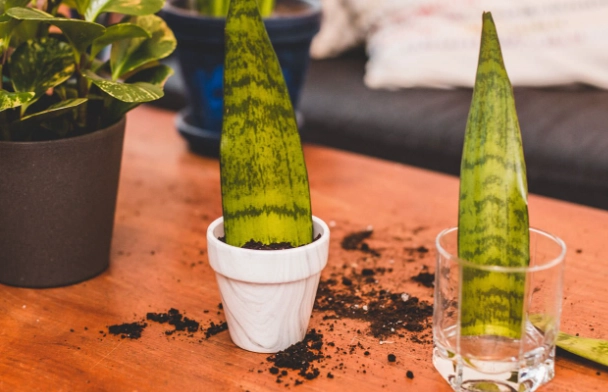
Take your calloused snake plant cuttings and place the bottom inch or so in a jar of clean water. Don't submerge the whole thing. Use a narrow jar or prop the cutting with toothpicks so only the very bottom is in the water. Place it in bright, indirect light. Change the water every week or if it looks cloudy to prevent bacterial growth.
What to expect? In a few weeks, you should see little white, nubby roots emerging from the bottom. They might look a bit like small, fat grains of rice at first. Let these water roots grow until they're a couple of inches long and have some secondary roots branching off. This can take 4-8 weeks, sometimes longer. Don't rush it.
The downside? Roots grown in water are different from roots grown in soil. They're more fragile. When you eventually pot them in soil, they have to adapt, and the plant might go through a bit of shock. Some cuttings handle this transition perfectly, others sulk for a bit.
Soil Propagation: The Set-and-Forget Method
This is my personal go-to method now. It's one less transition for the plant.
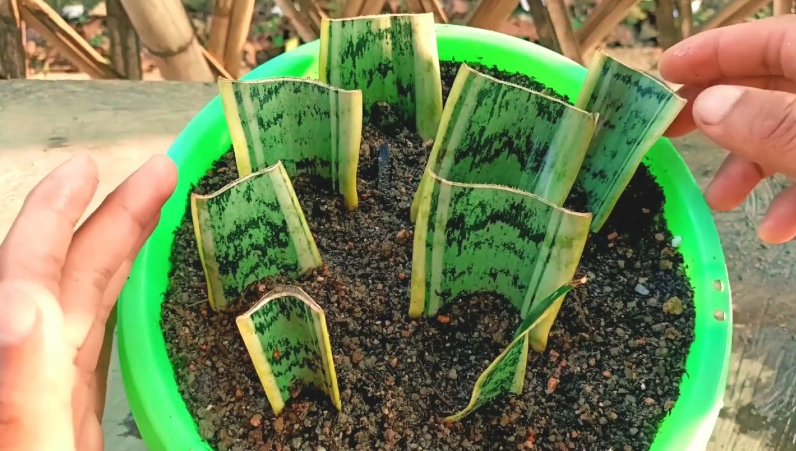
Take your calloused cuttings and stick the bottom end about an inch deep into a pot filled with your pre-moistened, well-draining soil mix. You can plant a few cuttings around the edge of one pot. Firm the soil gently around them so they stand upright.
Here's the key: water very sparingly at first. The cutting has no roots to drink with yet, so soggy soil will just rot it. Just keep the soil barely moist – think a lightly damp sponge, not a wet one. Place it in bright, indirect light.
The waiting game is harder here because you can't see what's happening. But in 4-8 weeks, if you give the cutting a very gentle tug and it resists, congratulations – it has rooted! New growth, a little pup emerging from the soil line, is the ultimate sign of success, but that can take several months.
 Water is for the impatient observer. Soil is for the patient, hands-off gardener.
Water vs. Soil: A Head-to-Head Showdown
Let's break this down so you can decide which method suits your style.
| Factor | Water Propagation | Soil Propagation |
|---|---|---|
| Root Visibility | Excellent. You see every step of the process. | None. It's a mystery until you tug on it or see new growth. |
| Speed of Rooting | Often perceived as faster, as you see roots sooner. | May be similar or slightly slower, but roots are soil-adapted from the start. |
| Risk of Rot | Moderate. Requires vigilant water changes. | Low to Moderate, if you avoid overwatering. |
| Transition Shock | High. Moving water roots to soil can stress the plant. | None. The plant is already in its final medium. |
| Maintenance | Higher. Weekly water changes are needed. | Lower. Just occasional light watering. |
| Best For... | Beginners who need visual confirmation, fun projects with kids. | Those who prefer a hands-off approach, minimizing plant stress. |
My personal take? I started with water because I needed the proof it was working. Now, I almost always go straight to soil. It feels more direct, and I hate the fragile transition phase from water to dirt. But there's no "wrong" answer. Try both and see which one you enjoy more.
Babying Your Baby: Care After Rooting
So your snake plant cuttings have roots. Hooray! Now what?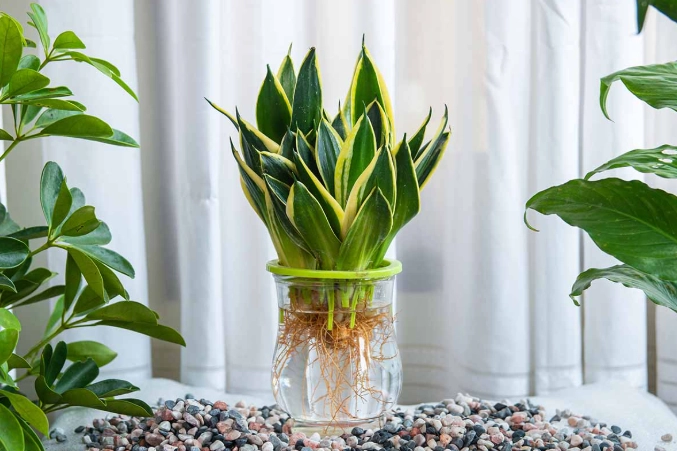
If you used water, it's time to pot up. Choose a small pot with drainage holes – too big a pot holds too much wet soil for a small root system. Gently place the rooted cutting in a pot with your well-draining soil. Water it once to settle the soil, then treat it like a mature snake plant, but be extra cautious about overwatering for the first few months as it adjusts.
If you started in soil, you can often just leave it in that pot until it's more established. Your care routine is simple:
- Light: Bright, indirect light is ideal. They tolerate low light but grow painfully slow. Direct hot sun can scorch the leaves.
- Water: This is where people kill snake plants. Err on the side of underwatering. Let the soil dry out completely between waterings. Stick your finger in the soil – if it's dry two inches down, it's time to water. In winter, you might only water once a month or less. Soggy soil is a death sentence.
- Patience: Snake plants are slow growers, and propagations are even slower. Don't expect a jungle overnight. It can take a year or more for a cutting to become a sizable, full plant. The wait is part of the charm.
When Things Go Wrong: Troubleshooting Your Cuttings
Not every attempt is a winner. Here are the common problems and how to fix (or prevent) them.
No Roots After Months: This is frustrating. Possible causes: it's planted upside down (check your mark!), the temperature is too cold (they like warmth to root), or it's just being slow. As long as it's not rotting, give it more time. Sometimes they just take their sweet time.
New Growth is All Green (on a variegated plant): As mentioned earlier, this is normal for leaf cuttings of variegated types. If you want the stripes, you need to propagate by division.
Beyond the Basics: Creative Ideas for Your Propagations
Once you get the hang of it, you'll have more baby snake plants than you know what to do with. Here are some ideas:
- The Friendship Garden: Pot up several cuttings in tiny, cute pots. They make fantastic, meaningful gifts. A plant that came from your plant is so much more personal than one from a store.
- The Living Centerpiece: Plant 3-5 rooted cuttings of varying heights in a long, shallow planter for a modern, architectural table centerpiece.
- The Snake Plant "Wall": Line up a series of identical pots, each with a single cutting, on a long windowsill or shelf. The uniformity is strikingly modern.
- Experiment with Varieties: Try propagating different types! The cylindrical Snake Plant (Sansevieria cylindrica) can be propagated from cuttings too, though the process is essentially the same. The dwarf 'Bird's Nest' varieties (Sansevieria hahnii) are best divided, but you can try leaf sections.
Some Honest Truths and Final Thoughts
Propagating snake plant cuttings is simple, but it's not always quick or 100% successful. I've had batches where every single one rooted, and batches where half turned to mush because I got lazy with the callusing. It happens. Don't get discouraged.
The biggest takeaway? Neglect is your friend. Snake plants thrive on benign neglect. After you do the initial work of cutting and planting, your main job is to mostly leave it alone. Don't fuss, don't overwater, don't move it around constantly looking for roots.
It's a practice in patience. In a world of instant gratification, watching a piece of a leaf slowly decide to become a whole new plant is a quiet, rewarding rebellion. You're not just growing a plant; you're learning its rhythm.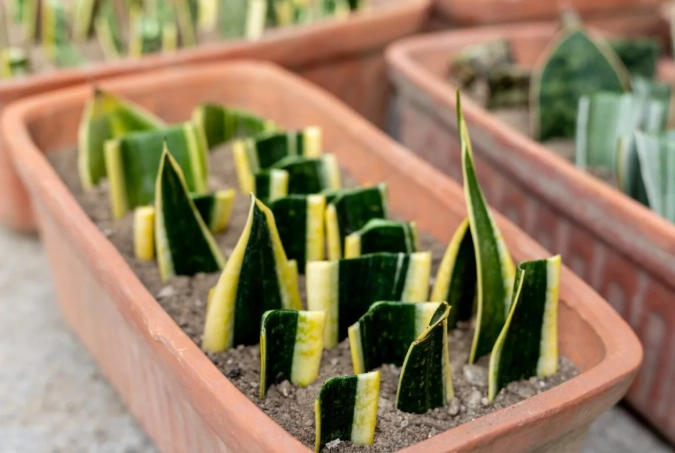
So grab a leaf, make a clean cut, and let it sit for a few days. Then give it a drink or a bit of dirt, and find a bright spot to forget about it. Check back in a month. You might just be surprised by what you find.
Comments