Let's talk about your front porch. It's the first thing you see coming home and the first impression you give guests. A couple of empty planters or a sad, half-dead shrub in a pot? It feels a bit... meh. But a vibrant, thoughtfully arranged set of front porch planters? That's a game-changer. It says you care, it welcomes people in, and it seriously boosts your home's curb appeal. I've been playing with porch containers for over a decade, and I'm here to tell you it's not as hard as it looks. Forget the generic advice. We're going deep on plant picks, container secrets, design tricks, and the maintenance stuff nobody tells you about.
What's Inside: Your Quick Guide
How to Choose the Right Plants for Your Front Porch Planter
This is where most people go wrong right off the bat. They buy the prettiest flowers at the nursery without considering their porch's microclimate. The single most important factor? Light.
Sun-Loving Stars for a Bright Porch
If your porch gets 6+ hours of direct sun, you've got options. Think bold and bright.
- Petunias & Supertunias: The classic workhorse. They spill beautifully and bloom non-stop if you deadhead them. Pro tip: the "Supertunia" series is more rain-tolerant and doesn't need deadheading. Worth the extra dollar.
- Geraniums (Pelargoniums): Tough, drought-tolerant once established, and come in a wild array of colors. Zonal geraniums are the upright ones; ivy geraniums are fantastic spillers for the edge of a large planter.
- Lantana: A heat-loving champion. Butterflies adore it. It can get leggy, so don't be afraid to give it a mid-summer haircut to encourage bushiness.
Shade-Tolerant Champions for Covered Entries
North-facing or deeply covered porch? No problem. Focus on foliage and subtle blooms.
- Ferns: Boston ferns, autumn ferns – they add instant texture and a lush, cool feel. They need consistent moisture, though.
- Coleus: This is your color secret weapon in the shade. The leaf patterns are insane – from deep burgundy to neon lime. Pinch off the flower spikes to keep the plant's energy in those gorgeous leaves.
- Begonias: Wax begonias are foolproof. Dragon Wing begonias are larger and make a bigger statement. They just need well-draining soil.
- Hostas: Yes, in pots! A single large blue hosta in a sleek ceramic pot is a minimalist masterpiece for a shady corner.
The "Thriller, Filler, Spiller" Formula:
This old garden center advice works. For a dynamic pot, pick one tall, eye-catching plant (Thriller: like a grass, dracaena, or tall salvia), several mid-height bushy plants to fill the middle (Filler: like coleus, geraniums, or begonias), and at least one trailing plant to soften the edges (Spiller: like sweet potato vine, ivy, or trailing lobelia).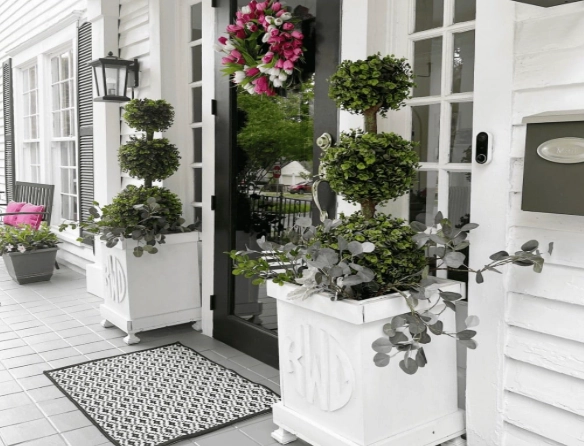
Selecting the Perfect Container: More Than Just Looks
You wouldn't wear shoes that are three sizes too small, right? Don't do that to your plants. Container choice is critical.
Size and Scale: Getting the Proportions Right
A tiny pot on a large porch gets lost. A massive pot on a small stoop feels oppressive. For a standard single front door, a pair of planters in the 16-22 inch diameter range usually hits the sweet spot. For a larger wraparound porch, think bigger or use groupings.
Root room matters. A petunia might survive in a shallow pot, but a shrub or small tree will be stunted and need constant watering. Match the pot depth to the plant's mature root ball.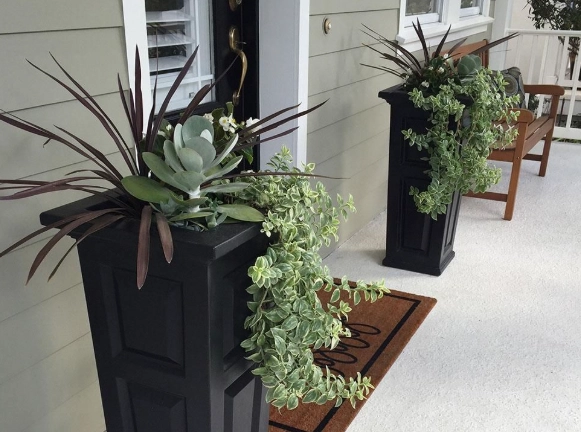
Material World: Pros, Cons, and Hidden Costs
| Material | Pros | Cons | Best For |
|---|---|---|---|
| Terracotta / Clay | Classic look, porous (roots breathe), affordable | Heavy, breaks easily, dries out very fast in sun | Shady spots, Mediterranean herbs, a rustic look |
| Glazed Ceramic | Beautiful colors/patterns, retains moisture better | Often very heavy, expensive, can crack in freeze-thaw cycles | Focal point planters in mild climates |
| Resin / Fiberglass | Lightweight, mimics other materials, durable, wide price range | Cheap versions can fade or become brittle in UV light | Almost everything; the go-to for most situations |
| Metal | Modern industrial look, very durable | Can get scorching hot in sun, cooking roots; may rust | Shady porches, or use as a cache pot |
My personal workhorse? High-quality resin. It looks like stone or wood, weighs a fraction, and survives my zone 6 winters without a fuss. I learned the hard way after a beautiful, expensive ceramic pot split after one winter.
Non-negotiable feature: Drainage holes. If a pot doesn't have them, drill them or use it only as an outer decorative sleeve.
Front Porch Planter Design Ideas and Layouts
Now for the fun part: putting it all together. Think about your porch architecture.
The Classic Symmetrical Pair: Two identical planters flanking the front door. It's timeless. Keep the plants identical or use a mirror-image version of the same color scheme (e.g., white geraniums on the left, red on the right).
The Grouped Collection: For a longer porch or a corner, cluster three planters of varying heights. Use the odd number rule. Place the tallest at the back, medium in the middle, and a short, sprawling one in front.
Don't Forget Vertical Space: Hanging baskets above or beside the door, or a tall, narrow planter with a climbing vine (like clematis or mandevilla) trained on a small trellis.
Color scheme? You can't go wrong with a monochromatic look (all whites and greens feels elegant). For impact, try complementary colors like purple and yellow. Tie the colors to your house's trim or front door for a pulled-together look.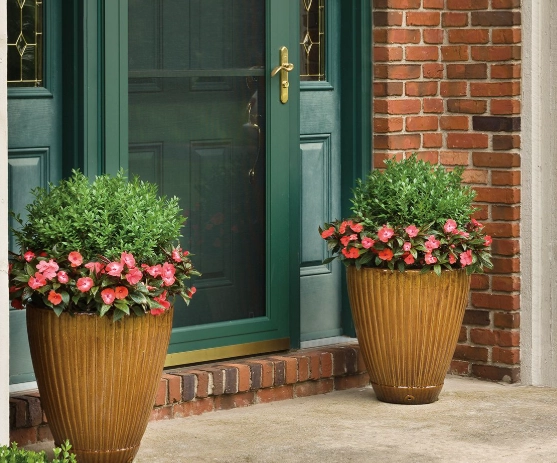
The Essential Care Guide: Keeping Your Porch Planters Thriving
Containers are high-maintenance real estate. They're not a "plant and forget" deal.
Watering: This is the big one. In summer, you'll likely water daily, sometimes twice. Water deeply until it runs out the bottom. A shallow sprinkle only wets the top inch and encourages weak roots. Early morning is best. Consider a self-watering planter or a simple drip irrigation kit if you travel often – a total game-changer I installed two years ago.
Soil: Don't use garden soil. It compacts. Use a high-quality potting mix designed for containers. It's fluffy, drains well, and often has a starter charge of fertilizer. For large planters, you can use "potting soil" to fill the bottom half to save money, but keep the premium mix in the root zone.
Feeding: That initial fertilizer in the soil washes out in about 6 weeks. Then you need to feed. I use a balanced liquid fertilizer (like a 10-10-10) every two weeks, or a slow-release granular fertilizer mixed into the soil at planting time. The granular stuff is easier but can run out mid-season, so I often do both.
Deadheading & Pruning: Snip off spent flowers. It tells the plant to make more, not go to seed. For leggy plants like petunias, don't be shy – cut them back by a third in mid-July. They'll come back bushier and bloom again in a few weeks.
Common Front Porch Planter Mistakes (and How to Avoid Them)
Let's wrap up with the pitfalls I see all the time.
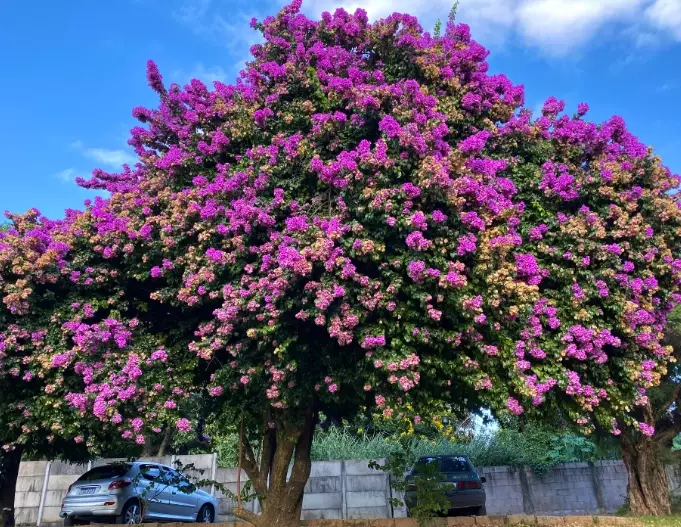
1. Ignoring the Light Map. That sun-loving bougainvillea will be a sad, flowering stick in deep shade. Observe your porch at different times of day before you buy. Resources like the USDA Plant Hardiness Zone Map are great for climate, but light is hyper-local.
2. Skimping on Soil and Fertilizer. You invested in plants and a pot. Don't starve them with bad dirt. It's like building a house on sand.
3. Forgetting About Scale. That tiny 8-inch pot looks cute at the store but will be invisible from the street. Go bigger than you think.
4. The "One of Everything" Approach. Buying a single cell of ten different plants leads to a chaotic, spotty look. Buy multiples of fewer varieties (3-5 of one filler plant) for a cohesive, lush display.
5. Not Having a Winter Plan. Come fall, you're left with dead annuals in expensive pots. Either plant hardy evergreens and ornamental grasses for winter interest, or empty, clean, and store your pots before the first hard freeze.
Your Front Porch Planter Questions, Answered



Comments