Let's be honest, the main reason pothos (Epipremnum aureum) is a superstar houseplant isn't just because it's hard to kill. It's because it's ridiculously easy to turn one plant into ten. Propagation is the magic trick every plant parent should know, and with pothos, it's almost impossible to fail. I've been doing this for years, turning a single golden pothos into gifts for friends and filling my own home with cascading vines. I've also seen the tiny mistakes that can slow things down. This guide cuts through the fluff and gives you the straight talk on how to propagate pothos successfully, whether you're team water or team soil.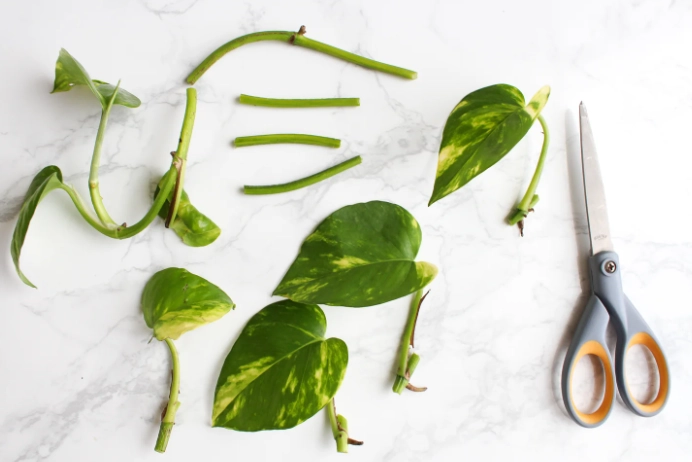
What's Inside This Guide?
- What You'll Need to Propagate Pothos
- How to Propagate Pothos in Water: A Step-by-Step Guide
- How to Propagate Pothos Directly in Soil
- Water Propagation vs. Soil Propagation: Which is Better?
- Aftercare: What to Do After Your Pothos Has Roots
- Common Mistakes & Pro Tips from a Decade of Trial and Error
- Your Pothos Propagation Questions, Answered
What You'll Need to Propagate Pothos
You don't need a fancy toolkit. Here's the bare minimum and the "nice-to-haves."
The Essentials:
- A healthy mother plant: Look for vines with vigorous growth, no yellow leaves, and no signs of pests. The better the parent, the better the kids.
- Sharp, clean scissors or pruning shears: Dull tools crush the stem. I wipe mine with rubbing alcohol before and after to prevent spreading any unseen issues.
- A vessel for water (if water propagating): A clear glass or jar is best. Why? You get to watch the roots grow. It's the best part.
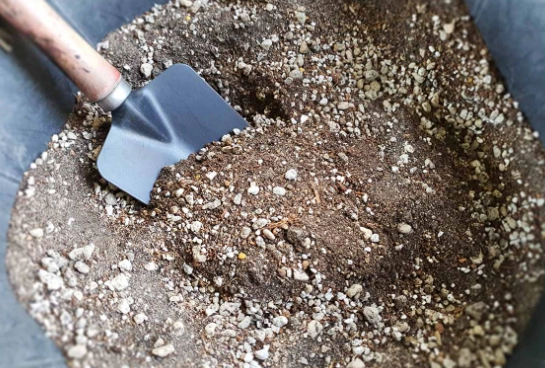
- Potting mix and a small pot (if soil propagating): A well-draining mix is key. I use a standard indoor potting mix with a handful of perlite mixed in.
How to Propagate Pothos in Water: A Step-by-Step Guide
This is the most popular method because it's visual and satisfying. It's also how most people get hooked on plant propagation.
Step 1: Identify and Cut the Right Stem
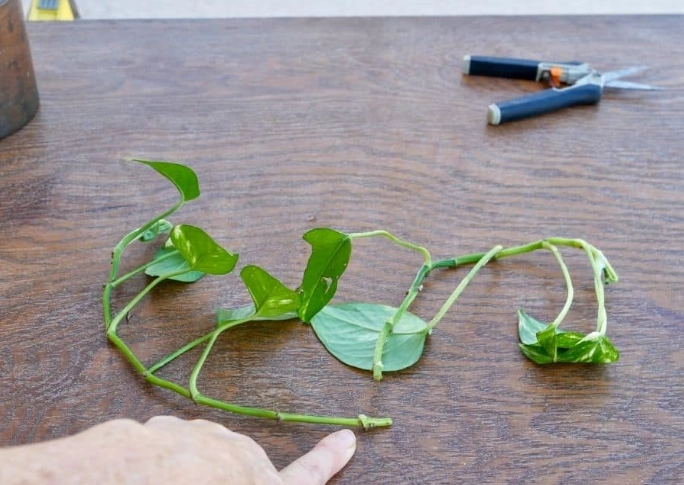
This is where the only real skill comes in. Don't just chop anywhere. Look for a section of vine with at least 3-4 leaves. Now, look closely at the stem. You'll see brownish, nub-like bumps opposite each leaf. These are nodes.
The golden rule: Every cutting MUST include at least one node. The roots will sprout from the node, not from the stem itself. I've seen countless cuttings fail because someone just cut a leaf with a bit of stem and no node.
Make your cut about a half-inch below a node. You can make a cutting with just one node and one leaf, but I prefer sections with 2-3 nodes for a fuller start.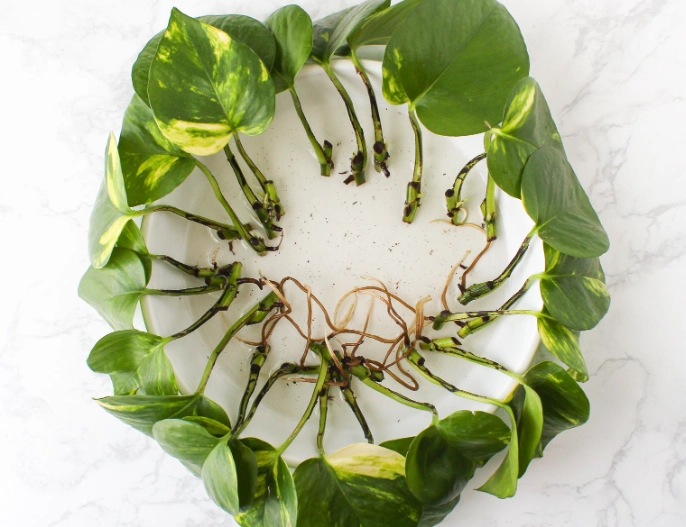
Step 2: Prepare the Cutting
Remove any leaves that would be submerged under water. Rotting leaves will foul the water. You can leave the aerial roots (those wiry bits coming from the node) alone. Some people say to trim them, but I don't bother.
Step 3: Place in Water and Wait
Put your cuttings in your clear vessel. Fill with enough water to cover the nodes, but not so much that the remaining leaves are wet. Use room-temperature water. If your tap water is very hard or chlorinated, letting it sit out for 24 hours first is a good idea.
Place it in bright, indirect light. A north or east-facing windowsill is perfect. Direct sun can cook the cuttings.
The Timeline: You'll see tiny white nubs from the nodes in 1-2 weeks. Proper roots (an inch or two long) take 3-6 weeks, depending on light and temperature. Change the water if it looks cloudy, or at least once a week to keep oxygen levels up.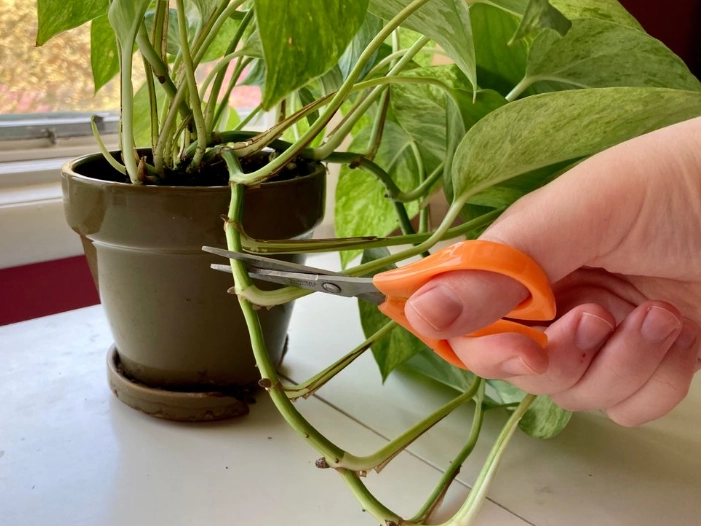
How to Propagate Pothos Directly in Soil
This method skips the water middleman and can result in a plant that's adapted to soil from day one. It feels a bit like a leap of faith since you can't see what's happening.
- Take your cuttings exactly as described above—node is mandatory.
- Optionally, dip the cut end in water first, then into rooting hormone powder. This helps seal the cut and may encourage faster rooting in the drier soil environment.
- Have your small pot (3-4 inches is plenty) filled with moist, well-draining potting mix ready. Poke a hole with your finger or a pencil.
- Insert the cutting, ensuring the node (and any others) is buried under the soil. Gently firm the soil around it.
- Water it lightly to settle the soil. Then, place the pot in a bright spot with indirect light.
- Here's the critical part: Keep the soil slightly moist, but never soggy. Think damp sponge, not wet mud. Overwatering is the #1 killer of soil propagations. A plastic bag loosely tented over the pot can create a humid greenhouse effect, but it's not strictly necessary for pothos.
How do you know it worked? In 3-5 weeks, give the cutting a very gentle tug. If you feel resistance, roots have formed. New leaf growth is the ultimate confirmation.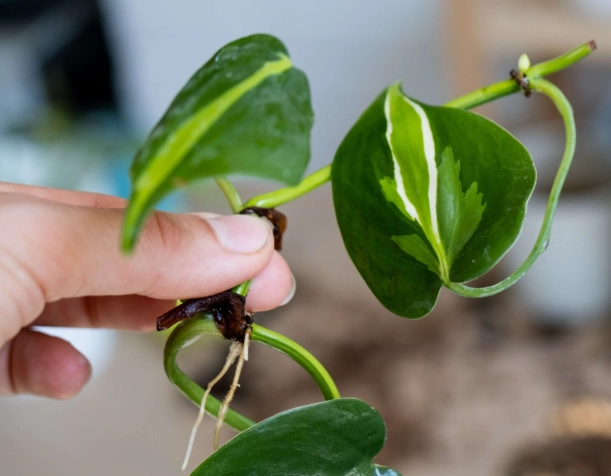
Water Propagation vs. Soil Propagation: Which is Better?
It's not about better, it's about different. Here’s a quick breakdown of what each method offers.
| Feature | Water Propagation | Soil Propagation |
|---|---|---|
| Ease for Beginners | Excellent. Visual feedback is motivating. | Moderate. Requires more careful watering. |
| Root Development Speed | Usually faster initial root growth. | Slower to start, but roots are soil-adapted. |
| Transition Shock | High. Water roots must convert to soil roots, which can stress the plant. | None. The plant is already home. |
| Success Rate (with good technique) | Very High | High |
| My Personal Preference | For fun, gifts, and watching the process. | For efficiency when I want to bulk up a pot quickly. |
I use both. Water for the sheer joy of it, and soil when I'm propagating a bunch of cuttings to plant back into the mother pot for a bushier look.
Aftercare: What to Do After Your Pothos Has Roots
For water propagations, don't leave them in water forever. Once roots are 2-3 inches long, it's time to pot up.
Choose a pot with drainage holes. Use a well-draining potting mix. Plant the rooted cutting, water it thoroughly, and then... treat it a little tenderly for the first 2-3 weeks. Keep the soil slightly more moist than you would for an established plant as those water roots adjust. Return to normal pothos care (letting the top inch of soil dry out) after it shows signs of new growth.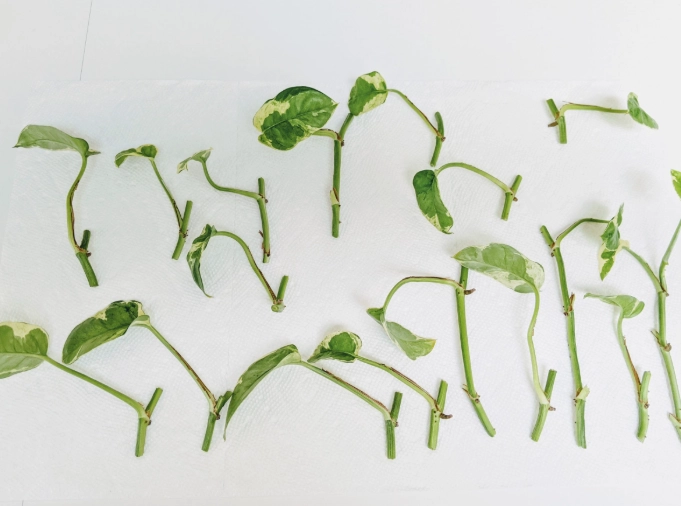
For soil propagations, just continue caring for them as normal. Once they're growing well, you can treat them like any other pothos.
Common Mistakes & Pro Tips from a Decade of Trial and Error
Here's where that "10-year experience" comes in. These are the subtle things that make a difference.
- Mistake 1: Not enough light. Cuttings need energy to make roots. Bright, indirect light is non-negotiable. A dim corner will lead to slow or failed rooting.
- Mistake 2: Overhandling water props. Constantly pulling them out to check for roots disturbs the delicate root initials. Leave them be.
- Mistake 3: Using a huge pot for a tiny rooted cutting. Excess soil stays wet too long and can rot the new roots. Size up gradually.
- My Non-Consensus Tip: When transferring from water to soil, don't pack the soil tightly. Create a loose, airy environment for those fragile water roots to ease into. I gently sift the soil around them and tap the pot to settle, rather than pressing down.
- Another One: The best time to propagate? When your plant is actively growing in spring or summer. You can do it in fall/winter, but patience is key—it will take longer.
Your Pothos Propagation Questions, Answered
My pothos cutting in water has slimy roots. What's wrong?
That's bacterial growth, usually from not changing the water often enough or from a decomposing leaf fragment. Immediately rinse the roots under lukewarm water, gently rubbing off the slime. Clean the jar thoroughly, add fresh water, and put the cutting back. Change the water every 3-4 days until it stays clear.
Can I propagate a pothos leaf without a node?
No. A leaf alone might stay alive in water for months (it's called a "zombie leaf"), but it will never grow roots or a new vine. The node contains the meristematic cells needed to create new growth. It's the plant's growth center.
How many cuttings should I put in one pot?
For a full, lush look from the start, I put 4-6 rooted cuttings in a 6-inch pot. Space them evenly around the pot's edge with stems angled slightly outward. They'll fill in the center as they grow.
Why are the leaves on my new propagation turning yellow?
On a water cutting, it's often a sign of insufficient light or nutrients (after a very long time in water). On a soil cutting, it's almost always overwatering. Let the soil dry out more between waterings. The mother leaf sometimes dies back as the plant directs energy to root growth, which is normal.
Is it better to propagate in a clear or opaque container for water?
Clear. While roots don't need light, algae does. Algae grows in clear containers, but it's mostly a cosmetic issue. The real benefit of clear is monitoring root health and growth without disturbance. If algae bothers you, just clean the jar during a water change.
Where can I find more scientifically-backed information on plant propagation principles?
University agricultural extension services are fantastic, free resources. For a deep dive into the science, the University of Florida IFAS Extension has detailed publications on plant propagation techniques that apply broadly.
Comments