You've seen them everywhere. That thick-stemmed, glossy-leaved succulent sitting in the corner of a dentist's office, surviving on neglect. The jade plant (Crassula ovata) has a reputation for being indestructible. It's the plant people gift when they think you can't keep anything alive. But here's the thing most articles won't tell you: that reputation is a trap. It leads to the slow, silent death of more jade plants than any pest ever could. True success with a jade plant isn't about ignoring it; it's about understanding its subtle language. We're not aiming for survival here. We're aiming for a robust, sculptural plant that can become a decades-old family heirloom. Let's cut through the myths.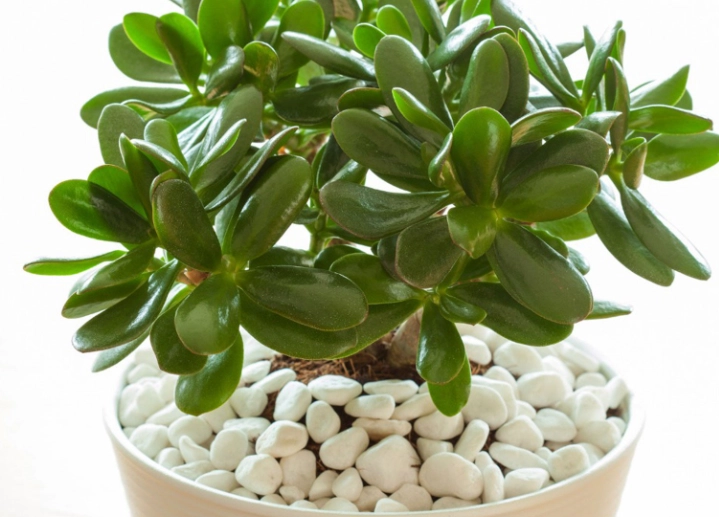
What's Inside: Your Quick Navigation
- Getting the Light Right: It's Not Just About Survival
- The Watering Truth: Why "When in Doubt, Don't" is Bad Advice
- Soil & Potting: The Foundation Everyone Gets Wrong
- To Feed or Not to Feed? A Simple Fertilizer Strategy
- Propagation Made Foolproof: Stem vs. Leaf Cuttings
- Problem-Solving Clinic: Diagnosing Your Jade's SOS Signals
- Answers to the Questions You're Actually Searching For
Getting the Light Right: It's Not Just About Survival
Jade plants need bright light. You know that. But the nuance is in the details. A south-facing window is ideal in the Northern Hemisphere, providing several hours of direct sun. An east or west window works too, but growth will be slower, and the plant might stretch a bit.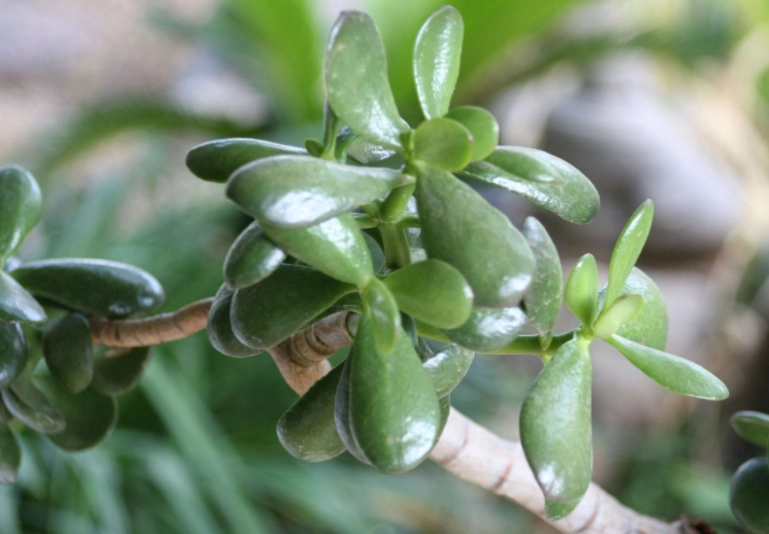
Here's the expert nuance everyone misses: jade plants are incredibly adaptive to lower light conditions. They won't die in a north-facing room or a few feet back from a window. They'll just... exist. The stems will elongate, searching for light (this is called etiolation), the space between leaves will increase, and the overall growth will be weak and leggy. The plant loses its compact, tree-like form. It becomes a testament to mere survival, not vitality.
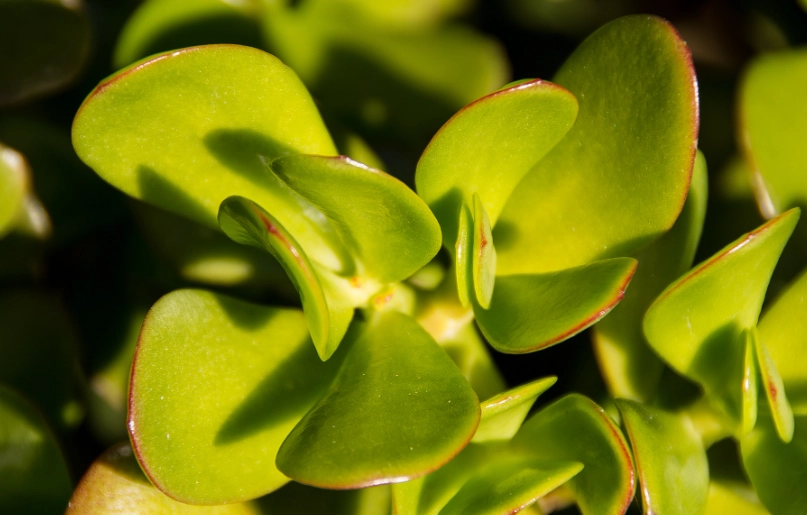
If your plant is in lower light, you must adjust everything else. Water much less frequently, as the soil will take ages to dry out. Hold off on fertilizer almost entirely. And don't expect rapid growth or those beautiful red leaf tips (a sign of perfect sun exposure).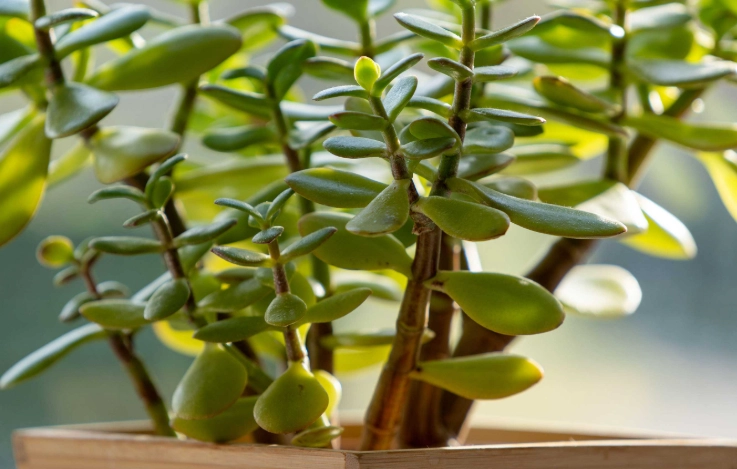
Pro Tip: Rotate your jade plant a quarter turn every time you water. This prevents it from leaning dramatically toward the light source and promotes even, balanced growth. It's a small habit that makes a huge difference in aesthetics.
The Watering Truth: Why "When in Doubt, Don't" is Bad Advice
Overwatering is the number one killer. But the advice to "water only when the soil is bone dry" can be just as harmful if applied without thought. A jade plant's thick leaves store water, allowing it to withstand drought. However, letting the roots sit in dust-dry soil for weeks stresses the plant and can cause fine root hairs to die.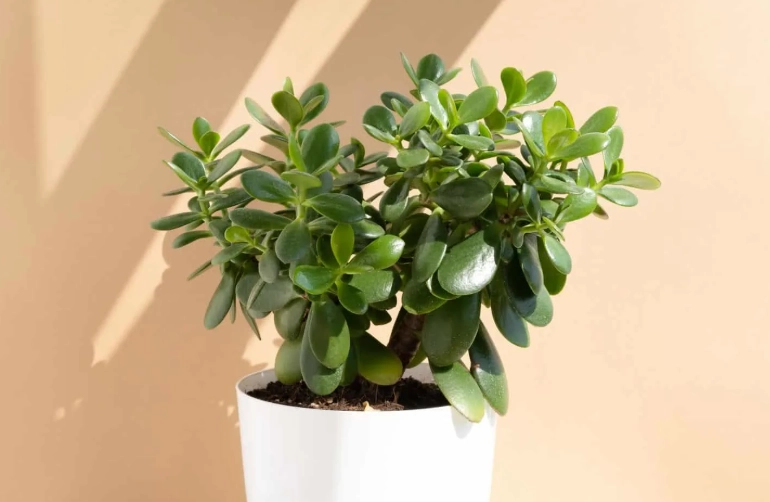
The goal is a cycle of thorough watering followed by complete drying.
How to Water Correctly
First, ditch the schedule. Watering every Tuesday because it's Tuesday is a recipe for disaster.
The Finger Test: Stick your finger into the soil up to the second knuckle. If it feels completely dry, it's time. For larger pots, a wooden chopstick or a moisture meter is more reliable.
The Soak Method: When it's time, water thoroughly. Take the plant to the sink and pour water evenly over the soil until it runs freely out of the drainage holes. This ensures the entire root ball gets hydrated. Let it drain completely before putting it back in its decorative pot or saucer. Never let it sit in standing water.
In summer, with more light and heat, this cycle might be every 7-10 days. In winter, it could stretch to 3-4 weeks or longer. The plant will tell you. Slightly soft, wrinkling leaves are a sign it's ready for a drink.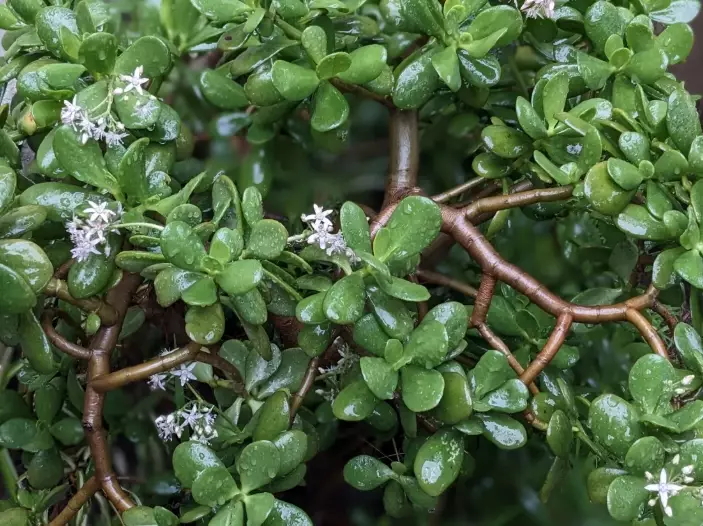
Soil & Potting: The Foundation Everyone Gets Wrong
This is where most store-bought plants fail from the start. They're often planted in dense, moisture-retentive potting soil that stays wet for far too long.
Jade plants need fast-draining, gritty soil. Think of the rocky slopes they naturally grow on. Water should flow through quickly, leaving moisture but not sogginess.
You have two good options:
- Buy a pre-mixed cactus & succulent soil. Even then, I recommend amending it by mixing in 25-50% additional perlite or pumice for extra drainage.
- Make your own mix. A simple, bulletproof recipe is: 2 parts regular potting soil, 1 part coarse sand or poultry grit, 1 part perlite or pumice.
The pot matters just as much. Always use a pot with a drainage hole. Terracotta pots are excellent for jade plants because they are porous, allowing the soil to dry out from the sides as well as the top. Plastic or ceramic pots retain moisture longer, so you must water less frequently.
Repot only when the plant is root-bound (roots circling the bottom or coming out the hole), typically every 2-3 years. Do it in the spring or summer, and don't jump to a pot more than 2 inches larger in diameter.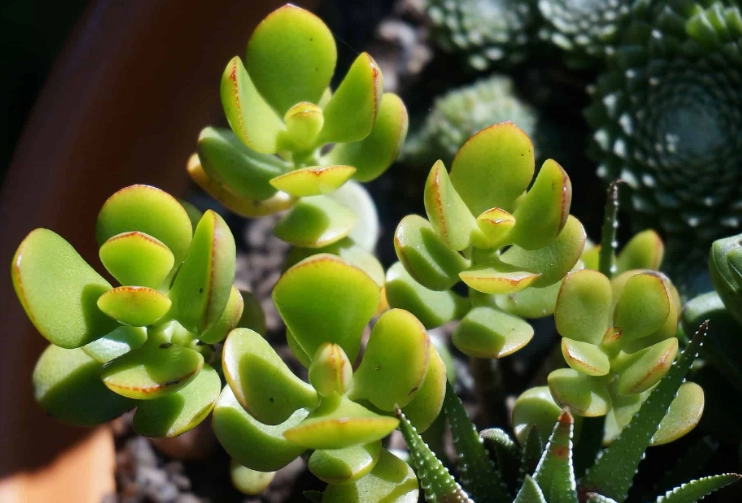
To Feed or Not to Feed? A Simple Fertilizer Strategy
Jade plants are not heavy feeders. In fact, over-fertilizing can cause weak, sappy growth and salt buildup in the soil.
Here's my simple, effective rule: Feed only during the active growing season (spring and summer), and do it sparingly.
Use a balanced, water-soluble fertilizer (look for an NPK ratio like 10-10-10 or 20-20-20) but dilute it to half the strength recommended on the label. Apply this weak solution once a month when you water. Stop fertilizing completely in fall and winter. The plant is resting, and feeding it then can do more harm than good.
If you repot annually with fresh soil, you can skip fertilizer altogether that year, as the new soil contains nutrients.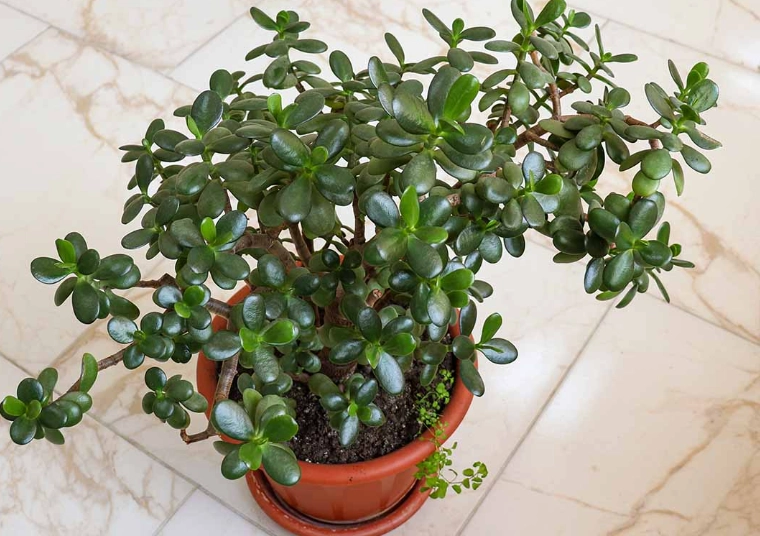
Propagation Made Foolproof: Stem vs. Leaf Cuttings
This is the fun part. Jade plants are famously easy to propagate, but a small misstep leads to rot. The secret? Patience during the callusing phase.
Stem Cuttings (The Fast Track)
This is the best method for creating a new, sizable plant quickly.
- Using clean, sharp scissors or pruners, cut a healthy stem that's at least 3-4 inches long.
- Remove the leaves from the bottom inch or two of the stem.
- This is the critical, often-skipped step: Let the cut end dry and callus over. Place the cutting in a dry, shaded spot for 3-5 days until the wound forms a hard, dry seal. This prevents rot when planted.
- Once callused, stick the bare stem into a small pot of your pre-moistened succulent mix. Don't water it again until you see signs of new growth (usually in 2-4 weeks).
Leaf Cuttings (The Slow Magic)
You can grow a whole new plant from a single leaf. It's slower but fascinating.
- Gently twist a healthy, plump leaf from the main stem. Try to get the whole base.
- Lay the leaf on dry soil in a bright, indirect light spot. Do not bury it.
- Ignore it. Seriously. In a few weeks, you'll see tiny pink roots emerge from the base, followed by a miniature plantlet. Mist the soil very lightly only when it's completely dry. Once the mother leaf shrivels and the new plant is established, you can treat it like a normal seedling.
Problem-Solving Clinic: Diagnosing Your Jade's SOS Signals
Your plant is talking. Here’s how to translate its most common complaints.
| Symptom | Likely Cause | The Solution |
|---|---|---|
| Leaves are soft, mushy, and falling off | Overwatering / Root Rot | Stop watering immediately. Check roots. If brown/mushy, cut away rot, let plant dry out, repot in dry, fresh mix. May need to take stem cuttings to save it. |
| Leaves are wrinkled, thin, and flat | Underwatering | Give the plant a thorough soak. Leaves should plump up in 1-2 days. |
| Leaves have brown, crispy spots | Sunburn | Move to a spot with bright indirect light. Acclimate slowly to direct sun if you want it there. |
| Leggy, stretched growth with large gaps | Insufficient Light | Move to a brighter location. You can prune back leggy stems to encourage bushier growth. |
| White, cottony masses on stems/leaves | Mealybugs | Isolate plant. Dab bugs with a cotton swab dipped in rubbing alcohol. Repeat weekly. Check neighboring plants. |
The most common issue I see is the slow decline from chronic overwatering in poor soil. The plant doesn't collapse overnight. It drops a leaf here and there, the stems get slightly soft, and the vibrant green fades. By the time the owner notices, the roots are often compromised. Prevention through proper soil and watering is infinitely easier than the cure.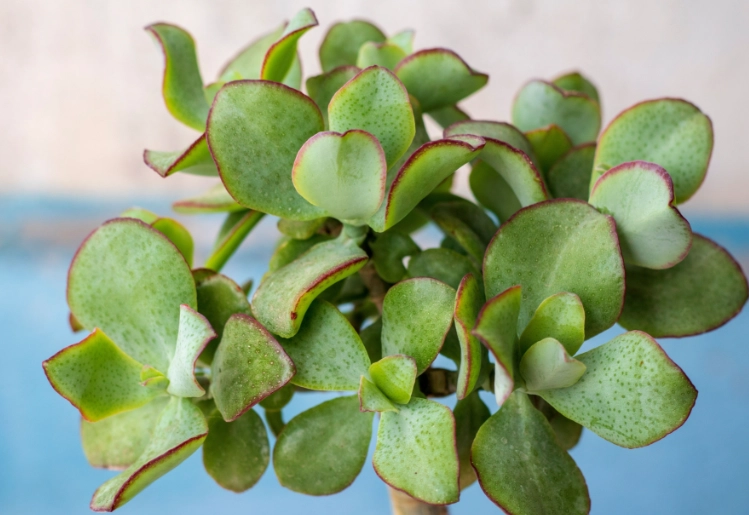
Answers to the Questions You're Actually Searching For

Comments