You've seen it on Instagram, spotted it in that trendy cafe, and now it's sitting on your wishlist. The Philodendron Birkin. Those crisp white pinstripes on deep green leaves look almost too good to be true. Is it hard to keep happy? Will the stripes fade? I bought my first one five years ago, convinced it would die within months. It didn't. But I made every mistake in the book first.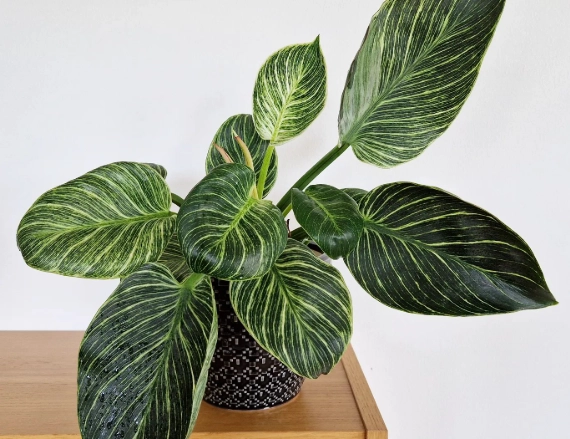
Let's cut through the hype. This isn't a mythical unicorn plant. It's a stunning, relatively stable houseplant with a few specific needs. Get those right, and it's a gratifyingly easy-going companion. Get them wrong, and you'll be staring at brown edges and confused green leaves.
What's Inside This Guide
What Exactly Is a Philodendron Birkin?
First, a bit of plant gossip. The Birkin is a spontaneous mutation, a genetic sport. It didn't come from a wild jungle; it appeared in a nursery, likely from a Philodendron 'Rojo Congo'. That's why it's a cultivar, not a species. Think of it as a happy accident we all get to enjoy.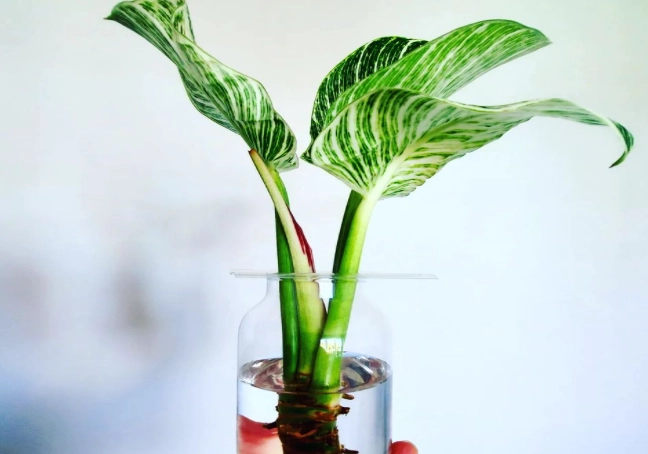
The most captivating feature is its variegation. Unlike the chaotic splashes of a Monstera Albo, the Birkin's stripes are orderly, linear, and creamy-white. New leaves often emerge a pale, almost lime green, with the white stripes developing as they harden off. Mature plants can even throw out a half-moon or nearly all-white leaf, which is thrilling but also a sign to check your light levels.
Key Takeaway: Its mutation means stability can vary. Some Birkins are champion stripe-producers. Others are a bit shy. Buying a plant already showing good variegation gives you a head start.
Finding Your Perfect Birkin: A Buyer's Checklist
Don't just grab the first one you see. A healthy start is everything. Here’s what to scrutinize before you pay.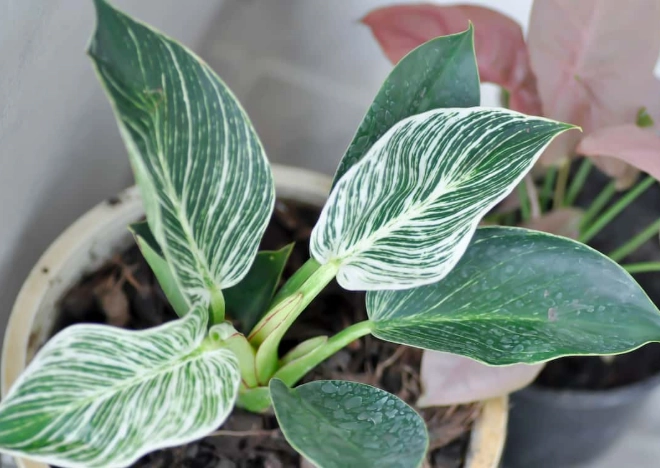
Leaf Inspection: Look for firm, taut leaves. Avoid plants with more than one or two leaves showing brown, crispy edges—this often indicates chronic underwatering or low humidity stress in the greenhouse. Yellowing lower leaves can be normal senescence, but multiple yellow leaves suggest overwatering.
Stripe Potential: Examine the newest, unfurling leaf. Even if it's pale, you should see faint white lines or a stark color contrast. If the newest growth is just plain green, this plant might be reverting or be a poor variegator.
Pest Patrol: Turn leaves over. Check the undersides and where the leaf meets the stem for tiny webbing (spider mites) or little white cottony blobs (mealybugs). A quick isolation period at home is always wise, regardless.
Root Glimpse: If possible, gently tap the plant out of its pot. You want to see healthy, creamy-white or light tan roots, not mushy, dark brown ones. A dense root ball is good; a few roots circling the bottom are normal for a nursery pot.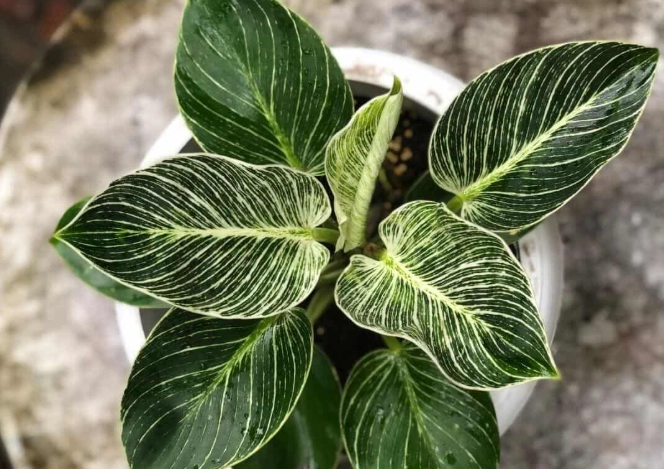
Light: The #1 Factor for Those Stripes
Everyone says "bright, indirect light." That's vague. Let's get specific.
Your Birkin needs enough light to fuel the production of that white variegation, which contains no chlorophyll. The green parts have to work overtime. A north-facing window is rarely enough. An east or west-facing window is the sweet spot for most homes. A few feet back from a south window (with a sheer curtain) works too.
Here's the expert mistake I see: people panic when they get a pale or white leaf and move the plant to lower light. That's backwards. A white leaf means the plant is pushing its variegation hard, but it needs more light (carefully, to avoid burn) to support that energy-intensive growth. If subsequent leaves come out green, the plant is essentially saying, "I need more chlorophyll to survive in this light." That's reversion.
Consider a light meter app on your phone. Aim for a minimum of 200 foot-candles (FC) for survival, but 400-800 FC is where you'll see robust growth and maintained variegation.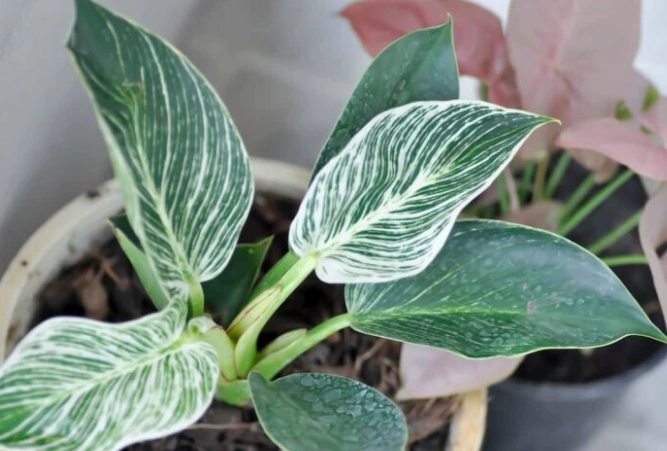
Watering & Soil: Avoiding the Soggy Death
Overwatering is the fastest killer. Birkins have thick roots that resent sitting in moisture. Your goal is to mimic a tropical downpour followed by a period of drainage and air.
The Finger Test is Your Best Friend
Stick your finger into the soil up to the second knuckle. If it feels dry, water thoroughly. If it feels damp, wait. In a typical indoor setting, this might be every 7-10 days in summer and every 14-20 days in winter. Your schedule depends on your light, pot, and humidity.
Soil Mix: Non-Negotiable Drainage
Ditch the dense, peaty soil it came in at the first repotting. Aroid mixes are ideal. You can make a simple one:
- 40% high-quality potting mix
- 30% orchid bark (for chunkiness and air)
- 20% perlite or pumice (for drainage)
- 10% horticultural charcoal (optional, but helps keep soil fresh)
This mix lets water flow through quickly while retaining just enough moisture.
Troubleshooting: Brown Leaves, Reversion & More
Let's decode what your plant is telling you.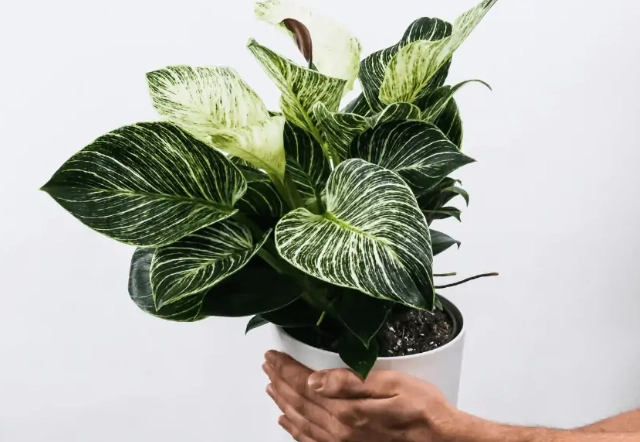
| Symptom | Likely Cause | Quick Fix |
|---|---|---|
| Brown, crispy leaf edges | Low humidity, inconsistent watering (letting it get too dry), or salt/mineral buildup from tap water. | Increase humidity with a pebble tray. Water more consistently. Use filtered or rainwater if your tap is hard. |
| Yellowing leaves, especially lower ones | Usually overwatering and soggy soil. Can also be natural aging if it's just one old leaf at a time. | Check soil moisture and drainage. Let soil dry out more between waterings. Ensure pot has drainage holes. |
| Leaves losing stripes, turning all green | Reversion. The plant isn't getting enough light to sustain the variegation. | Gradually move to a brighter location. You can prune back fully reverted green stems to encourage variegated growth. |
| Leggy growth, small leaves | Insufficient light. The plant is stretching to find a light source. | Provide brighter indirect light. Rotate the plant regularly for even growth. |
| Drooping leaves | Could be thirsty (soil is dry) or waterlogged (soil is wet). Check the soil first! | If dry, water thoroughly. If wet, let it dry out completely and check for root rot. |
On reversion: It's not a death sentence. The plant is just adapting. Often, increasing light will cause new growth to come in striped again. If you get a fully green stem, you can cut it off to redirect energy. Some people love the mix of striped and green; it's a personal choice.



Comments