Your Guzmania Care Companion
- What Even Is a Guzmania Bromeliad? (It's Not What You Think)
- The Non-Negotiable Guzmania Care Routine
- The Inevitable Question: What Happens After the Bloom?
- Choosing the Right Potting Mix (It's Not Potting Soil)
- Troubleshooting Your Guzmania Bromeliad
- Popular Guzmania Varieties to Fall In Love With
- Fertilizing: Less is More
- Bringing It All Together: A Guzmania Bromeliad Success Timeline
Let's be honest. You brought home that stunning Guzmania bromeliad with its fiery red or sunny yellow flower spike (they call it an inflorescence, but let's just say flower) because it stopped you dead in your tracks at the garden center. It looked like a permanent party on a plant. Now, a few months in, the colors are fading, the leaves look less perky, and you're worried you've killed another one. Sound familiar?
I've been there. I killed my first Guzmania by treating it like a regular houseplant. Poured water right into the soil, watched it sit in a dark corner, and wondered why it gave up on me. It wasn't the plant's fault. Guzmanias, like most bromeliads, play by a completely different set of rules. Once you get those rules, they're actually some of the most forgiving and long-lasting tropicals you can have indoors.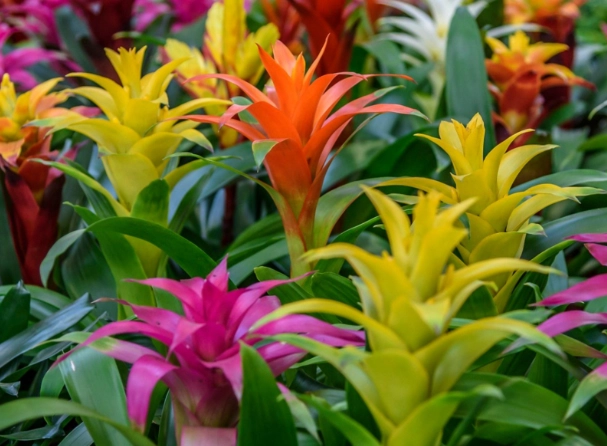
What Even Is a Guzmania Bromeliad? (It's Not What You Think)
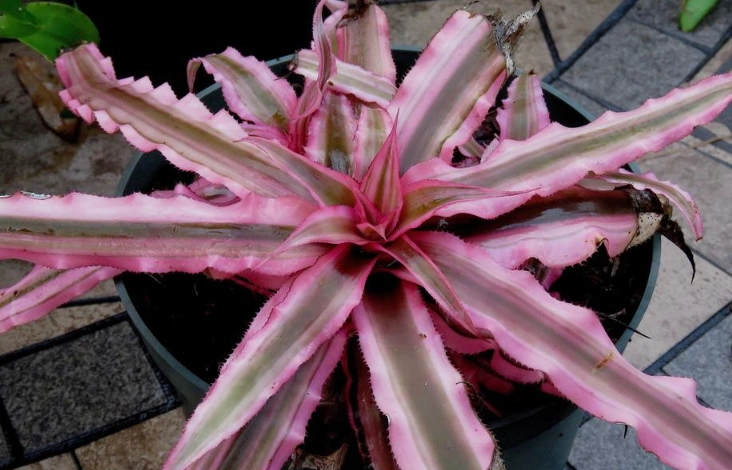
First things first. That gorgeous colorful part? It's not a flower in the traditional sense. Those are modified leaves called bracts. The actual flowers are tiny, often short-lived, and nestled within that colorful display. The bracts are the real show-stoppers, and they can last for an astonishing 3 to 6 months, sometimes even longer. The plant itself is a rosette of strappy, often glossy green leaves that form a central cup or vase. This cup is the secret to its survival strategy in the wild, and it's the key to caring for it at home.
They're epiphytes in their natural habitat, which means they grow on other plants (like tree branches) in the rainforest canopy, not in the ground. They're not parasites; they just use the tree for support. They get their water and nutrients from rain and debris that collects in their central cup. This is the single most important concept for keeping your guzmania bromeliad happy. Forget the soil for a minute. Think about the cup.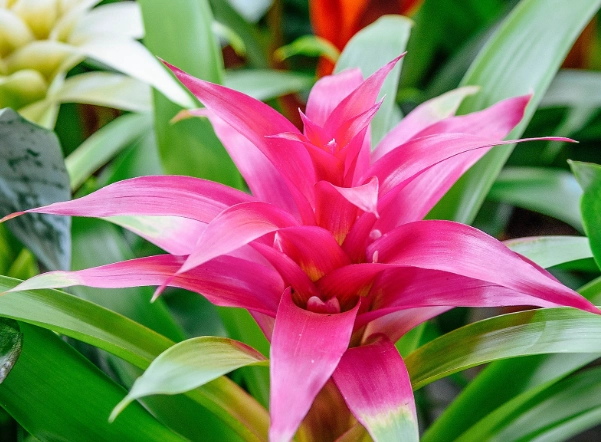
The Non-Negotiable Guzmania Care Routine
Here’s where we separate the thriving Guzmanias from the struggling ones. You can't just wing this.
Watering: The Cup is King
This is the make-or-break move. You must water the central cup (the vase). Keep it filled with water, about one-quarter to one-half full. Use distilled, rainwater, or filtered water if your tap water is hard. Minerals from tap water can leave crusty deposits on the leaves and potentially damage the plant over time.
What about the soil? The potting medium should be kept lightly moist, but never soggy. Think "damp sponge," not "wet mud." Overwatering the soil is the fastest way to rot those anchorage roots. I water the soil only when the top inch feels dry to the touch. In winter, that might be once every 3-4 weeks. In summer, maybe every 10-14 days. It depends entirely on your home's humidity and temperature.
Light: Bright But Gentle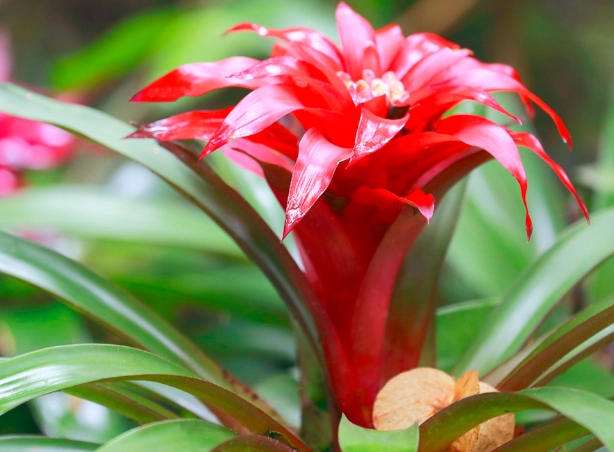
They don't want to bake in a south-facing window. The leaves scorch surprisingly easily, leaving ugly brown patches. But a dark room will make them leggy and dull, and they'll refuse to produce pups later on. The sweet spot is bright, indirect light. An east-facing window is perfect. A west-facing window with a sheer curtain works well. A few feet back from a south-facing window is also good.
Humidity & Temperature: Think Tropical Understory
Average home humidity (around 40-50%) is usually okay for Guzmanias, but they truly shine with more. They love 50-70% humidity. Browning leaf tips are a classic sign the air is too dry. You can group plants together, use a pebble tray, or run a humidifier nearby. As for temperature, keep them between 60°F (15°C) and 80°F (27°C). Protect them from drafts, both hot (heat vents) and cold (AC units or drafty windows).
The Inevitable Question: What Happens After the Bloom?
This is the part that shocks and saddens new bromeliad owners. The mother plant, after its spectacular, months-long display, will slowly begin to die. It's a monocarpic plant, meaning it flowers once and then that growth point is done. This is not your fault. You didn't kill it. This is its natural life cycle.
But here's the fantastic part: before it dies, it will produce offspring. These are called "pups" or offsets. Your job is to nurture the mother plant until these pups are big enough to survive on their own. The mother plant will redirect its energy into growing these pups, which can take several months.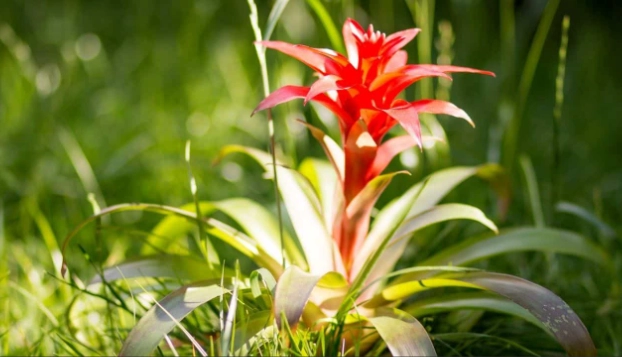
- Keep caring for the mother plant as usual. Water the cup, provide light. She needs energy to produce strong pups.
- Wait for the pups to reach about one-third to one-half the size of the mother. They should have their own root system starting to form.
- Separate them carefully. Use a clean, sharp knife to cut the pup away from the mother plant, getting as many of its roots as possible.
- Pot the pup separately in a small pot with a very fast-draining mix (like orchid bark mixed with a little potting soil).
- Treat the pup as a juvenile plant. Keep its soil slightly more moist than you would for a mature plant, and hold off on filling its tiny cup until it's more established.
You can now compost the old mother plant. You've successfully propagated your Guzmania bromeliad! With good care, the pup will mature and bloom in 2-3 years, starting the cycle all over again.
Choosing the Right Potting Mix (It's Not Potting Soil)
You cannot use regular, heavy, moisture-retentive potting soil for these plants. It will hold too much water around the roots and cause rot. The mix needs to be incredibly airy and fast-draining.
| Mix Component | Purpose | Approximate Ratio |
|---|---|---|
| Orchid Bark (Fir or Pine) | Provides chunky structure, excellent drainage, and mimics tree branches. | 50% |
| Peat-free Potting Mix or Coco Coir | Holds a small amount of moisture and provides a medium for fine roots. | 25% |
| Perlite or Horticultural Charcoal | Improves aeration further and prevents compaction. Charcoal can help keep the mix "sweet." | 25% |
| A handful of Sphagnum Moss (optional) | Can be added to increase moisture retention slightly in very dry environments. | 10% (of total) |
You can also use a pre-mixed orchid potting medium and just add a bit of potting mix to it. The goal is that when you water the soil, it should drain through almost immediately. The pot matters too. Always use a pot with drainage holes. A terra cotta pot is great because it wicks away extra moisture. A plastic pot is fine if you're careful with watering.
Troubleshooting Your Guzmania Bromeliad
Things go wrong. Let's decode what your plant is trying to tell you.
This is almost always low humidity or, less commonly, minerals from tap water building up. Try switching to filtered or distilled water for the cup and increasing humidity around the plant. You can snip the brown tips off with clean scissors, following the natural leaf shape, for aesthetics.
This is crown or heart rot, caused by the water in the cup stagnating, especially in cool conditions. You must flush the cup regularly. If it's already rotten, unfortunately, the plant is likely a loss. This is a tough lesson I learned the hard way with my second Guzmania bromeliad. Prevention is key.
Too much direct sunlight is bleaching the colors. Move it to a spot with gentler, filtered light. The vibrant bract colors are sensitive to intense rays.
Likely fungus gnats, attracted to consistently moist soil. Let the soil surface dry out more between waterings. Sticky yellow traps can catch adults. For a severe infestation, you might need a biological control like Bacillus thuringiensis israelensis (Bti), often sold as mosquito dunks. Let a chunk dissolve in your watering can.
Popular Guzmania Varieties to Fall In Love With
Not all guzmania bromeliads are the classic red. The genus is incredibly diverse. Here are a few standout varieties you might hunt for.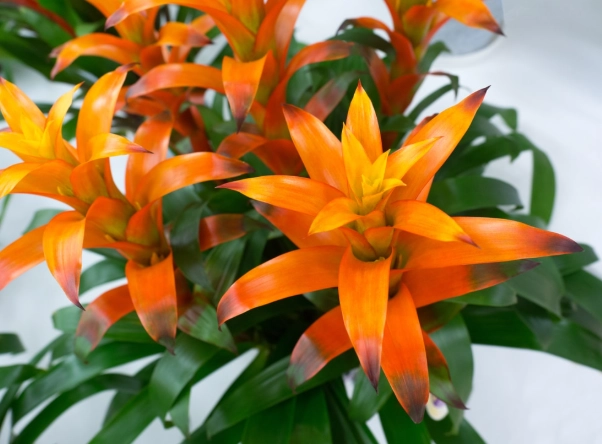
- Guzmania 'Luna': A stunning, almost pastel pink inflorescence that seems to glow. It's less common but absolutely breathtaking.
- Guzmania 'Hope': This one has a beautiful two-tone effect, often with a deep pink base fading to a lighter pink or white at the tips.
- Guzmania 'Orangeade': As the name suggests, a vibrant, cheerful orange spike. It really brightens up a room.
- Guzmania lingulata (Scarlet Star): The classic. Bright red bracts that are almost impossible to ignore. This is the one you see everywhere, and for good reason.
- Guzmania conifera: Looks totally different! It has a cone-shaped, almost fuzzy-looking orange or red inflorescence that sits on a tall stalk. A real conversation piece.
Caring for these different varieties of guzmania bromeliads is essentially the same. The main difference is in their visual impact.
Fertilizing: Less is More
These are not heavy feeders. In fact, over-fertilizing can burn the leaves, damage the roots, and cause the bract colors to become distorted. If you want to give them a boost to support pup growth, use a very weak, balanced, water-soluble fertilizer (like a 10-10-10 or 20-20-20 diluted to 1/4 strength) and apply it only to the soil, not in the cup, during the spring and summer months. Do this once a month at most. In fall and winter, don't fertilize at all. Many experts, including those at the Missouri Botanical Garden, note that epiphytic bromeliads get minimal nutrients in nature and often thrive with little to no supplemental feeding in cultivation.
Bringing It All Together: A Guzmania Bromeliad Success Timeline
Let's wrap this up with a simple, actionable plan from day one.
Week 1: Bring your plant home. Place it in bright, indirect light. Fill the central cup with filtered water. Check the soil moisture—water only if the top inch is dry.
Monthly Routine: Flush and refill the cup with fresh water. Wipe the leaves gently with a damp cloth to remove dust (this helps it breathe and photosynthesize). Check for pests. Rotate the pot a quarter turn for even growth.
When the Bloom Fades (After 3-6 months): Don't panic. Keep caring for the mother plant. Watch for pups growing from the base.
When Pups Appear: Continue care. Wait patiently for pups to reach a good size (one-third of the mother). This can take 6+ months.
Separating Pups: Use a clean knife, pot in airy mix, care for as a new juvenile plant.
Year 2-3: Your pup matures. With the right light and care, it will initiate its own bloom cycle, gifting you with another spectacular display. The cycle of life continues right on your windowsill.
The truth is, guzmania bromeliads ask for very little once you understand their language. They don't need constant watering of the soil, they don't need heavy feeding, and they forgive the occasional forgetful plant parent. They just need that cup of water, gentle light, and the understanding that their glorious display is a finale that leads to new beginnings. Give them that, and they'll be a source of tropical wonder in your home for years to come. For more in-depth botanical information on the Bromeliaceae family, you can always refer to resources from institutions like the Bromeliad Society International or university extensions like the University of Florida IFAS Gardening Solutions.
Now go check that central cup. Is it full?
Comments