Your Navigation Guide
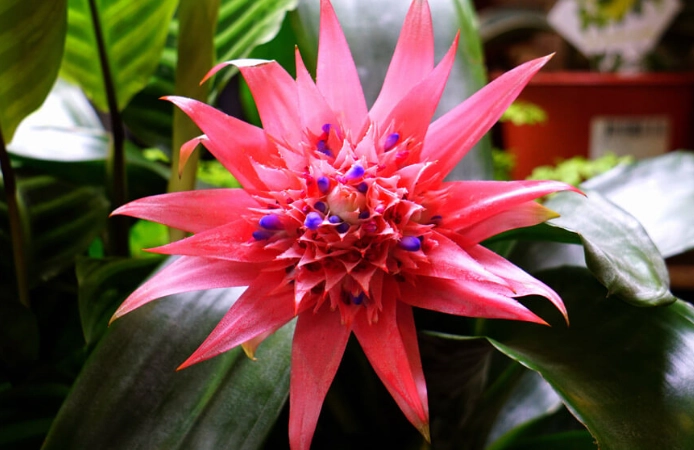
Let's talk about the red bromeliad. You've probably seen it—that stunning, architectural plant with a fiery red center (it's called an inflorescence, technically) sitting proudly in a garden center or making someone's living room look like a million bucks. It looks exotic, maybe a bit fussy, and you might be wondering if you can actually keep it alive. I thought the same thing when I got my first one. I'm here to tell you, you absolutely can. In fact, they're one of the more forgiving tropical plants out there once you get a few basics down.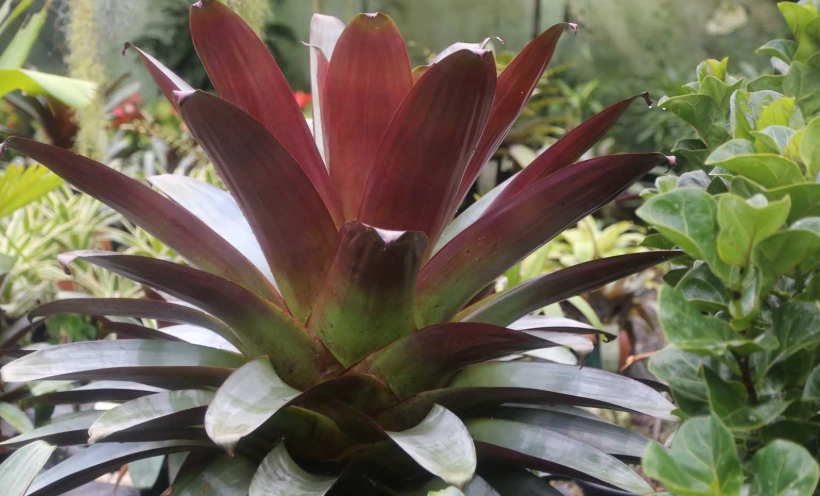
This isn't just a plant; it's a statement piece. That bold red color isn't from flowers in the way a rose is red; it's modified leaves called bracts, and they can last for months. Months! Compared to a bouquet that wilts in a week, that's a pretty good deal. But there's a lot of confusing advice out there. Do you water the soil or the cup? How much light does it really need? And what happens after it flowers? We're going to clear all that up.
What Exactly Is a Red Bromeliad?
First, a bit of family history. Bromeliads are a huge family (Bromeliaceae) with over 3,000 species, mostly from the Americas. The famous pineapple is a bromeliad! The ones we call "red bromeliad" are usually from a few specific genera prized for their colorful bracts. They're mostly epiphytes in the wild, meaning they grow on trees and rocks, not in the ground. This is the single most important thing to understand about their care—their roots are often more for anchoring than for heavy drinking.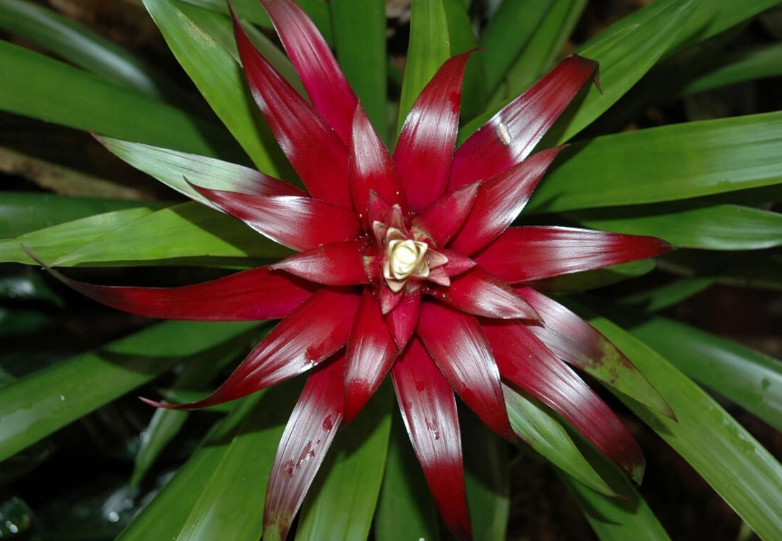
I made the mistake of treating my first one like a regular potted plant, drowning its roots. It did not thank me for that. The leaves started to get mushy at the base—a classic sign of overwatering.
The Most Common "Red" Varieties You'll Find
Not all red bromeliads are the same. The care is similar, but their shapes differ. Knowing which one you have helps set expectations.
| Common Name / Genus | Key Features | Typical Red Color Location | My Personal Take on Care Difficulty |
|---|---|---|---|
| Guzmania | Smooth, strap-like leaves forming a perfect vase or "urn." The flower spike emerges from the center. | The central flower spike (bracts) is often a solid, vibrant scarlet. | Easiest for beginners. Very tolerant of indoor conditions. The classic "red bromeliad" in stores. |
| Vriesea (Flaming Sword) | Flat, often patterned leaves. The inflorescence is a flattened, sword-like spike. | The entire sword-like flower head is a brilliant red. | Moderate. Needs a bit more consistent humidity than Guzmania to look its best. |
| Neoregelia | Low, spreading rosette. The plant flowers in the center, which often fills with water. | The center of the rosette (the "cup") turns a deep, intense red when it's ready to bloom. | Fun and different. Care is easy, but their flowering signal (the red center) is super cool to watch develop. |
| Aechmea | Stiff, often spiny leaves. The flower spike is tall and dramatic with pink or red bracts. | Pinkish-red bracts on a tall spike. Leaves may have silvery bands. | Sturdy but prickly. Handles neglect well, but watch out for the leaf spines! |
See? That "red bromeliad" label covers a fun little group. Most of the care advice applies to all of them, with slight tweaks. The Missouri Botanical Garden's plant finder is a fantastic resource if you want to dive deeper into identifying specific species. I use it all the time to double-check facts.
Your No-Nonsense Red Bromeliad Care Guide
Here's where we separate the helpful tips from the horticultural myths. I've killed a couple of plants to learn this, so you don't have to.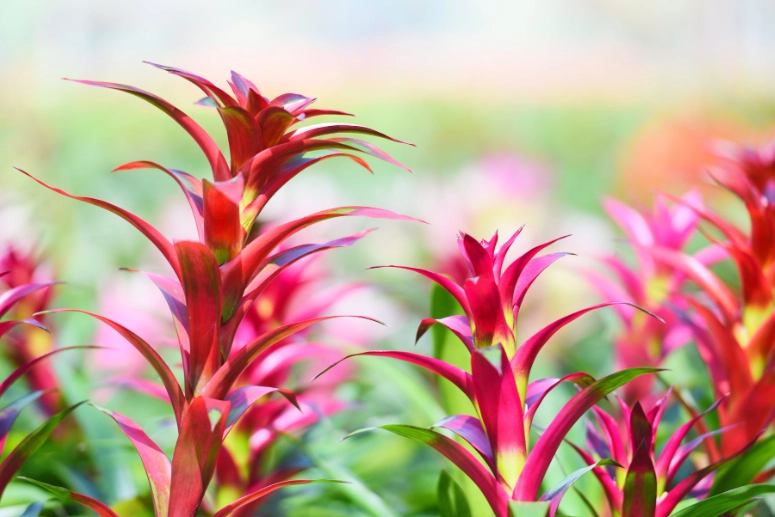
Light: The Key to That Red Color
This is the biggest make-or-break factor, especially for color. People often say "bright, indirect light," which is correct but vague.
- For Deep Red Color: They need plenty of light. An east-facing window is perfect. A west-facing window is good too, but maybe pull it back a foot or two from the hot afternoon sun to prevent scorching. A south-facing window with a sheer curtain is the gold standard in the Northern Hemisphere.
- What "Indirect" Really Means: No direct, hot midday sun beating down on the leaves. Think dappled sunlight, like under a tree canopy. If the leaves start turning a pale green or yellowish, or the red color starts to fade to green, it's begging for more light.
- The Low-Light Myth: Yes, they survive in lower light. But they'll become leggy, lose their vibrant color, and almost certainly never produce a pup (baby plant). It's a slow, sad decline. Give them the light they crave.
Watering: Forget Everything You Know About Houseplants
This is the part that freaks everyone out. Stop thinking about the soil for a second.
The Central Cup (Tank) Method: Most red bromeliads (especially Guzmania, Vriesea, Aechmea) form a natural cup or vase at the base of their leaves. This is where you water them. Keep this cup about 1/4 to 1/2 full of water. Refresh the water weekly by tipping the plant slightly to dump out the old water and refilling with fresh. This prevents mosquito larvae and bacterial stagnation.
Why? In nature, they collect rainwater and debris in this tank. Their specialized leaves absorb moisture and nutrients from it.
What About the Soil? For potted plants, the potting mix should be lightly moist but never soggy. Water the soil only when the top inch feels completely dry to the touch. Maybe once every week or two, depending on your home's warmth and humidity. The roots will rot in constantly wet soil. I use a moisture meter now because I'm a chronic over-waterer. Best $15 I ever spent.
Soil and Potting: They Hate Wet Feet
You cannot use regular potting soil. It holds too much moisture and will suffocate the roots.
You need a mix that is extremely fast-draining and airy. Here's a simple recipe you can make:
- 50% Orchid bark (chunky, not fine)
- 25% Perlite
- 25% Peat moss or Coco coir (for a little moisture retention)
Many garden centers also sell pre-mixed "bromeliad mix" or "orchid mix," which work great. The pot is crucial too. Always use a pot with excellent drainage holes. Terracotta pots are excellent because they wick away extra moisture from the mix.
Temperature and Humidity: Think Comfortable, Not Extreme
They are tropical, but not steamy-jungle-only tropical. Average home temperatures (65-80°F or 18-27°C) are perfect. Avoid drafts from heating vents, air conditioners, or leaky windows. As for humidity, 40-60% is ideal. Most homes sit around 30-40%, which is often fine. If your leaf tips are constantly turning brown and crispy, low humidity is likely the culprit.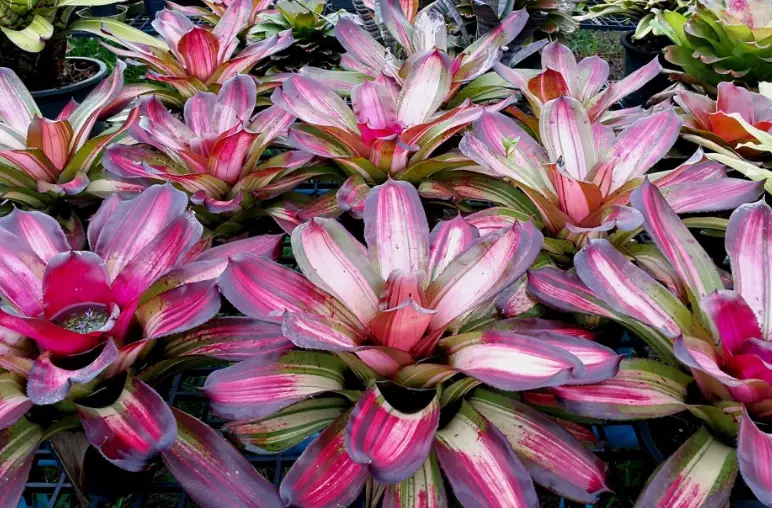
Easy Humidity Boosters: Group it with other plants, place the pot on a tray filled with pebbles and water (keep the pot above the water line), or run a small humidifier nearby. Misting? I find it does almost nothing for humidity and can promote fungal spots on the leaves if done too often. Skip it.
Common Problems and How to Fix Them (For Real)
Your red bromeliad will give you signs when it's unhappy. Here's how to read them.
Brown Leaf Tips
The most common issue. It's usually one of three things: low humidity, mineral build-up from tap water in the central cup, or under-watering (letting the cup run completely dry for too long). Trim the brown tips off with clean scissors, following the natural leaf shape. Address the likely cause.
The Center is Rotting or Smelly
This is a classic sign of overwatering the soil and/or not changing the water in the central cup. The stagnant water rots the base. If it's mushy and foul, the plant is often a goner. Prevention is key: fresh water in the cup, well-draining soil.
Fading Color or No Color
Your red bromeliad isn't red anymore? It's almost always insufficient light. Gradually move it to a brighter location. Also, remember that the colorful bracts are part of the flowering cycle. After many months, they will naturally begin to fade and die back as the plant completes its lifecycle. This is normal, not a failure on your part.
Pests
They're fairly pest-resistant, but can get mealybugs (look like tiny white cotton balls) or scale (little brown bumps). Isolate the plant. Wipe them off with a cotton swab dipped in rubbing alcohol. For larger infestations, insecticidal soap or neem oil applied to the pests (not just the leaves) works. Check the central cup for pests too.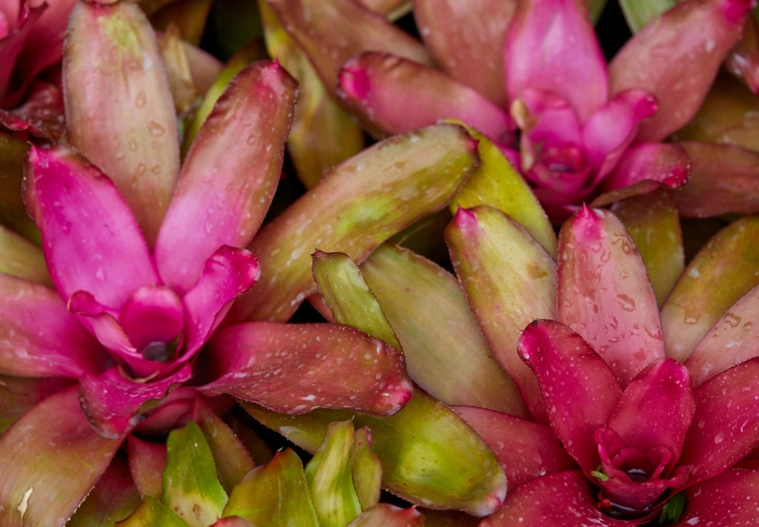
The Lifecycle: What Happens After the Bloom?
This is the part that surprises—and sometimes disappoints—new owners. The magnificent red bloom is not forever. In fact, the main plant that produced it is now programmed to die. Don't panic!
This is a slow process over many months to a year. As the red flower or bract fades, the mother plant will start to produce offshoots, called "pups," from its base. These are your new plants. The mother plant will slowly decline, its leaves turning brown from the outside in. Your job is to keep caring for it until the pups are big enough to survive on their own.
Propagation: Making More Red Bromeliads from Pups
This is the rewarding part—getting free plants! When the pups are about one-third to one-half the size of the mother plant and have developed their own root system (you might see little nubs), they're ready to be separated.
- Remove the entire plant cluster from the pot.
- Using a clean, sharp knife, cut the pup away from the mother plant, trying to keep some roots attached to the pup.
- Let the cut end of the pup callous over for a day (this helps prevent rot).
- Pot the pup in a small container with your fast-draining bromeliad mix. Water the soil lightly and keep the central cup (if it has one) filled. Provide bright, indirect light.
It will take 1-3 years for the pup to mature and produce its own stunning red bloom, starting the cycle all over again.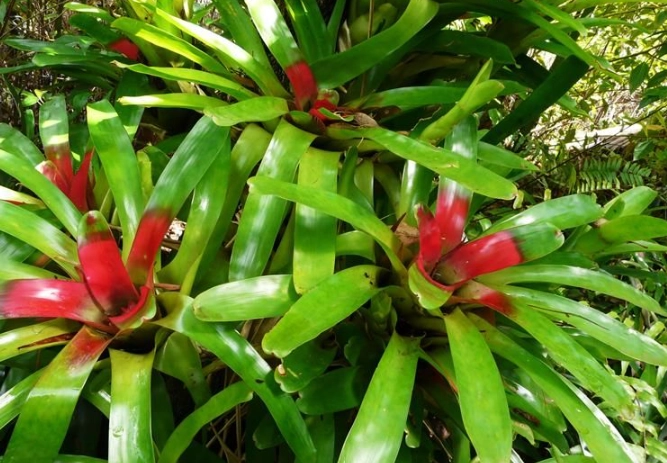
The first time I successfully separated a pup and watched it grow, it felt like a real gardening achievement. It's surprisingly straightforward. Don't be afraid to try it.
Final Thoughts: Is a Red Bromeliad Right for You?
If you want a low-maintenance plant that looks high-maintenance, the answer is yes. If you're a chronic over-waterer of normal plants, its unique watering needs might actually be a good fit for you. If you have a bright spot that needs a pop of long-lasting color, it's perfect. They're conversation starters. They're architectural. And caring for them teaches you to think differently about what a plant needs, which makes you a better plant parent overall.
For the absolute deepest dive into bromeliad science and classification, the Marie Selby Botanical Gardens is a world-renowned center for epiphyte research. Their resources are next-level.
So go ahead, pick up that vibrant red bromeliad. Now you know its secret: it's not a diva, it just follows different rules. Give it light, water its cup, use airy soil, and enjoy that fiery show for months on end.
Comments