Let's be honest. Most jade plants don't die from neglect; they drown in kindness, starting with the wrong soil. You brought home a plump, vibrant jade, gave it a sunny spot, and watered it when the top felt dry. Yet, the leaves started yellowing, dropping, or worse, the stem turned mushy. I've seen it a hundred times. The culprit is almost always the same: a potting mixture that holds water like a sponge instead of draining like a sieve. Getting the soil right isn't just a detail—it's the single most important factor for a healthy, long-lived jade plant. It's the difference between a struggling survivor and a thriving, sculptural centerpiece.
What You'll Learn in This Guide
- Why Standard Potting Soil is a Death Sentence for Jade Plants
- The Anatomy of the Perfect Jade Plant Potting Mix
- My Go-To DIY Jade Soil Recipe (Tested for 10+ Years)
- Top 3 Soil Mistakes Even Experienced Growers Make
- Best Commercial Soil Mixes for Jade Plants (2024)
- Your Jade Plant Soil Questions, Answered
Why Standard Potting Soil is a Death Sentence for Jade Plants
Walk into any garden center, and you'll see bags labeled "Potting Soil" or "All-Purpose Mix." For your monstera or fern, great. For your jade plant? It's a slow-acting poison. These mixes are designed for moisture-loving plants. They contain high levels of peat moss, coir, or fine compost—materials that retain water and break down into a dense, airless sludge over time.
Jade plants (Crassula ovata) are succulents from arid regions of South Africa. Their roots have evolved to dry out completely between infrequent, heavy downpours. In a dense, moisture-retentive mix, the roots are constantly damp. They suffocate from lack of oxygen, a condition called "wet feet." This creates the perfect environment for root rot fungi to attack. The plant can't take up water or nutrients, so it starts sacrificing leaves from the bottom up. Ironically, the owner sees wilting or leaf drop and waters more, sealing its fate.
The subtle mistake everyone misses: It's not just about "good drainage." It's about soil structure. A good succulent mix needs inorganic, gritty particles that create permanent air pockets and don't decompose. Most pre-mixed "cactus soils" still contain 50% or more organic matter, which compacts over 6-12 months, silently undermining your drainage.
The Anatomy of the Perfect Jade Plant Potting Mix
Think of the ideal mix as a lightweight, rocky substrate, not "dirt." It needs to perform three jobs simultaneously:
- Drain Instantly: Water should flow freely out the bottom of the pot within seconds of watering.
- Provide Aeration: The structure must remain loose and porous, allowing oxygen to reach the roots.
- Offer Minimal, Slow Nutrition: Jade plants are light feeders. Too much rich organic material leads to weak, leggy growth.
To achieve this, we combine two categories of ingredients:
Inorganic Grit (The Non-Negotiable Foundation)
This is the backbone of your mix, making up 60-80% of the volume. These materials don't hold much water, don't decompose, and create the crucial air pockets. Your options include:
- Perlite: The white, popcorn-like stuff. It's cheap, lightweight, and excellent for aeration. It can float to the top over time and is a bit dusty.
- Pumice: My personal favorite. It's a volcanic rock that's porous, holds a tiny bit of water within its structure, and has a neutral pH. It's heavier than perlite, so it doesn't float, and provides fantastic drainage and root anchorage.
- Coarse Sand: Not play sand or beach sand (too fine). You need horticultural grit or builder's sand with particles 1/8" or larger. It adds weight and improves drainage.
- Aquarium Gravel or Chicken Grit: Small, non-porous stones. They add weight and drainage but no water retention.
Organic Component (The Minimalist Fuel)
This makes up the remaining 20-40%. It provides a tiny bit of water retention and nutrients. Avoid rich compost or garden soil.
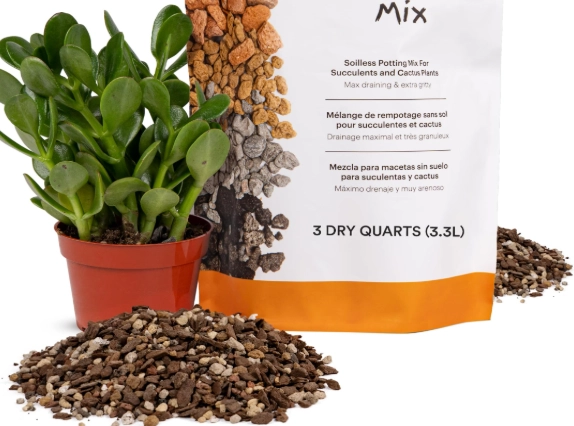
- Succulent & Cactus Potting Mix (Bagged): Use this as a convenient base to add grit to, not as the final product.
- Coconut Coir: A more sustainable alternative to peat moss. It rewets easier when bone dry.
- Pine Bark Fines: Small chunks of composted pine bark. They decompose slowly, improve aeration, and slightly acidify the soil, which jades tolerate well.
My Go-To DIY Jade Soil Recipe (Tested for 10+ Years)
After killing my fair share of plants with "good enough" mixes, I landed on this formula. It's bulletproof. You can mix it on a tarp in your garage.
Proportions are by volume, not weight. Use a scoop, trowel, or even a large yogurt container to measure. Consistency is more important than precision.
The Standard Recipe:
- 2 parts Pumice (or 1.5 parts Perlite + 0.5 parts Coarse Sand if pumice is hard to find)
- 1 part high-quality Succulent & Cactus Potting Mix (I like brands like Bonsai Jack or Superfly for their chunky consistency, but a standard bag from the hardware store works as a base).
- 1 part Pine Bark Fines (sifted to 1/4" size). Optional, but highly recommended for mature, tree-like jades as it mimics a more natural, well-aerated substrate.
Mixing Instructions: Dump all ingredients into a large tub or wheelbarrow. Put on a dust mask (especially with perlite). Mix thoroughly with your hands or a small shovel until the color is uniform. Moisten the mix lightly with a spray bottle as you mix—this keeps the dust down and makes it easier to work with when potting.
I used a pure perlite mix once for some cuttings. The drainage was phenomenal, but the plants were too unstable and dried out in two days under my grow lights. Balance is key.
Top 3 Soil Mistakes Even Experienced Growers Make
- Not Repotting After Purchase: Nurseries grow plants in cheap, peaty mixes to keep them moist during transport. That mix is a ticking time bomb in your home. Always repot a new jade into your proper gritty mix within the first few weeks.
- Ignoring Soil Breakdown: Even the best organic components break down. After 18-24 months, your once-gritty mix will have compacted. If water starts pooling on the surface for a second before soaking in, it's time for a refresh. Don't wait for the plant to show distress.
- Using a Pot Without a Drainage Hole: No soil mix, no matter how perfect, can overcome a pot with no escape route for water. It's non-negotiable. If you love a cache pot, keep your jade in a plain nursery pot inside it, and always empty the drained water.
Best Commercial Soil Mixes for Jade Plants (2024)
Don't have time to DIY? Some brands get it right. Look for mixes that feel gritty, not fluffy or fibrous. Here’s a breakdown of reliable options:
| Brand & Product Name | Key Ingredients | Best For | What You Might Need to Add |
|---|---|---|---|
| Bonsai Jack Succulent Soil | Pine Coir, Monto Clay, 1/4" Calcined Clay | Growers who tend to overwater; extremely fast drainage. | Nothing. Pot-ready. May dry very fast in hot climates. |
| Superfly Bonsai Succulent Mix | Diatomaceous Earth, Montmorillonite Clay, Pine Bark | A premium, ready-to-use gritty mix with great aeration. | Nothing. Excellent out of the bag. |
| Espoma Organic Cactus Mix | Peat Moss, Perlite, Sand, Limestone | A widely available, affordable starting point. | More perlite or pumice (add 25-30% by volume) for better drainage. |
| Miracle-Gro Cactus, Palm & Citrus | Peat Moss, Sand, Perlite | Maximum availability at big-box stores. | Significantly more grit (add 40-50% pumice/perlite). It's too moisture-retentive alone. |
The American Society for Horticultural Science has published research on the importance of air-filled porosity in container substrates for plant health, which strongly supports this gritty approach for succulents. You can search for their studies on "container substrate physical properties."
My shelf has a bag of Bonsai Jack for critical plants and a tub of my DIY mix for everything else. The commercial gritty mixes are more expensive, but they save time.

Comments