Quick Guide
- Why a Succulent Garden is the Perfect Project for Anyone
- Getting Started: Your First Succulent Garden in 5 Steps
- Designing a Succulent Garden That Wows
- Care and Maintenance: The Art of Neglect
- Beyond the Basics: Propagation and Seasonal Care
- Frequently Asked Questions (The Stuff You Actually Google)
Let's be honest. You've probably seen those perfect, overflowing succulent gardens on Instagram or Pinterest and thought, "I could never do that." Maybe you've even bought a cute little echeveria from the store, only to watch it slowly turn to mush a few months later. I've been there. My first attempt at a succulent garden was a disaster—a sad, waterlogged tray of what were once beautiful plants. But here's the thing: succulents want to live. We just need to stop treating them like our other houseplants.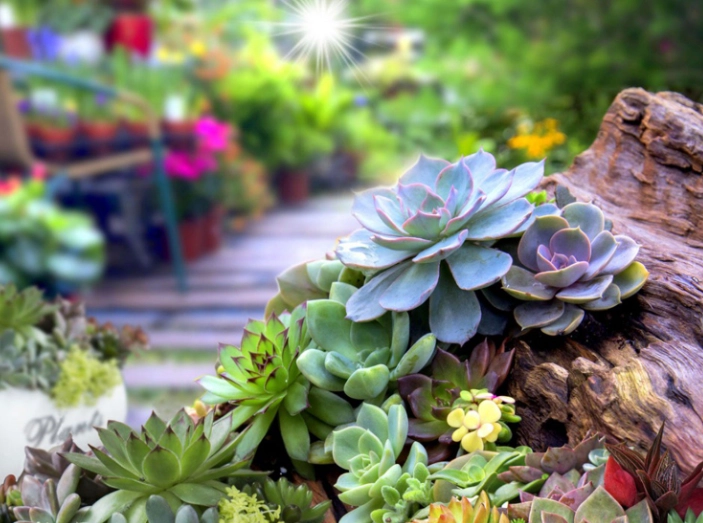
The secret to a thriving succulent garden isn't a green thumb; it's understanding a few simple, non-negotiable rules. It's about mimicking the dry, bright, and often harsh environments they call home. Once you get that, everything clicks into place. This guide is the one I wish I had when I started. We're going to skip the fluff and dive straight into the practical, actionable steps that actually work. Forget complex theories. We're talking about the right dirt, the right light, and the right amount of neglect.
Why a Succulent Garden is the Perfect Project for Anyone
You might be wondering why bother with a succulent garden specifically. Well, let me give you a few compelling reasons that go beyond just "they're pretty." For starters, they are arguably the most forgiving plants for beginners. Forget to water them for two weeks? They'll probably thank you for it. Going on vacation? No need to hire a plant sitter. This low-maintenance nature is a huge relief for busy people or those who doubt their gardening abilities.
Then there's the sheer variety. A succulent garden isn't just a collection of green blobs. You have a stunning palette to work with: the dusty blue of a Echeveria 'Perle von Nurnberg', the fiery red tips of a Sedum rubrotinctum (Jelly Bean plant), the architectural spikes of an agave, or the quirky, geometric patterns of a haworthia. You can create textures and colors that you simply can't get with traditional flowering plants. And the design possibilities are endless—from minimalist modern bowls to sprawling, rustic rock gardens.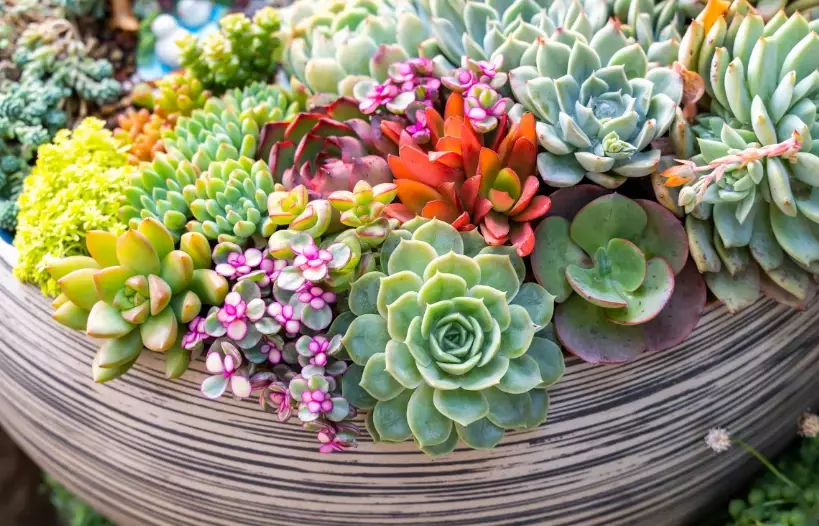
They're also incredibly economical. Many succulents propagate easily from a single leaf or a cutting. You can start small with a few key plants and grow your collection for free over time. I have a whole shelf of succulents that started as leaves I found on the floor of a garden center (with permission, of course!). Finally, in an era of increasing water consciousness, creating a drought-tolerant succulent garden is a responsible and stylish choice. You're building a landscape that thrives on minimal resources.
Getting Started: Your First Succulent Garden in 5 Steps
Okay, enough theory. Let's get our hands dirty. Starting your first succulent garden doesn't require a huge investment or a lot of space. You can begin with a simple pot on a sunny windowsill. Here's the straightforward, no-nonsense process.
Step 1: Choosing the Right Container (It's Not Just About Looks)
Drainage. Drainage. Drainage. This is the single most important factor. That gorgeous ceramic pot with no hole in the bottom is a death sentence. You must have a drainage hole. If you fall in love with a pot that doesn't have one, use it as a cache pot—plant your succulents in a plain plastic pot with holes, and then slip that inside the decorative one. Terracotta pots are a classic choice for a reason: they're porous, which allows the soil to dry out more evenly and helps prevent root rot. But plastic, concrete, or glazed ceramic work fine too, as long as they have that crucial hole.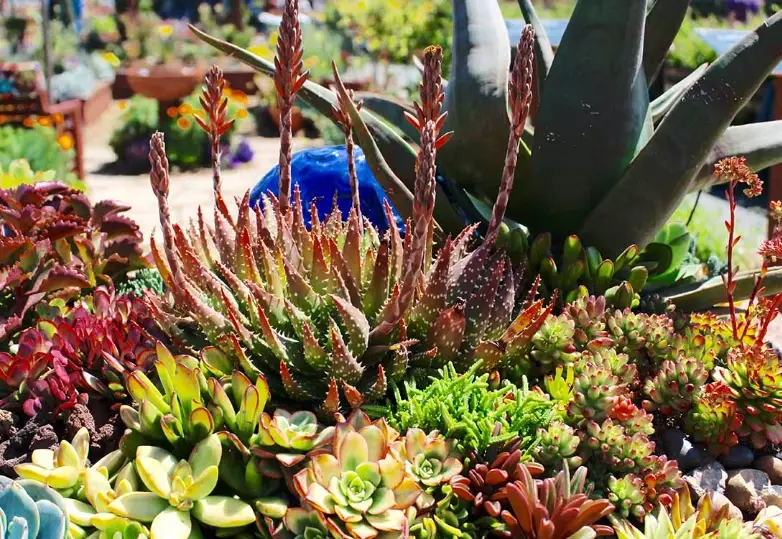
Size matters, but not in the way you might think. A common mistake is planting a small succulent in a huge pot. All that extra soil holds moisture for too long, far away from the roots. It's better to choose a pot that's just slightly larger than the root ball of your plant. You can always repot later as it grows.
Step 2: The Holy Grail: Succulent Soil Mix
This is where most store-bought succulent gardens fail. They're often planted in dense, moisture-retentive potting soil that stays wet for weeks. Succulents need a gritty, fast-draining mix that mimics their native, rocky habitat.
You can buy a pre-mixed "cactus and succulent" soil, but in my experience, most commercial mixes still hold too much water. I always amend them. Here's my go-to, foolproof recipe for a DIY succulent soil mix that has never let me down:
| Material | Purpose | Ratio (Approx.) |
|---|---|---|
| Potting Soil (Any all-purpose kind) | Provides minimal structure and some nutrients. | 1 Part |
| Perlite or Pumice | Creates air pockets, improves drainage dramatically. Pumice is heavier and better. | 1 Part |
| Coarse Sand (Horticultural grit, not beach sand) | Adds weight and further improves drainage. Prevents compaction. | 1 Part |
Just mix these three components together thoroughly. It should feel gritty, not soft and fluffy. If you want to get fancy, you can add a handful of fine pine bark or coconut coir, but the three-ingredient mix above is the core. The goal is to create a mix where water flows through quickly, wetting the roots but not soaking them. For more scientific backing on soil aeration and drainage, resources from institutions like the Royal Horticultural Society provide excellent, research-based guidelines.
Step 3: Picking Your Plants (Start Simple!)
When you're at the nursery, it's easy to get overwhelmed. Stick to a few hardy, beginner-friendly genera for your first succulent garden. Look for:
- Echeveria: The classic rosette shape. They come in countless colors.
- Sedum & Graptopetalum: Very forgiving and fast-growing. Great for filling space.
- Haworthia & Gasteria: Perfect for lower light conditions (like a bright indoor spot without direct sun).
- Sempervivum (Hens and Chicks): Extremely cold-hardy and prolific. Best for outdoor gardens.
When selecting a plant, give it a gentle squeeze. It should feel firm and plump, not soft or mushy. Check for signs of pests (little white fluff = mealybugs) or disease (black or brown soggy spots). Choose plants that look sturdy, not leggy and stretched out.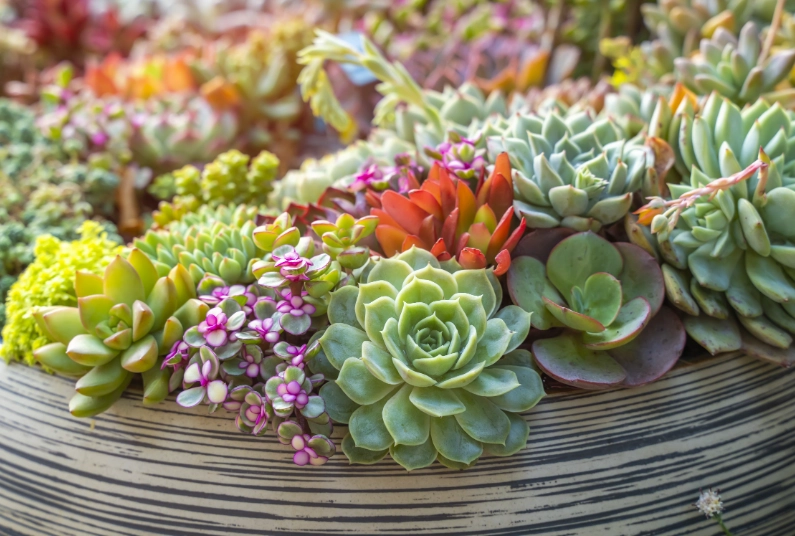
Step 4: The Planting Process
Fill your pot about halfway with your prepared gritty mix. Gently remove your succulent from its nursery pot and loosen the roots slightly. Place it in the new pot and fill around it with more soil, tamping lightly to settle the plant. Leave a small space (about half an inch) between the soil surface and the rim of the pot for watering. Here's a critical tip: do not water immediately after repotting. Wait about 4-7 days. This gives any tiny root tears a chance to callus over, preventing rot when water is introduced.
Step 5: Finding the Perfect Spot
Light is food for succulents. Most need bright, direct light for at least 4-6 hours a day. A south-facing window is ideal indoors. An east or west-facing window can work, but you might see some stretching (etiolation) as the plant reaches for more light. If your indoor light is poor, consider a simple grow light. For an outdoor succulent garden, a spot with morning sun and afternoon shade is often perfect in hot climates, preventing sunburn.
Designing a Succulent Garden That Wows
Now for the fun part—making your succulent garden look intentional and beautiful. Design is what elevates it from a pot of plants to a living sculpture.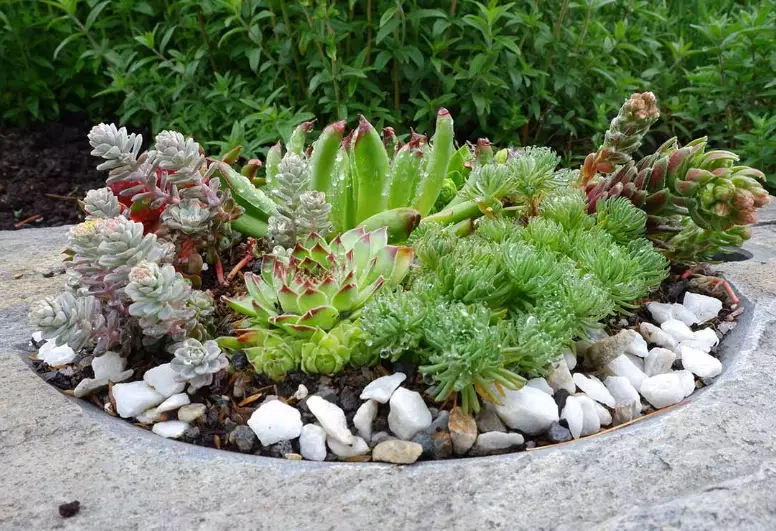
The "Thriller, Filler, Spiller" Formula
This classic container gardening principle works brilliantly for succulent gardens. Pick one tall, architectural plant as your focal point (Thriller—like an aeonium or a tall sedum). Add several mid-sized, rosette-forming plants to fill the bulk of the space (Filler—echeverias, graptoverias). Finally, include a trailing plant that will gracefully spill over the edge of the pot (Spiller—like String of Pearls, Sedum morganianum, or a creeping sedum). This combination creates instant depth and visual interest.
Playing with Color and Texture
Don't just plant all green succulents together. Mix it up! Combine the powdery, pastel leaves of a Graptopetalum paraguayense (Ghost Plant) with the deep, almost black hue of an Aeonium 'Zwartkop'. Add a pop of bright lime green with a Sedum japonicum 'Tokyo Sun'. Think about texture too: pair the smooth, waxy leaves of a jade plant with the fuzzy, velvety leaves of a Kalanchoe tomentosa (Panda Plant) or the intricate, bumpy texture of a Haworthia cooperi.
For a large-scale, in-ground succulent garden or xeriscape, the principles of landscape design apply. Use larger agaves or yuccas as anchor points. Plant drifts of low-growing sedums or sempervivums as a living ground cover. Incorporate non-plant elements like rocks, boulders, and gravel paths to enhance the natural, arid aesthetic. The University of California's Agriculture and Natural Resources site has fantastic, region-specific guides on drought-tolerant landscaping that are a goldmine of ideas.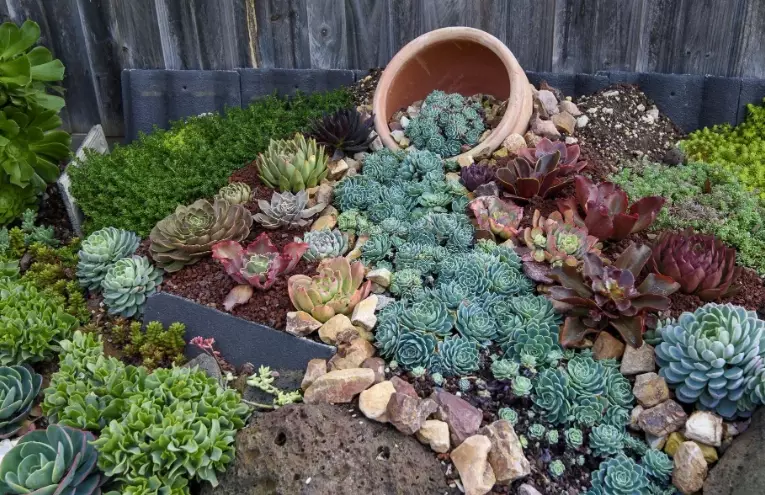
Care and Maintenance: The Art of Neglect
Here's where you need to rewire your brain. Caring for a succulent garden is more about restraint than action.
Watering: The #1 Killer
Overwatering is responsible for 90% of succulent deaths. There is no fixed schedule (not weekly, not bi-weekly). You water only when the soil is completely dry. Stick your finger into the soil up to the first knuckle. If it feels even slightly damp, wait. When it's bone dry, give it a thorough, deep watering. Soak the soil until water runs freely out of the drainage hole. Then, let it drain completely and don't water again until it's dry all the way through. In winter, when plants are dormant, you might only water once a month or even less.
The "soak and dry" method is non-negotiable. It encourages strong, deep root growth and prevents rot.
Feeding: Less is More
Succulents are not heavy feeders. Fertilizing once or twice a year during their active growing season (spring and summer) is plenty. Use a balanced, water-soluble fertilizer diluted to half or even quarter strength. I use a generic 10-10-10 fertilizer at quarter strength in early spring. Over-fertilizing leads to weak, leggy growth that's prone to pests.
Common Problems and Simple Solutions
- Stretching / Etiolation: The plant is stretching out, with wide gaps between leaves. This means it needs more light. Move it to a brighter location. You can't fix the stretched part, but you can behead the top and replant it.
- Soft, Mushy Leaves (Rot): Classic overwatering. Stop watering immediately. If the stem is mushy, the plant may be a goner. You can try to save it by cutting above the rot, letting the cutting callus, and replanting it.
- Shriveling, Wrinkled Leaves: This is usually underwatering. Give the plant a good soak. It should plump up in a day or two.
- Pests (Mealybugs, Scale): Isolate the affected plant. Dab pests with a cotton swab dipped in rubbing alcohol. For larger infestations, a spray of insecticidal soap or neem oil works.
Beyond the Basics: Propagation and Seasonal Care
Once you've kept your succulent garden alive for a season, you can start playing mad scientist. Propagation is incredibly rewarding and easy.
For many succulents like echeverias and sedums, you can gently twist a healthy leaf off the stem. Let the broken end dry and callus over for a few days. Then, just lay it on top of dry soil in a bright spot (no direct sun). Mist the soil very lightly every few days. Don't bury it. In a few weeks, you'll see tiny roots and a rosette forming. It's magical. For stemmed plants, you can take a cutting, let it callus, and then stick it in soil.
Seasonal care is straightforward. In summer, protect from extreme afternoon heat that can scorch leaves. In winter, the main concern is temperature and water. Most common succulents can't handle a hard frost. If you're in a cold climate, bring pots indoors before the first frost. Reduce watering drastically in winter, as the plants are semi-dormant and not actively growing.
Frequently Asked Questions (The Stuff You Actually Google)
Let's address those lingering questions that pop up when you're deep in a succulent rabbit hole at 2 AM.
Building a beautiful, healthy succulent garden is a journey of small, satisfying successes. It teaches patience, observation, and a different rhythm of care. Whether it's a single pot on your desk or a full backyard landscape, the principles are the same: brilliant light, gritty soil, and a restrained watering can. Now go find a pot with a hole in it, mix up some gritty soil, and start creating your own little piece of the desert. You've got this.
Comments