In This Guide
- The Bougainvillea's Diet: It's Not Just About “Food”
- Beyond NPK: The Micronutrient Secret Sauce
- How to Apply Bougain Fertilizer: Timing and Technique Are Everything
- Choosing Your Bougain Fertilizer: A Real-World Comparison
- The Invisible Partner: Watering and Fertilizer
- Fertilizing Potted vs. In-Ground Bougainvillea
- Answering Your Bougain Fertilizer Questions
- The Final Word: Less is More, But Consistency is King
Let's be honest. We've all seen them. Those houses draped in a riot of fuchsia, orange, or purple, the bougainvillea so vibrant it looks photoshopped. You buy one, plant it with hope, water it faithfully... and get a few sad green leaves. Maybe a couple of timid pink bracts if you're lucky. What gives?
The difference, nine times out of ten, is in the feeding. It's the bougain fertilizer. Not just any old plant food you have lying around, but the right stuff, applied the right way. It's the single most impactful thing you can do to turn your shy vine into a blooming beast. I learned this the hard way after my first bougainvillea spent a whole summer looking more like a sparse hedge than a tropical spectacle.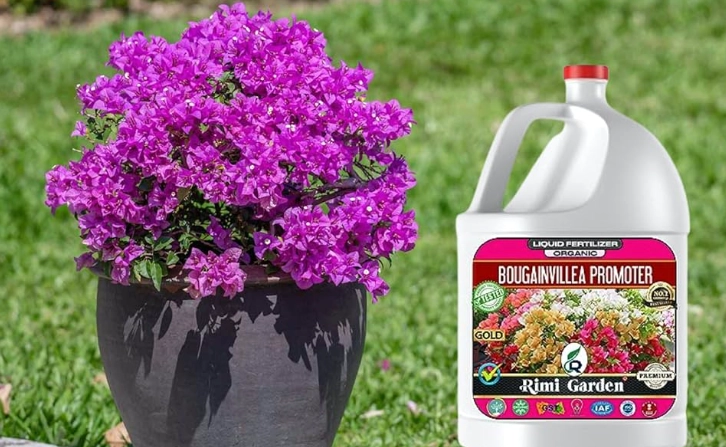
The Bougainvillea's Diet: It's Not Just About “Food”
People throw generic “flowering plant” fertilizer at their bougainvillea and wonder why it doesn't work. That's like feeding a marathon runner nothing but candy – energy, sure, but not the right kind for the job. A bougainvillea has a very specific job: to produce those papery bracts (which we call flowers) in massive quantities, all while supporting tough, fast-growing vines.
What exactly goes into a quality bougain fertilizer?
It all comes down to the NPK ratio – the three numbers on every fertilizer bag representing Nitrogen (N), Phosphorus (P), and Potassium (K). For bougainvillea, the magic formula is heavily skewed away from nitrogen.
- Nitrogen (N): Promotes lush, green leaf and stem growth. Too much is the #1 killer of blooms. Your plant becomes a beautiful, green, flowerless bush.
- Phosphorus (P): The key player for root development, flower formation, and overall energy transfer. This is what you want to emphasize.
- Potassium (K): The regulator. It improves drought tolerance, disease resistance, and the general hardiness of the plant – crucial for a vine that's often in full, scorching sun.
So, what's the ideal ratio? You'll see a lot of recommendations, but after testing a bunch, formulas like 6-8-10, 5-10-10, or even 2-7-7 consistently outperform high-nitrogen mixes. The middle number (Phosphorus) should be the highest or equal to the last. A good bougainvillea fertilizer is essentially a “bloom booster.”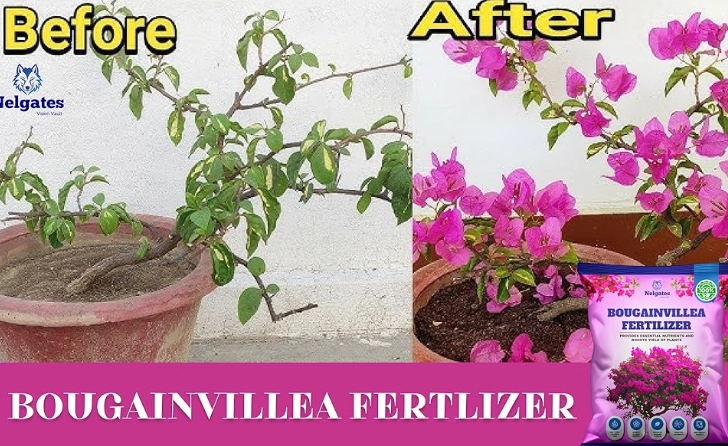
My Personal Mistake: I once used a balanced 10-10-10 fertilizer, thinking “balanced is safe.” My bougainvillea responded with phenomenal leaf growth. It was the greenest, leafiest vine on the block. And it didn't produce a single new bract for eight months. I had literally fed it to be a foliage plant.
Beyond NPK: The Micronutrient Secret Sauce
If you stop at NPK, you're still missing a piece of the puzzle. Bougainvilleas are heavy feeders of certain micronutrients, especially Iron and Magnesium. In alkaline or heavily watered soils, these become unavailable to the plant, leading to yellow leaves with green veins (chlorosis) – a sure sign your plant is struggling to feed itself, no matter how much bougain fertilizer you add.
The best bougain fertilizer products include these micronutrients. Look for terms like “chelated iron” on the label. Sometimes, a separate application of Epsom salts (magnesium sulfate) or a dedicated micronutrient spray can make a world of difference, turning pale leaves deep green and ready to support blooms.
How to Apply Bougain Fertilizer: Timing and Technique Are Everything
You can have the best fertilizer in the world and still mess it up with poor application. Bougainvilleas aren't like your lawn; they're sensitive to both feast and famine.
The Golden Rule of Feeding Bougainvillea
“Feed little and often during the growing season.” A massive dose of fertilizer once a season can burn roots and cause salt buildup in the soil. Smaller, regular meals are far more effective.
Here’s a practical, season-by-season breakdown:
- Early Spring (as new growth appears): This is your starting gun. Apply your first dose of bougain fertilizer. I like to use a slow-release granular formula at this stage. It provides a steady baseline of nutrients for the next few months.
- Late Spring through Summer (the main blooming season): This is prime time. Switch to a water-soluble, high-phosphorus fertilizer. Apply it every 2-4 weeks as you water. The plant is actively growing and blooming and can use the direct nutrient hit.
- Fall: As temperatures start to cool and growth slows, reduce feeding frequency. One last application in early fall is plenty.
- Winter: Stop fertilizing. Full stop. The plant is dormant or semi-dormant. Feeding it now can force weak, frost-tender new growth that will just die back. It's a waste and can stress the plant.
Application technique is simple but critical. Always water the soil thoroughly before applying liquid fertilizer to prevent root burn. For granular types, sprinkle evenly around the drip line (the area under the outermost branches) and water it in well. Never pile fertilizer against the main stem.
Choosing Your Bougain Fertilizer: A Real-World Comparison
The market is flooded with options. Let's cut through the marketing and look at some common types. This isn't about naming specific brands, but about the forms they come in and their pros and cons for bougainvillea care.
| Fertilizer Type | Best For | Pros | Cons (The Downside) | My Take |
|---|---|---|---|---|
| Water-Soluble (Powder/Liquid) | Main feeding during peak bloom (Spring-Summer) | Fast-acting, easy to control dosage, often has ideal high-P ratios. | Requires frequent application (every 2-4 weeks). Can leach out quickly with heavy rain. | This is my workhorse for the main season. The results are visible quickly. |
| Slow-Release Granular | Foundation feeding in early Spring or for container plants. | Set-it-and-forget-it convenience. Provides steady nutrients for 3-6 months. | Harder to control the exact nutrient release. Not all have the perfect NPK for bougain. | Great for a baseline. I use it in March and then supplement with water-soluble later. |
| Organic (Fish Emulsion, Seaweed, etc.) | Gardeners wanting an organic approach, improving overall soil health. | Gentle on plants, improves soil microbiome. Less risk of burn. | NPK ratios are often lower and balanced. May not provide the intense phosphorus push needed for maximal blooming. Smell can be... potent. | I love it for soil health, but for explosive color, I often combine it with a mineral bloom booster. |
| Specialty “Bougainvillea” or “Bloom Booster” Fertilizers | Those who want a tailored, no-guesswork solution. | Formulated specifically for the plant's needs. Often includes micronutrients. | Can be more expensive than general-purpose fertilizers. | If you're unsure, start here. It removes the guesswork from the NPK ratio. |
The Invisible Partner: Watering and Fertilizer
You can't talk about bougain fertilizer without talking about water. They're a tag team. Overwatering is a silent killer of blooms. Constantly soggy soil stresses the roots, prevents them from taking up nutrients efficiently (including that precious phosphorus), and again, promotes leafy growth over flowers. Bougainvilleas thrive on a cycle of thorough watering followed by the soil drying out significantly. This “dry period” seems to be a physiological trigger for flowering. Applying fertilizer to waterlogged soil is pointless and harmful.
Fertilizing Potted vs. In-Ground Bougainvillea
This is a huge distinction that many guides gloss over.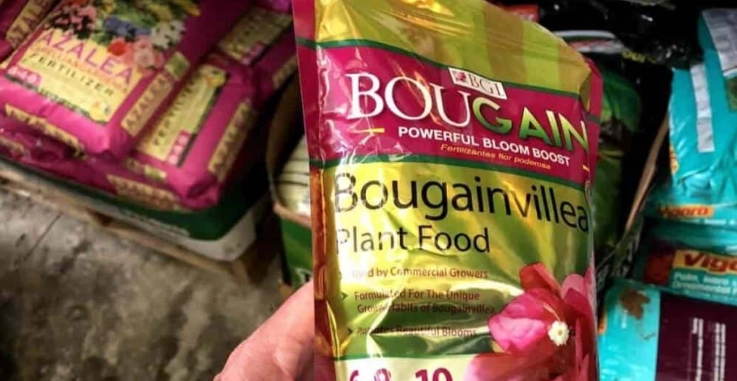
Potted Bougainvillea
They live in a finite world. Nutrients get used up and leached out with every watering. They are totally dependent on you for their bougain fertilizer. You'll need to feed them more frequently than in-ground plants – think every two weeks in the hot summer with a water-soluble feed. But be extra careful with dosage; it's easy to over-concentrate in a small soil volume. Always err on the side of a weaker solution.
In-Ground Bougainvillea
Their roots can explore a larger area for water and some nutrients. They're more forgiving. A good slow-release bougainvillea fertilizer in spring, followed by monthly liquid feeds during summer, is often sufficient. They're also less prone to the rapid fertilizer salt buildup that potted plants experience.
Answering Your Bougain Fertilizer Questions
Can I use tomato fertilizer on my bougainvillea?
You know what? Often, yes. A good tomato fertilizer often has a ratio like 5-10-10 or similar, which is pretty darn close to what a bougainvillea wants. Both plants are heavy bloomers that need lots of phosphorus and potassium. It's not a perfect match every time, but it's usually a much better choice than an all-purpose lawn fertilizer.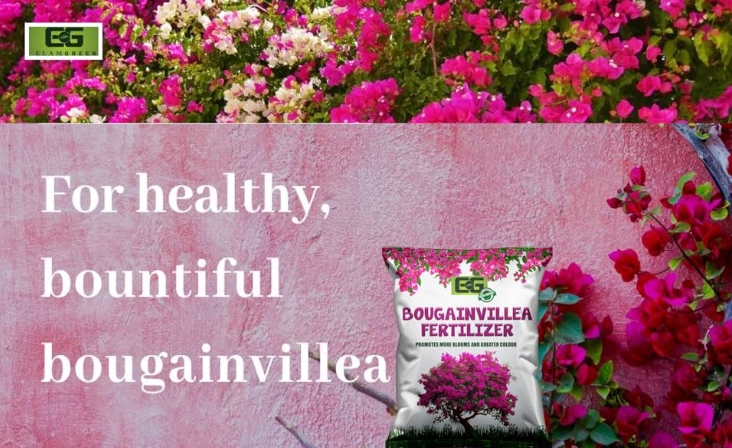
Why is my fertilized bougainvillea still not blooming?
This is the heartbreaker. If you're sure you're using a good bougain fertilizer, look at these other culprits:
- Too much shade: They need a minimum of 5-6 hours of direct, brutal sun. More is better.
- Overwatering: Re-read the section above. Let it get dry.
- Over-pruning: Bougainvillea bloom on new growth, but if you're constantly shearing it, you're cutting off the tips where flowers form. Tip-prune instead of hacking.
- Night Temperature: They bloom best when there's a significant difference between day and night temperatures. Consistently hot nights can sometimes inhibit flowering.
Is Miracle-Gro good for bougainvillea?
It depends entirely on which Miracle-Gro. Their standard “All Purpose” (24-8-16) is far too high in nitrogen. You'll get leaves, not blooms. However, their “Bloom Booster” product line (like 15-30-15) is formulated for exactly this purpose and can be an excellent, readily available bougain fertilizer. Always read the numbers, not just the brand.
How do I fix yellow leaves on my bougainvillea?
First, diagnose. Are they older leaves turning evenly yellow? Could be a natural nitrogen draw as it pushes new growth. Are they new leaves, yellow with green veins? That's classic iron chlorosis. Your soil pH might be off, or the plant needs chelated iron. A good, micronutrient-rich bougain fertilizer can help prevent this, but for an acute case, a specific iron supplement might be needed. Resources from institutions like the University of Minnesota Extension have great guides on diagnosing plant nutrient deficiencies.
The Final Word: Less is More, But Consistency is King
Getting bougainvillea fertilizer right feels like a secret handshake into a club of amazing gardeners. It's not about dumping more product on the plant. It's about precision: the right ratio, applied consistently during the growing season, and then backed off completely when the plant rests.
Start with a phosphorus-heavy formula. Feed lightly but regularly from spring to fall. Pair it with plenty of sun and restrained watering. Do that, and you won't just be growing a plant. You'll be cultivating a landmark. The kind that makes people slow down and point. And honestly, that's the whole point, isn't it?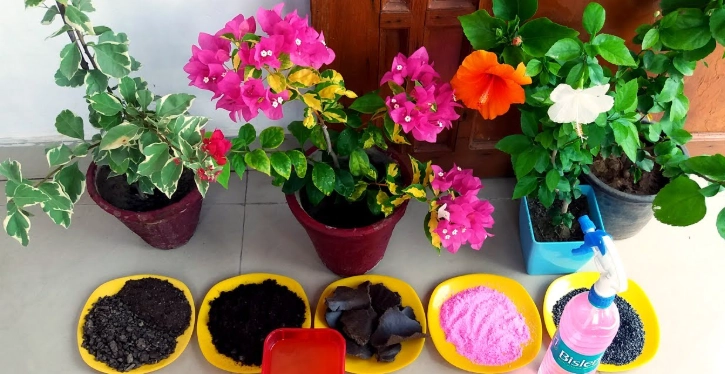
For further reading on general bougainvillea botany and care principles from an academic perspective, the Penn State Department of Plant Science offers robust, science-based resources that complement this practical fertilizer guide.

Comments