Quick Guide Navigation
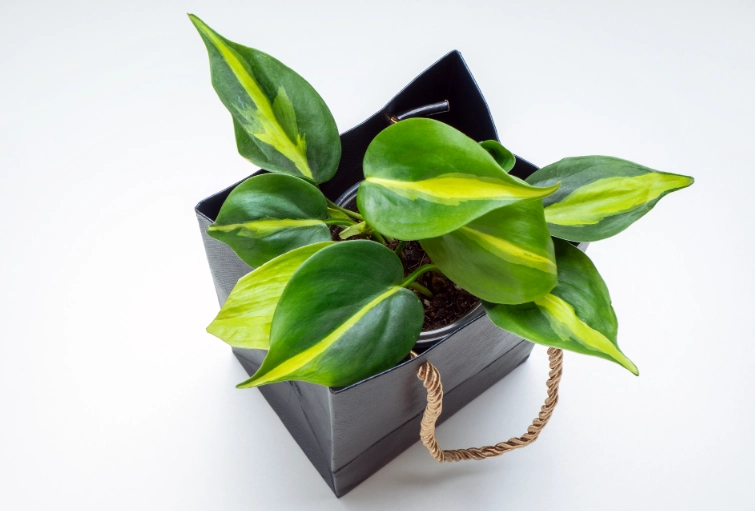
Let's be honest. You probably picked up that Pothos N' Joy because it looked stunning in the store. Those crisp, clean blocks of white and green on each leaf are hard to resist. It promises to be an easy-care plant, a classic pothos with a fancy outfit. But then you get it home, and a few weeks later, you're staring at a leaf with a brown spot, or wondering why the new growth seems so slow, or maybe that brilliant white is looking a bit... dull. Sound familiar?
You're not alone. I've been there. I brought my first Pothos N' Joy home, plopped it in a medium-light spot, and watered it when I remembered. It survived, sure. But it didn't thrive. The leaves stayed small, the vines were timid, and the variegation was more muddy than marbled. It took some trial and error (and a few sad, yellow leaves) to figure out what this particular cultivar really wants. It's not *difficult*, but it has a few specific needs that, if you miss them, leave you with a mediocre plant instead of the showstopper it can be.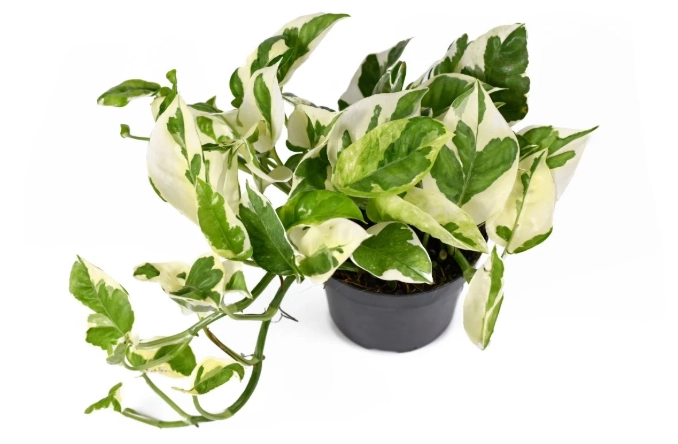
This guide is everything I wish I'd known. We're going beyond the basic "water when dry" advice. We'll dive into the specifics of light for maintaining that iconic variegation, the tightrope walk of watering, and the simple trick to making it bushier. We'll also tackle those annoying problems like brown tips and yellow leaves head-on. By the end, you'll know exactly how to turn your Pothos N' Joy from a survivor into the absolute jewel of your plant collection.
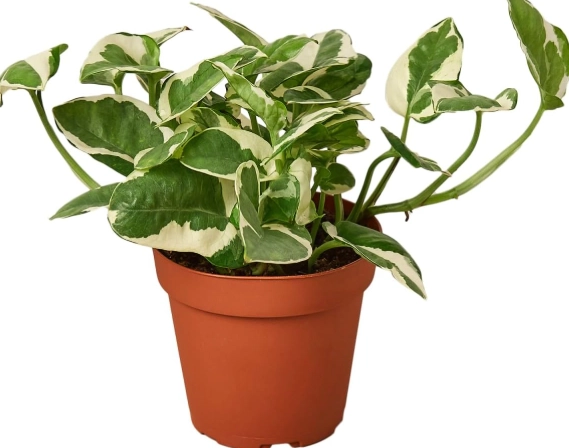
It's a cultivated variety (cultivar) of Epipremnum aureum, the common Devil's Ivy or Golden Pothos. The 'N' Joy' (sometimes written as N-Joy or N Joy) is known for its highly variegated, smaller leaves with distinct, separated patches of creamy white and deep green. It tends to have a more compact, bushy growth habit compared to the wild, trailing vines of its parent plant. It was patented and has become a staple in the houseplant world for its clean, modern look.
Getting the Basics Right: The Non-Negotiable Care
Think of this section as the foundation. Get this wrong, and you'll be troubleshooting problems forever. Get it right, and your Pothos N' Joy will reward you with vigorous, healthy growth.
Light: The Secret to Those White Splashes
This is the most important factor for a happy Pothos N' Joy. That beautiful white variegation isn't just for show—it comes with a catch. The white parts of the leaf contain little to no chlorophyll, the pigment plants use to convert light into energy.
So, if you stick your plant in a dark corner, two things happen. First, the plant isn't getting enough overall energy from the green parts alone. It will respond by growing very slowly, or stretching out with long gaps between leaves (etiolation) as it searches for light. Second, and more crucially for looks, the plant will start producing new leaves with more green and less white. It's a survival tactic—more green means more energy. You'll slowly watch your high-contrast N' Joy revert to a mostly green plant.
The sweet spot is bright, indirect light. A spot near an east-facing window is perfect. A north-facing window can work if it's very bright. A south or west-facing window is great, but you must shield the plant from several hours of direct, hot sun, which can scorch those delicate white sections. The white parts are more susceptible to sunburn.
If you only have lower light, consider supplementing with a simple LED grow light. A few hours a day can make a world of difference in maintaining the variegation and promoting growth.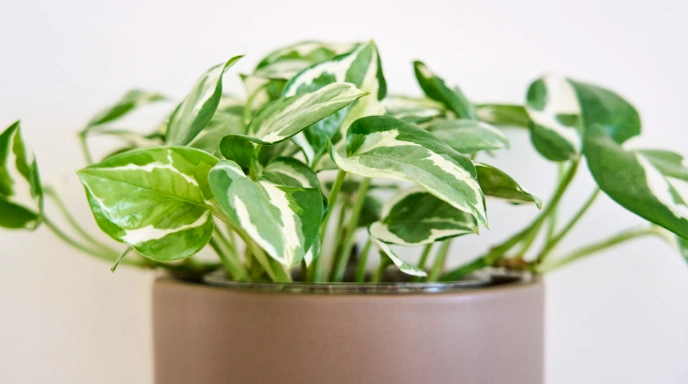
Watering: The Root of All Evil (Literally)
Overwatering is the number one killer of houseplants, and pothos are no exception. The Pothos N' Joy is drought-tolerant but hates soggy feet. Its roots need oxygen, and waterlogged soil suffocates them, leading to root rot—a nasty, often fatal condition.
Forget watering on a schedule (every Tuesday!). The right time to water depends on pot size, soil, light, and temperature. The best method is the finger test.
- Stick your finger about 2 inches into the soil.
- If the soil feels dry at your fingertip, it's time to water.
- If it feels even slightly damp or cool, wait.
When you do water, do it thoroughly. Take the plant to the sink and water until you see a good amount draining freely from the bottom holes. This ensures the entire root ball gets hydrated. Let it drain completely before putting it back in its decorative pot. Never let it sit in a saucer of standing water.
Signs of overwatering: yellowing leaves (often starting with the older ones), mushy brown stems, and a general look of wilt despite wet soil. Signs of underwatering: leaves that are dry, crispy, and curling inward, starting at the tips and edges. The soil will be bone-dry and may pull away from the edges of the pot.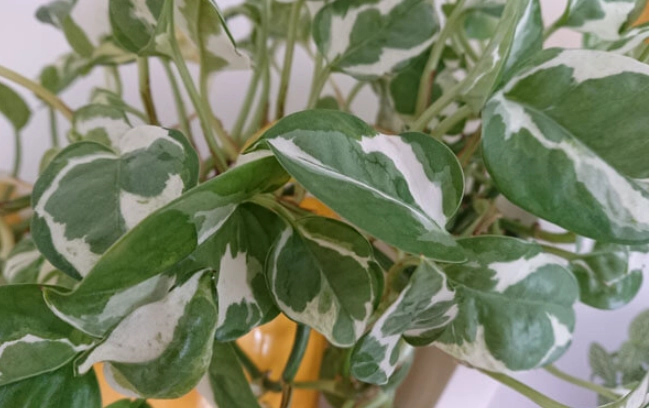
Soil and Potting: Giving Roots Room to Breathe
A Pothos N' Joy needs a well-draining potting mix. A standard all-purpose potting soil straight from the bag is often too dense and moisture-retentive on its own.
I prefer to make my own simple aroid mix:
- 2 parts regular potting soil
- 1 part perlite (for aeration and drainage)
- 1 part orchid bark or coconut coir (for chunkiness and airflow)
This creates a light, airy medium that holds some moisture but allows excess to drain away quickly, mimicking the plant's natural epiphytic tendencies.
Repotting is needed every 1-2 years, or when you see roots circling the bottom of the pot or growing out of the drainage holes. Only go up one pot size (1-2 inches larger in diameter). A pot that's too big holds too much wet soil around a small root system, inviting rot.
Temperature, Humidity, and Food
Temperature: Standard household temperatures are perfect (65-85°F or 18-29°C). Avoid cold drafts from windows or doors in winter, and keep it away from heating and air conditioning vents.
Humidity: While pothos are adaptable to average home humidity (around 40-50%), the Pothos N' Joy appreciates a bit more. Higher humidity can lead to larger leaves and may help prevent those pesky dry, brown leaf tips. You can boost humidity by grouping plants together, using a pebble tray with water, or running a humidifier. Mine does fine in average humidity, but I notice the leaves are glossier in my more humid bathroom.
Fertilizing: Feed your plant during its active growing season (spring and summer). A balanced, water-soluble houseplant fertilizer (like a 10-10-10 or 20-20-20) diluted to half-strength once a month is plenty. Do not fertilize in fall and winter when growth slows. Over-fertilizing can cause salt buildup in the soil and burn the roots.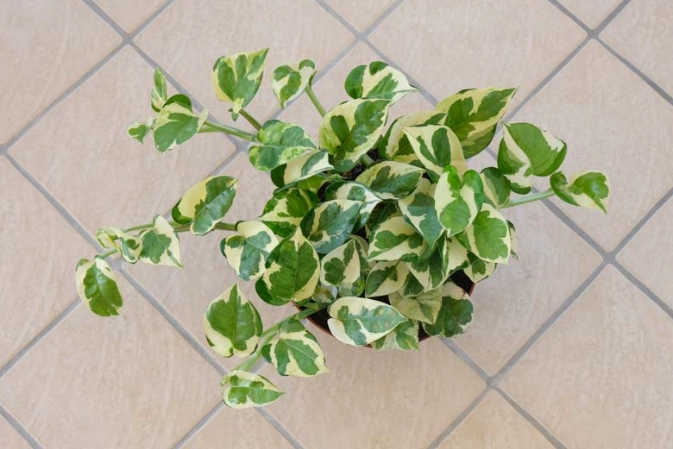
Shaping Your Masterpiece: Pruning and Propagation
One of the joys of a pothos is how easily you can shape it and make more plants. Your Pothos N' Joy might start to get a bit leggy, or maybe you want a fuller pot.
Pruning for Bushiness
Pothos grow from a point called a node (the little brown bump on the stem where a leaf attaches). When you cut just above a node, you signal the plant to send out new growth points from that node, often resulting in two new vines.
To make your plant bushier, don't be afraid to take some cuttings from longer, leafless vines. Use clean, sharp scissors. Cutting back to just above a healthy leaf will encourage new growth further back on the plant, creating a denser appearance.
Propagation: Making More N' Joy
This is where the fun begins. Those cuttings you just took? Don't throw them away! You can easily root them to create new plants. There are two main methods:
1. Water Propagation (The Easiest Method):
- Take a cutting that has at least one node and one or two leaves.
- Place the cutting in a jar or glass of water, ensuring the node is submerged but the leaf is not.
- Place in bright, indirect light.
- Change the water every week or so to keep it fresh.
- In 2-6 weeks, you should see white roots sprouting from the node.
- Once the roots are an inch or two long, you can pot the cutting in soil. Keep the soil slightly more moist than usual for the first few weeks as it transitions from water to soil.
2. Soil Propagation (Direct Planting):
- Take a cutting with a node.
- Optionally, dip the cut end in rooting hormone powder (this can speed things up but isn't necessary).
- Plant the cutting directly into a small pot with moist, well-draining soil, burying the node.
- Keep the soil consistently (but not soggy) moist and provide high humidity if possible (a plastic bag loosely over the pot can create a mini greenhouse).
- In a few weeks, give the cutting a gentle tug. If you feel resistance, roots have formed.
You can take several cuttings and plant them all in the same pot to instantly create a fuller, lusher mother plant. It's the quickest way to fix a leggy pothos.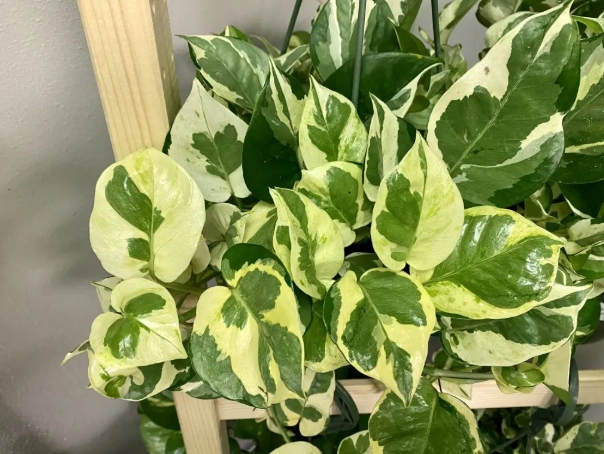
Solving the Problems: What's Wrong With My Plant?
Let's diagnose the common issues. This table should help you pinpoint the cause.
| Symptom | Likely Cause | How to Fix It |
|---|---|---|
| Yellow Leaves | Most often overwatering/poor drainage. Can also be natural aging of old leaves. | Check soil moisture. Let dry out more between waterings. Ensure pot has drainage. Remove yellow leaves. |
| Brown, Crispy Leaf Tips/Edges | Low humidity, underwatering, or fertilizer burn. | Increase humidity. Check watering frequency (use finger test). Flush soil with water if fertilizer salt buildup is suspected. |
| Brown Spots/Patches on White Areas | Sunburn from direct sunlight. | Move plant to a location with bright, indirect light only. Damaged leaves won't recover; you can prune them off. |
| Leggy Growth, Small Leaves, Less White | Insufficient light. | Gradually move to a brighter location. Consider a grow light. |
| Wilting with Dry Soil | Underwatering. | Give the plant a thorough soak. Re-evaluate your watering schedule. |
| Wilting with Wet Soil | Overwatering/root rot. | Stop watering. Check roots. If they are brown and mushy, prune rotten roots, repot in fresh dry soil, and hope for the best. Propagate healthy cuttings as a backup. |
| No New Growth | Dormancy (winter), lack of light, or need for fertilizer. | Ensure adequate light during growing season. Feed monthly in spring/summer. Be patient in winter. |
Pothos N' Joy vs. The Look-Alikes
It's easy to get confused. The houseplant market is full of variegated pothos. Here’s a quick breakdown to tell your N' Joy apart from its cousins, especially the very similar Pearls and Jade and the often-confused Marble Queen.
- Pothos N' Joy: Distinct, blocky separation between white and green. The green is a solid, deep forest green. The white is creamy and very clean. Leaves are smaller and somewhat textured. The variegation is mostly on the edges and center of the leaf.
- Pearls and Jade Pothos: Has a more speckled or marbled appearance. You'll see tiny dots and splashes of green on the white areas, and white/grey specks on the green areas. The green is often a lighter shade. The leaves are a similar size to N' Joy.
- Marble Queen Pothos: Has a much more chaotic, streaky marbling of creamy white and green all over the leaf. It's less "blocky" and more swirly. The leaves are typically larger than N' Joy, and the plant tends to grow faster but can revert to green more easily if light is low.
Why does this matter? Care is broadly similar, but growth rates and light needs for optimal variegation can vary slightly. Knowing what you have ensures you're looking at the right advice.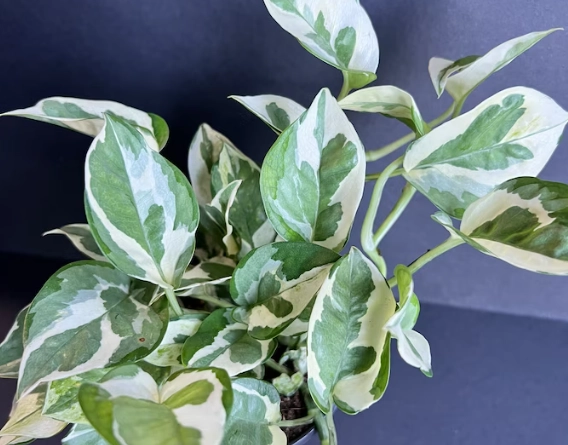
Your Pothos N' Joy Questions, Answered
Final Thoughts: Embracing the Imperfections
The Pothos N' Joy is a fantastic plant. It's more forgiving than a fiddle leaf fig, more interesting than a plain green pothos, and endlessly propagatable. But remember, it's a living thing, not a plastic decoration. It might get a brown tip. A leaf might yellow. That's okay. It's communicating with you.
Don't chase perfection. Instead, focus on providing that bright indirect light, watering only when needed, and enjoying the process. The goal isn't a flawless magazine spread plant; it's a thriving, growing companion that brings a bit of life and pattern into your space. And when you succeed—when you see a new, perfectly variegated leaf unfurl—it’s a genuine thrill. That’s the real joy of the Pothos N' Joy.
Start with the light. Get the watering right. Everything else is just fine-tuning. You've got this.

Comments