Essential Guide
- What a Money Tree Really Wants: It Starts in the Jungle
- Deconstructing the Perfect Money Tree Potting Mix
- The DIY Recipe: Your Custom-Blended Potting Mix for Money Tree
- Buying vs. Making: Navigating Commercial Potting Soil for Money Trees
- The Repotting Process: Putting Your Perfect Potting Mix to Work
- Answering Your Money Tree Soil Questions (FAQ)
- Troubleshooting: When the Soil is the Problem
- Beyond the Soil: The Supporting Cast
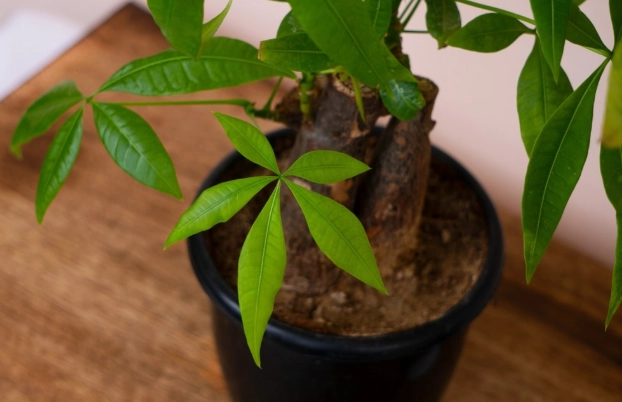
Let's talk about dirt. Not just any dirt, but the specific, life-giving stuff you put your money tree in. Get this wrong, and you're basically setting your plant up for a slow, soggy decline. Get it right, and that Pachira aquatica (that's the fancy name for a money tree) will reward you with lush, green growth and maybe even a sense of pride that you've kept something alive. I've killed my share of plants by using the wrong soil, and my first money tree was a victim of my "one bag of all-purpose potting soil fits all" philosophy. It didn't end well.
The truth is, the perfect potting mix for a money tree isn't a mystery. It's about understanding what the plant craves in its roots and then mixing or buying accordingly. Everyone searches for "potting mix for money tree," but the answers are often vague. "Use well-draining soil," they say. Okay, but what does that actually mean? What's in it? Can I just buy a bag, or should I make my own?
We're going to dig deep—pun intended—into every grain of this topic. By the end, you'll know exactly what to look for, what to avoid, and how to create the ideal home for your plant's roots.
What a Money Tree Really Wants: It Starts in the Jungle
To figure out the best potting mix for a money tree, you have to know where it comes from. Money trees are native to Central and South American swamps and wetlands. Now, hear me out before you think, "Swamp? So it wants wet soil!" That's the trap. In its natural habitat, the money tree often grows in areas with frequent flooding, but the key is that the water drains away quickly. The root system is adapted to periods of moisture followed by periods where the roots can access air.
Stick it in dense, moisture-retentive soil, and those roots will suffocate and rot faster than you can say "yellow leaves." The single biggest killer of indoor money trees is overwatering facilitated by poor drainage. So, the core demand of any good money tree potting soil is this: excellent drainage and aeration.
It needs to hold some moisture to deliver water and nutrients to the plant, but it must let the excess water escape freely and allow oxygen to reach the roots. It's a balancing act.
Deconstructing the Perfect Money Tree Potting Mix
So, what ingredients make this magic happen? A great potting mix for money tree plants is a cocktail of different components, each with a specific job. Let's break them down.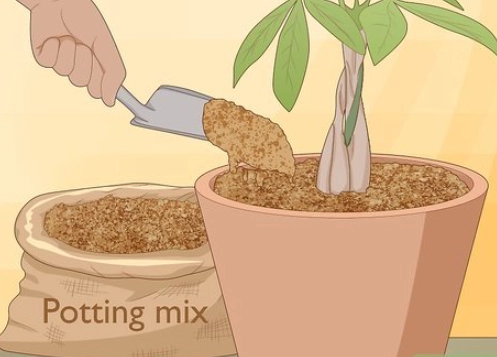
The Must-Have Ingredients
1. The Base: All-Purpose Potting Mix
This is your foundation. A decent-quality, peat or coco coir-based potting mix provides structure and a bit of water retention. Don't use garden soil or topsoil—it's too dense, compacts easily, and can harbor pests and diseases. Look for a mix without added wetting agents or slow-release fertilizer if you can, as you want control over feeding. This base usually makes up about 50% of your final blend.
2. The Drainage Champion: Perlite
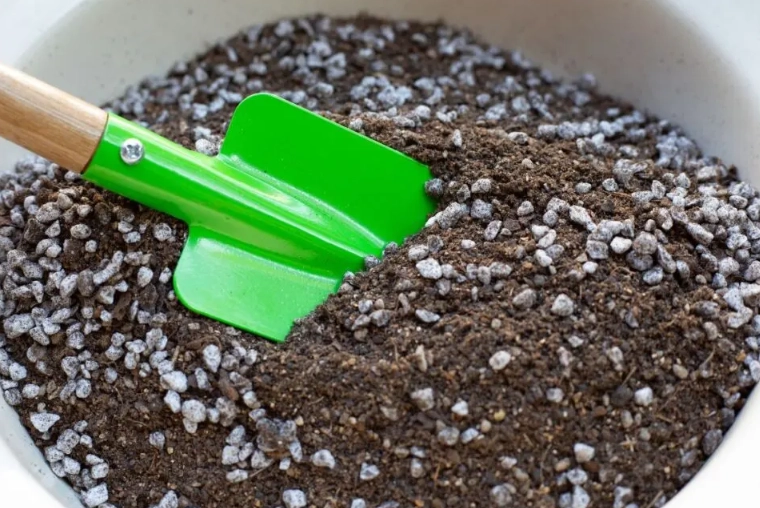
Perlite is those little white, popcorn-like bits you see in bagged soil. It's superheated volcanic glass that's incredibly lightweight. Its job is purely physical: it creates air pockets in the soil. It doesn't hold water or nutrients; it just prevents the soil from compacting into a solid brick. For a money tree potting mix, you can't have too much perlite. I'm serious. A ratio of 1 part perlite to 3 parts base mix is a good start, but I often go heavier.
3. The Aeration & Structure Pro: Orchid Bark
Here's a game-changer. Chunky orchid bark (usually fir or pine bark) is fantastic for mimicking that loose, airy forest floor environment. The chunks create large pores for water to drain through and roots to grow around. It also breaks down slowly, providing slight acidity. This is the secret ingredient that elevates a good mix to a great one. It makes the potting mix for your money tree feel loose and chunky, just the way the roots like it.
4. The Optional but Beneficial: Horticultural Charcoal
Not essential, but highly recommended if you're a chronic overwaterer (we've all been there). Horticultural charcoal (not grill charcoal!) helps to absorb impurities and toxins from the soil and can mildly inhibit fungal growth. It's like a little insurance policy against rot in the bottom of the pot.
What to Avoid in Your Mix
Just as important as what you add is what you leave out.
- Fine Sand: It seems logical for drainage, but fine sand actually fills in the gaps between soil particles, making the mix more concrete-like over time.
- Excessive Compost or Manure: Too rich and can retain too much moisture. A little is okay for nutrients, but it shouldn't be a primary component.
- Soil Moistening Gels/Crystals: These are designed to hold water and release it slowly. For a money tree, this is the opposite of what you want.
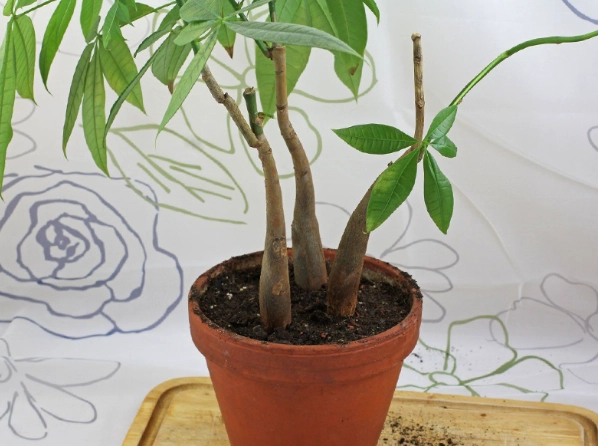
The DIY Recipe: Your Custom-Blended Potting Mix for Money Tree
Ready to play mad scientist? Here's my go-to recipe, perfected after a few failed attempts. It's simple, effective, and uses easy-to-find components.
The Standard Champion Blend:
- 2 parts All-Purpose Potting Mix (the base)
- 1 part Perlite (for aeration)
- 1 part Orchid Bark (chunky, for drainage and structure)
Optional: Add a handful of horticultural charcoal per gallon of final mix.
Mix it all together in a large tub or bucket. Really get your hands in there to ensure it's uniform. This blend is my gold standard. It drains incredibly well, dries out at a reasonable pace (usually in 7-10 days depending on pot size and light), and gives the roots plenty of room to breathe.
What if your environment is different? You can tweak it.
For Extra-Humid Rooms or If You Tend to Overwater:
- 1 part All-Purpose Potting Mix
- 1 part Perlite
- 1 part Orchid Bark
This is an even faster-draining, airier mix. It's what I use for most of my succulents and my money tree sits in a version close to this.
Buying vs. Making: Navigating Commercial Potting Soil for Money Trees
Not everyone wants to mix their own soil. I get it. It can be messy. So, can you just buy a good potting mix for a money tree off the shelf? Yes, but you have to read labels like a detective.
Many bags labeled "Cactus & Succulent Mix" or "Palm & Citrus Mix" are actually excellent starting points for a money tree. They are formulated for drainage. However—and this is a big however—I find that even these commercial mixes often benefit from a bit of extra perlite or bark. They're a good base, not always a perfect final product.
| Brand/Type | Pros | Cons | Verdict |
|---|---|---|---|
| Generic Cactus & Succulent Mix | Readily available, pre-mixed for drainage, affordable. | Can still be too peaty/water-retentive; quality varies wildly by brand. | A decent option. Always add 25% more perlite. |
| Premium Aroid Mixes (online) | Perfect chunky, airy texture; designed for epiphytes with similar needs. | Expensive, usually only available online, shipping costs. | Excellent if budget allows. Often a complete solution. |
| Standard All-Purpose Potting Soil | Cheap and available everywhere. | Will almost certainly kill your money tree if used alone. Too dense. | Avoid as a standalone mix. Only use as a base for DIY. |
My personal take? I buy a bag of cactus mix and a big bag of perlite. I mix them about 3:1 (cactus mix to perlite). It's a cheap, effective, and low-effort compromise that works really well. It saves me from the full DIY but still ensures proper drainage.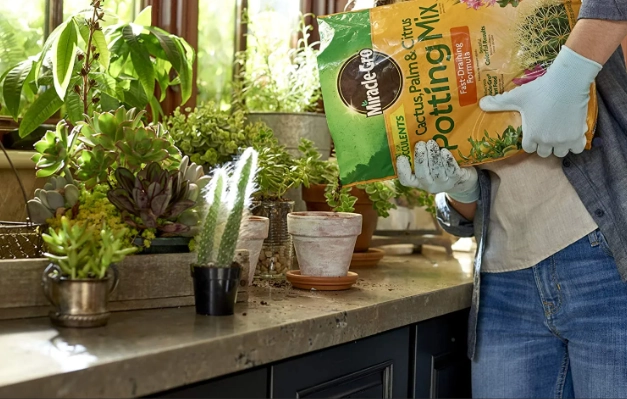
The Repotting Process: Putting Your Perfect Potting Mix to Work
You've got your perfect potting mix for your money tree. Now, how do you actually use it? Repotting is stressful for the plant, so do it right.
- Timing: Spring or early summer is best, during the active growing season. Only repot when the roots are circling the bottom of the pot or growing out of the drainage holes, or if the soil is degraded (every 2-3 years).
- The New Pot: Go only one pot size up (1-2 inches wider in diameter). A pot that's too large holds too much wet soil, leading to root rot. Drainage holes are non-negotiable. Terracotta pots are fantastic because they wick away moisture.
- The Operation: Gently remove the plant. Loosen the root ball with your fingers, shaking off the old soil. Don't be aggressive—just enough to free the outer roots. Trim any black, mushy roots with sterile scissors.
- Planting: Place a layer of your new mix in the bottom of the pot. Set the plant in, ensuring the top of the root ball sits about an inch below the pot's rim. Fill in around the sides with your mix, tapping the pot to settle it. Don't pack it down tightly.
- Aftercare: Water thoroughly until it runs out the bottom. This settles the soil around the roots. Then, place the plant in bright, indirect light and don't water again until the top few inches of soil are dry. Hold off on fertilizer for 4-6 weeks.
Answering Your Money Tree Soil Questions (FAQ)
I get a lot of questions from friends about this. Here are the most common ones.
Can I use cactus soil for a money tree?
Yes, absolutely. In fact, it's one of the best store-bought options. Cactus and succulent soil is formulated for excellent drainage, which aligns perfectly with what a money tree needs. Just check the texture—if it seems very fine, mix in some extra perlite or orchid bark to increase chunkiness.
How often should I change the potting mix for my money tree?
You don't need to change it on a schedule. Repot only when the plant has outgrown its pot or the soil has broken down and become compacted (usually every 2-3 years). The organic components like bark and peat will decompose over time, reducing aeration. If water starts pooling on the surface or the soil dries into a hard block, it's time.
My money tree soil is growing mold. What do I do?
White, fuzzy mold on the surface is a classic sign of soil staying too moist and having poor air circulation. It's more of an eyesore than an immediate threat, but it indicates a problem. First, scrape off the moldy top layer. Then, let the soil dry out much more between waterings. Increase air flow around the plant. If it's a persistent issue, you likely need a faster-draining potting mix for your money tree. Repotting into a fresh, well-aerated mix is the ultimate fix.
Is moisture meter reading reliable for a chunky mix?
They can be less reliable in very chunky, airy mixes because there are more gaps. The probe might hit an air pocket and give a false "dry" reading. The best method is still the finger test. Stick your finger 2-3 inches into the soil. If it feels dry, it's time to water. If it feels cool or damp, wait.
Troubleshooting: When the Soil is the Problem
Sometimes, you can diagnose an issue just by looking at the soil and the plant's symptoms.
- Yellowing, Dropping Leaves + Constantly Wet Soil: The classic overwatering/root rot scenario. The potting mix is not draining well enough. This is an emergency. Stop watering, check roots for rot, and repot into a much faster-draining mix immediately.
- Wilting, Dry Leaf Edges + Soil Pulling Away from Pot: The soil has become hydrophobic—it repels water. This happens when peat-based mixes dry out completely for too long. You need to bottom-water (soak the pot in a tray of water for 30 mins) to rehydrate it, and consider repotting if the problem is chronic.
- Stunted Growth, Pale Leaves: The soil might be exhausted of nutrients or too compacted for roots to grow. It might be time for a refresh with new potting mix or at least a consistent fertilizing schedule during growing season.
Beyond the Soil: The Supporting Cast
Even the world's best potting mix for a money tree can't perform miracles if other conditions are off. Remember, it's a system.
Light: Bright, indirect light is key. Low light slows growth and water usage, meaning the soil stays wet longer, increasing rot risk.
Watering: This is the partner to your soil. Water deeply when the soil is dry, then let the mix do its job and drain. Never let the plant sit in a saucer of water.
Pot Choice: I mentioned terracotta. It's porous, allowing the soil to dry from the sides as well as the top. Plastic pots retain moisture longer. Choose your pot material in tandem with your soil mix and your watering habits.
For further reading on the science of potting media and aeration, resources from university extension services are invaluable. For example, the University of Florida IFAS Extension has detailed publications on container media and components that explain the physics of water and air in soil. It's technical but confirms why ingredients like perlite and bark are so critical.


Comments