Let's talk about the wax plant, Hoya carnosa. You've probably seen it—those thick, waxy leaves trailing elegantly from a hanging basket, or maybe you've caught a whiff of its incredible, night-time perfume from its star-shaped flower clusters. It's one of those classic houseplants that has made a huge comeback, and for good reason. It's tough, it's beautiful, and when it blooms, it feels like a real achievement.
But here's the thing I've learned from killing my first one (yes, I admit it) and then finally figuring them out: they have a reputation for being easy, but they have their own quiet, stubborn ways. They won't throw a dramatic tantrum like a fern, but they will just... stop. Stop growing, stop putting out new leaves, and definitely stop flowering if they're not happy.
So, if your Hoya carnosa is just sitting there, or you're thinking of getting one and want to do it right, you're in the right place. This isn't just a list of instructions. It's everything I wish I knew when I started, pieced together from my own mistakes, conversations with much better growers, and a lot of late-night reading.
Quick Navigation
- Getting to Know Your Hoya Carnosa: More Than Just a Wax Plant
- The Core Care Routine: Light, Water, and the Right Setup
- Beyond the Basics: Feeding, Humidity, and Temperature
- Propagating Your Hoya: Share the Green Love
- Common Problems & Solutions: A Troubleshooting Guide
- Popular Hoya Carnosa Varieties: Beyond the Plain Green
- Your Hoya Carnosa Questions, Answered
- The Final Word: Patience is a Virtue
Getting to Know Your Hoya Carnosa: More Than Just a Wax Plant
Before we dive into the how-to, let's understand the what. The wax plant Hoya carnosa is a tropical succulent vine native to Eastern Asia and Australia. Those thick leaves are its water storage tanks, which is your first big clue about its care—it hates wet feet.
The flowers are the real showstopper. They grow in perfect spherical clusters called umbels, and each tiny, star-shaped flower looks like it's made of porcelain or, well, wax. They produce nectar, which can sometimes drip, and their fragrance is strongest at night to attract moths in the wild. In your living room, it just smells divine.
One non-negotiable rule? Don't cut off the old flower stalks (peduncles). This is the number one beginner mistake. The Hoya carnosa will re-bloom from the same stalk year after year. Cutting it off means you're resetting the clock on flowers, sometimes for years.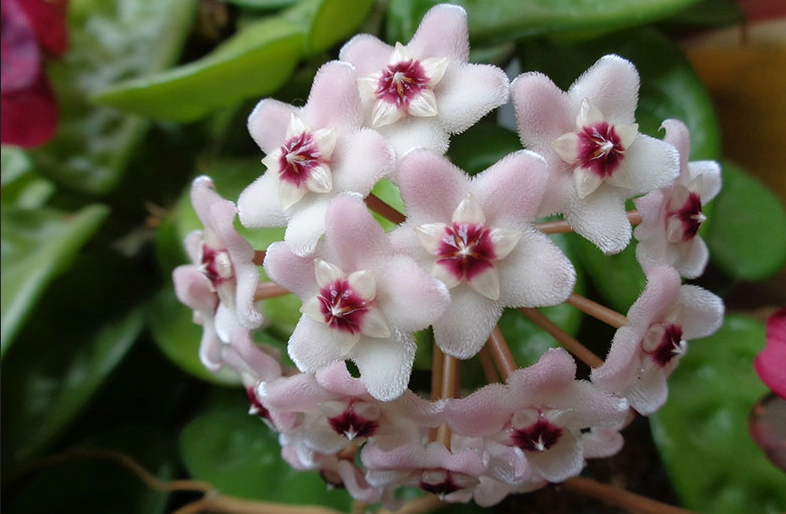
The Core Care Routine: Light, Water, and the Right Setup
This is where most people go wrong, either by doing too much or placing it in the wrong spot. Let's break it down.
Light: The Single Most Important Factor for Growth and Blooms
Here's a common myth: "Hoyas are low-light plants." That's only half true. A wax plant Hoya carnosa will survive in low light. It might even put out a few sad, elongated leaves. But to thrive, to grow vigorously, and most importantly, to flower, it needs bright, indirect light.
Think of an east-facing window where it gets gentle morning sun. A south or west-facing window is great too, but you might need to diffuse the harsh afternoon rays with a sheer curtain. Direct, scorching sun can bleach and burn those beautiful waxy leaves. No flowers? The first thing to check is your light situation.
Watering: The Art of Neglect (Almost)
Overwatering is the fastest way to kill a Hoya carnosa. Those succulent leaves mean it's built for drought. My method is simple: wait until the soil is completely dry all the way through the pot. Don't just check the top inch. Stick your finger deep into the soil, or better yet, lift the pot. A dry pot is significantly lighter than a watered one.
When you do water, do it thoroughly. Take it to the sink and drench the soil until water runs freely out of the drainage holes. Let it drain completely before putting it back in its cachepot. In winter, you might only need to water it once a month or even less.
The leaves will tell you if you're getting it right. Underwatered leaves get thin, wrinkly, and may curl. Overwatered plants get soft, yellow leaves starting at the bottom, and the stems might turn mushy—a sign of root rot.
Soil and Potting: Creating the Perfect Home
You can't talk about watering without talking about soil. Regular potting soil holds too much moisture. Your Hoya carnosa needs a mix that is airy and chunky, replicating how it might grow on tree bark in the wild.
Here's a simple, effective mix you can make at home:
- 50% high-quality potting soil (like a cactus/succulent blend)
- 30% orchid bark or coconut husk chips (for chunkiness and airflow)
- 20% perlite or pumice (for extra drainage)
As for the pot, drainage holes are non-negotiable. Terracotta pots are a fantastic choice because they're porous and help wick away extra moisture from the soil.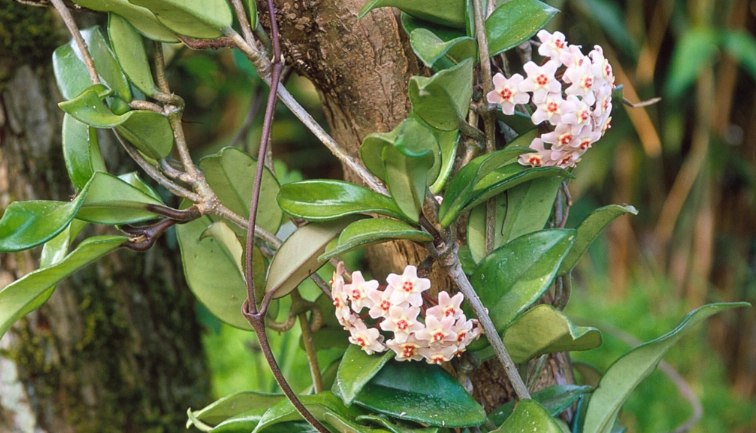
Beyond the Basics: Feeding, Humidity, and Temperature
Once you've got light and water down, these factors help your plant go from okay to outstanding.
Fertilizer: A Light Touch for Steady Growth
Hoyas aren't heavy feeders. During the active growing season (spring and summer), a balanced, water-soluble fertilizer diluted to half strength every 4-6 weeks is perfect. I use a 5-5-5 or 10-10-10 formula. Some swear by a high-phosphorus fertilizer (like a 5-10-5) to encourage blooming. You can experiment, but the key is dilution—too strong can burn the roots.
Stop fertilizing in fall and winter. The plant is resting.
Humidity & Temperature: Creating a Comfortable Environment
While the wax plant Hoya carnosa is adaptable to average household humidity (around 40-50%), it truly appreciates higher levels. If your air is very dry, you might see slower growth or the tips of new leaves drying out.
You don't need a fancy humidifier (though it helps). Grouping plants together creates a microclimate. A pebble tray with water under the pot works. Or, just give it an occasional misting, though avoid misting the flowers directly.
Temperature-wise, they like it warm. Aim for between 60°F (15°C) and 85°F (29°C). Protect them from cold drafts and sudden temperature drops, which can cause leaf drop.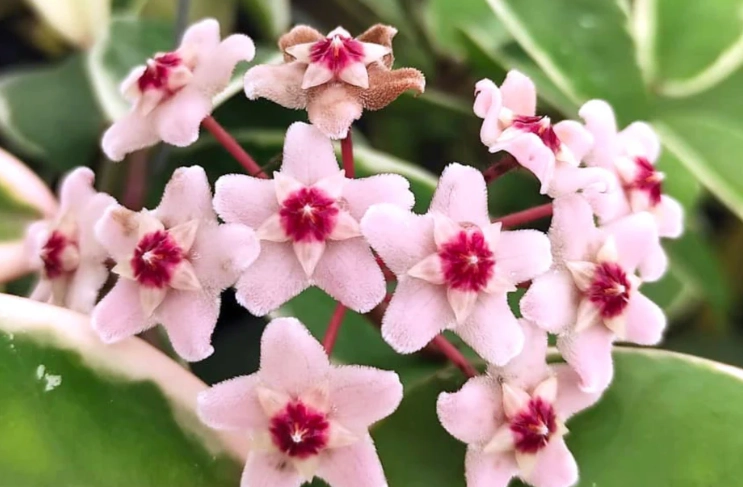
Propagating Your Hoya: Share the Green Love
One of the joys of growing Hoyas is how easy they are to propagate. Want a second plant? Or need to save a leggy one? Here's how.
The most reliable method is stem cuttings in water. It's simple and lets you watch the roots grow.
- Take a cutting with at least 2-3 nodes (those little bumps on the stem where leaves grow).
- Remove the leaves from the bottom node or two.
- Place the cutting in a jar of water, ensuring the bare nodes are submerged.
- Put it in bright, indirect light and change the water weekly.
- In 2-6 weeks, you should see white roots developing.
- Once the roots are an inch or two long, pot it up in your chunky Hoya mix and care for it as usual.
You can also propagate directly in sphagnum moss or even in soil, but water propagation is foolproof for beginners.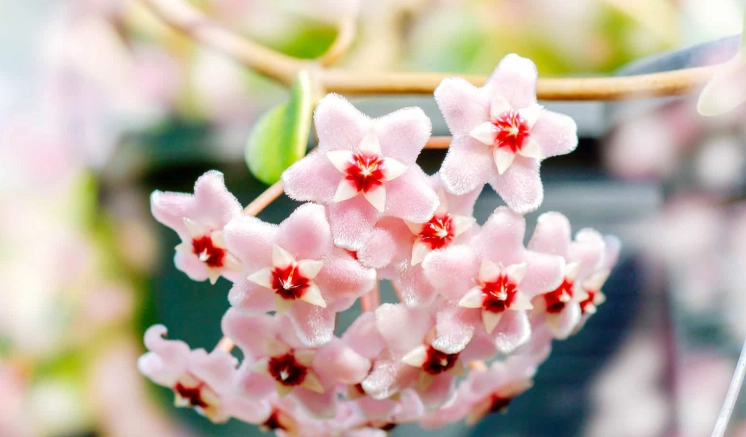
Common Problems & Solutions: A Troubleshooting Guide
Even with the best care, things can go sideways. Here’s a quick-reference table for the most common issues with your Hoya carnosa.
| Symptom | Likely Cause | How to Fix It |
|---|---|---|
| Yellowing, soft leaves falling off | Overwatering / Root Rot | Stop watering immediately. Check roots. If mushy/brown, cut them off, repot in fresh dry mix, and cross your fingers. |
| Wrinkled, thin, curling leaves | Underwatering | Give it a deep, thorough drink. The leaves should plump up in a day or two. |
| Brown, crispy leaf edges or tips | Low humidity or salt/mineral buildup | Increase humidity. Flush the soil with distilled water every few months to remove fertilizer salts. |
| No new growth for months | Dormancy (winter) or insufficient light | Check light levels. Be patient in winter; growth will resume in spring. |
| Sticky residue on leaves (honeydew) | Pests - likely Mealybugs or Scale | Isolate plant. Wipe with rubbing alcohol on a cotton swab. Treat with insecticidal soap or neem oil. |
| Long, leggy stems with few leaves | Insufficient light | Move to a brighter location. You can prune the leggy stems back to encourage bushier growth. |
Pests are rare on Hoyas because of the waxy leaves, but mealybugs (little white cottony bugs) can sometimes hide in the nooks. Vigilance is key—catch them early.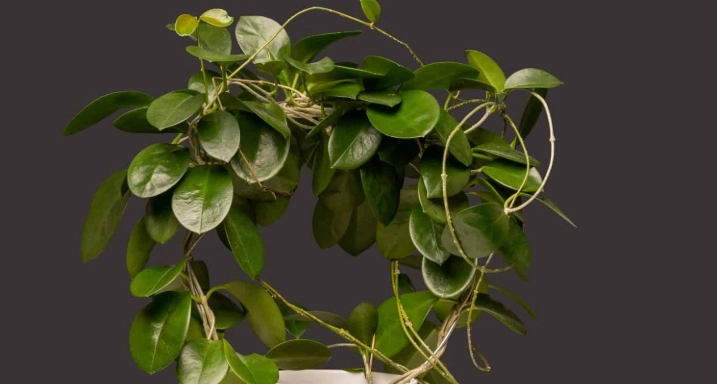
Popular Hoya Carnosa Varieties: Beyond the Plain Green
The classic green Hoya carnosa is just the beginning. Plant breeders have developed stunning cultivars that are all cared for the same way but offer different looks. Here are a few favorites:
- Hoya carnosa 'Krimson Queen': My personal favorite. It has green leaves with a striking creamy-white margin. The new growth often comes in bright pink—just gorgeous.
- Hoya carnosa 'Krimson Princess': The reverse of the Queen. The leaves are creamy-white with a green center and margin.
- Hoya carnosa 'Compacta' (Hindu Rope): This one is a showstopper. The leaves are curled and contorted, growing on a twisted stem that looks like a rope. It grows slower but is incredibly sculptural.
- Hoya carnosa 'Variegata': Similar to the Krimson varieties, with lovely splashes of cream and yellow on the leaves.
Care for all these is identical to the standard wax plant Hoya carnosa. One note: the highly variegated ones (with more white) may grow a tad slower because they have less chlorophyll, and they might need a touch more light to maintain their colors.
Your Hoya Carnosa Questions, Answered
This is the big one. First, check light—it needs plenty of bright, indirect light. Second, age—a plant often needs to be 2-3 years old and somewhat root-bound to feel the urge to flower. Third, don't cut the old flower stalks! Finally, a period of slightly cooler, drier rest in winter can help trigger blooming in spring/summer.
According to the ASPCA (American Society for the Prevention of Cruelty to Animals), Hoya plants are listed as non-toxic to cats and dogs. However, it's always best to keep plants out of reach of curious pets to avoid any stomach upset from chewing.
Infrequently! Hoyas bloom best when a bit root-bound. Repot only every 2-3 years, or when you see roots literally circling the bottom of the pot or growing out of the drainage holes. When you do, only go up one pot size (1-2 inches larger in diameter).
If you live in USDA hardiness zones 10-12, you can grow it outdoors year-round in a shaded or partly shaded spot (check your zone on the USDA Plant Hardiness Zone Map). For everyone else, it makes a fantastic summer vacation plant on a shaded patio. Just bring it in before nighttime temps drop below 50°F (10°C).
They're often confused! Hoya carnosa leaves are thicker, waxier, and often have silvery speckles (splash). Hoya pubicalyx leaves are longer, thinner, and less waxy to the touch. Both are great, but carnosa is the classic "wax plant."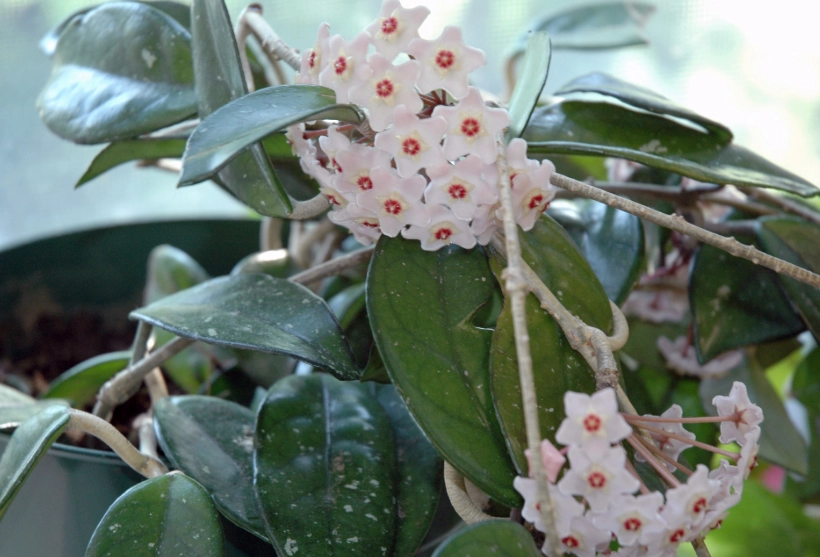
The Final Word: Patience is a Virtue
Growing a thriving wax plant Hoya carnosa isn't about constant attention. It's about setting up the right conditions—bright light, chunky soil, a snug pot—and then mostly leaving it alone. It rewards a patient, observant gardener.
Don't stress if it's not growing quickly in the winter. Don't panic if it goes months without a new leaf. And for goodness' sake, don't overwater it out of love.
Treat it right, and one day, you'll notice tiny little knobs forming. Those are the flower peduncles. A few weeks later, you'll have a cluster of perfect, fragrant stars. And you'll realize the wait was absolutely worth it. That's the magic of the Hoya.
Got a specific question I didn't cover? The best resource for deep-dive, scientifically-backed information on plant species is often a botanical garden. For precise botanical details on Hoya carnosa, you can always refer to resources like the Missouri Botanical Garden's Plant Finder. It's a fantastic way to verify what you're growing.
Now go check on your Hoya. Is the soil dry? Good. Leave it for another week.
Comments