In This Guide
- The #1 Secret to Bougainvillea Care: Think Tough Love
- Bougainvillea Care Breakdown: The Non-Negotiables
- The Art (and Courage) of Pruning Bougainvillea
- Choosing the Right Bougainvillea Variety
- Overwintering: Keeping Your Bougie Alive in the Cold
- Solving the Biggest Bougainvillea Problems (Why Isn't Mine Flowering?!)
- Bougainvillea Care FAQs: Quick Answers to Thorny Questions
- Final Thoughts: Embracing the Bougainvillea Mindset
Let's be honest. You probably fell in love with bougainvillea because of those insane, papery blooms that look like a burst of pure joy. I know I did. I saw one cascading over a wall in Southern California, a riot of magenta against a white wall, and I was hooked. I thought, "How hard can it be?"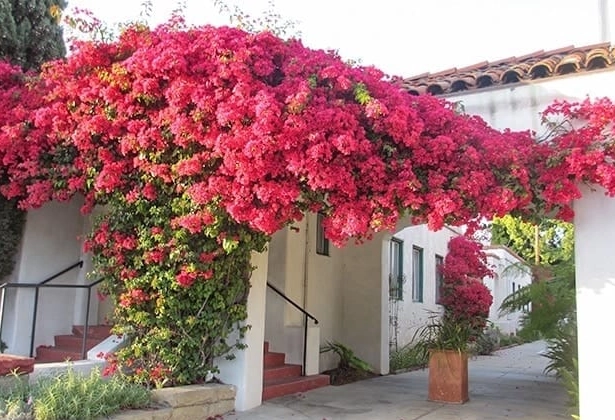
Well, my first attempt was a lesson in humility. A sad, leafy stick with two pathetic pink bracts. It was embarrassing.
That's why I'm writing this. Not as a botanist, but as someone who killed a few before figuring out their quirky, wonderful language. This guide isn't about complex science. It's about translating what these tropical beauties are trying to tell you. We're going to cut through the noise and get to the real, actionable stuff that makes the difference between a survivor and a showstopper.
The #1 Secret to Bougainvillea Care: Think Tough Love
This is the core idea you need to wrap your head around. Bougainvilleas are not delicate orchids. They're sun-worshipping, drought-tolerant survivors that thrive on a bit of neglect. The biggest mistake? Being too nice. Overwatering, over-fertilizing, and too much shade are the fast track to a green, bloomless bush.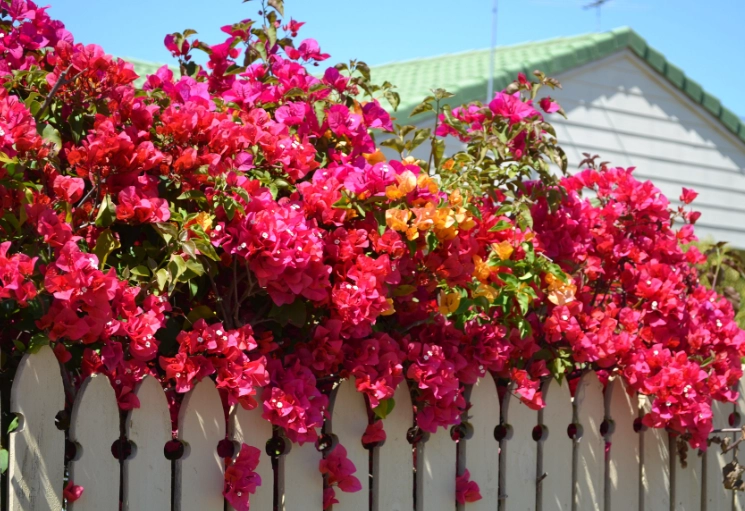
Their vibrant "flowers" aren't actually flowers at all. They're modified leaves called bracts. The tiny white center is the true flower. The plant puts all that crazy color into the bracts to attract pollinators. To get that color, it needs stress—the good kind. Think of it like building muscle; you need resistance.
Bougainvillea Care Breakdown: The Non-Negotiables
Let's get into the specifics. If you remember nothing else, lock in these five pillars.
Sunlight: The Ultimate Fuel
This is non-negotiable. Bougainvilleas need a minimum of 6 hours of direct, unfiltered sunlight per day. More is better. 8+ hours is ideal for maximum blooming. If you're growing indoors, a south-facing window is your only real shot. East or west might keep it alive, but it will likely get leggy and shy with blooms.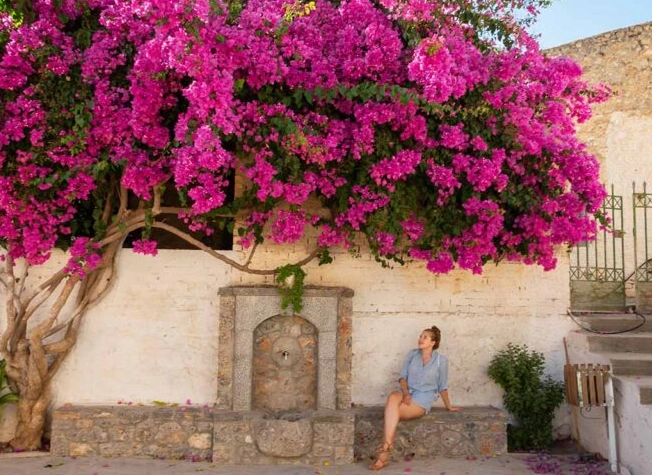
No sunny spot? Honestly, consider a different plant. It's the number one reason for failure.
Watering: The Delicate Balance
Here's where most people trip up. Bougainvilleas hate wet feet. Their roots are prone to rot. The goal is to let the soil dry out completely between waterings.
When you do water, do it thoroughly. Soak the soil until water runs freely out of the drainage holes. Then, let it drain completely. No saucers full of water underneath!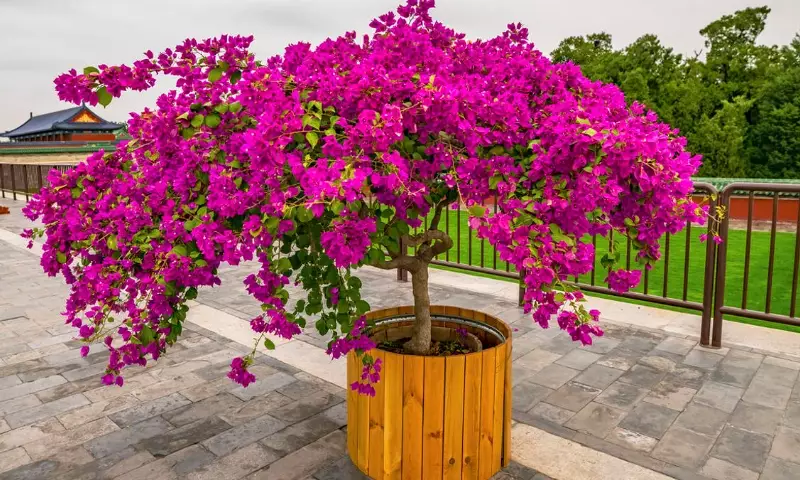
Established in-ground plants are incredibly drought-tolerant. Once they've settled in (after the first season), they often thrive on rainfall alone in many climates.
Soil & Drainage: Building the Right Foundation
Fast drainage is critical. They prefer a slightly acidic to neutral soil pH (5.5 to 7.0).
- In Pots: Use a high-quality, well-draining potting mix. I often add extra perlite or coarse sand (about 25% by volume) to the mix to guarantee drainage. A cactus/succulent mix is a great starting point.
- In Ground: If you have heavy clay soil, you must amend it. Dig a hole twice as wide as the root ball and mix the native soil generously with compost and some gritty material like pea gravel or expanded shale to improve drainage.
Feeding: Less is More
Contrary to popular belief, bougainvilleas are not heavy feeders. High-nitrogen fertilizers (the first number in the N-P-K ratio) will promote lush, green foliage at the expense of blooms.
You want a fertilizer that promotes flowering. Look for a blend where the middle number (Phosphorus) is higher, or one that's balanced but labeled for "bloom boosters" or "flowering plants." A formula like 10-20-10 or 6-8-10 is good. Some swear by hibiscus fertilizer.
My routine: I feed my potted bougainvilleas with a half-strength, water-soluble bloom fertilizer every 4-6 weeks during the active growing season (spring through early fall). I stop feeding in late fall and winter. For in-ground plants, one or two feedings a season is often plenty.
Temperature & Climate
Bougainvilleas are tropical to subtropical plants. They thrive in heat. They are best suited for USDA Hardiness Zones 9-11, where they can be grown as perennial landscape plants. You can check your specific zone on the authoritative USDA Plant Hardiness Zone Map.
- Ideal Daytime Temp: 75°F - 95°F (24°C - 35°C).
- Nighttime Temp: Above 60°F (16°C) is best for continuous growth.
- Cold Tolerance: Mature plants can handle brief dips to about 32°F (0°C), but frost will damage or kill them. Sustained cold below 40°F (4°C) can cause leaf drop and send them into dormancy.
The Art (and Courage) of Pruning Bougainvillea
Pruning scares people. Those thorns are no joke—wear good gloves! But pruning is essential for shape, size control, and, most importantly, more blooms.
Bougainvilleas bloom on new growth. When you prune a tip, you signal the plant to send out multiple new branches from just below that cut. More new branches = more potential flowering sites.
When to Prune: The best time for major shaping is in late winter or early spring, just before the new growth surge. You can do light tip-pruning throughout the growing season to encourage branching.
How to Prune:
- Remove dead, diseased, or weak branches first, cutting back to healthy wood.
- To encourage bushiness, cut back long, leggy shoots by one-third to one-half. Make your cut just above a leaf node or a junction with another branch.
- To control size, you can cut branches back more severely, even by several feet if needed. They bounce back vigorously.
- Always use clean, sharp pruning shears to make clean cuts.
You can train them as standards (tree-form), espaliers on a wall, or let them ramble over an arbor. It's up to you.
Choosing the Right Bougainvillea Variety
Not all bougainvilleas are created equal. Some are massive climbers, others are more shrub-like or even dwarfs perfect for containers and hanging baskets. Picking the right one for your space is half the battle.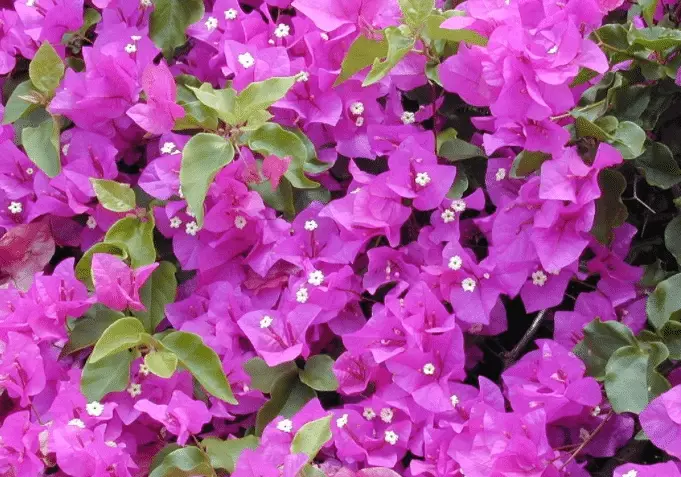
| Variety Name | Color | Growth Habit & Size | Best For | Notes |
|---|---|---|---|---|
| Barbara Karst | Vibrant Crimson Red | Vigorous climber, 20-30 ft+ | Fences, Walls, Large Arbors | Classic, fast-growing, very common and reliable. |
| Raspberry Ice | Magenta Pink | Shrubby, 4-6 ft tall and wide | Hedges, Large Containers | Variegated cream-and-green foliage, stunning contrast. |
| Miss Alice (aka "White" or "Singapore White") | Pure White | Large, semi-dwarf shrub, 5-8 ft | Landscape focal point, containers | Thornless! A huge plus. More cold-sensitive. |
| Vera Deep Purple |
For container bougainvillea plant care, the dwarf or semi-dwarf varieties like 'Vera Deep Purple', 'Raspberry Ice', or 'Miss Alice' are much more manageable. Trying to keep a 'Barbara Karst' in a pot long-term is a constant pruning battle.
Overwintering: Keeping Your Bougie Alive in the Cold
This is the big challenge for gardeners in zones 8 and below. I'm in a zone 8a/7b border, so I've become a pro at the winter shuffle.
For Potted Plants:
- Bring it indoors well before your first frost date. A bright, cool (45-60°F / 7-15°C) spot is ideal—a heated garage with a window, a sunroom, or a cool greenhouse.
- It will likely go semi-dormant and drop many leaves. Don't panic. This is normal.
- Drastically reduce watering. Only water when the soil is bone dry, maybe once a month. No fertilizer.
- Watch for pests like spider mites or whiteflies in the dry indoor air. A gentle spray with water or insecticidal soap can help.
For In-Ground Plants (Marginal Zones 8-9):
- Stop fertilizing in late summer to harden off new growth.
- Pile a thick, dry mulch (like straw or shredded bark) around the base of the plant after the first hard frost to protect the roots.
- You can try covering the plant with a frost cloth on freezing nights. The goal is to keep the root crown alive. Even if the top dies back, it may resprout from the roots in spring.
The University of Florida IFAS Extension, in a region where bougainvilleas flourish, has excellent resources on landscape use and care for bougainvillea that are worth a look for foundational knowledge.
Solving the Biggest Bougainvillea Problems (Why Isn't Mine Flowering?!)
Let's troubleshoot. Here are the common issues and, more importantly, the fixes.
This is the number one complaint. Causes:
- Not Enough Sun: This is culprit #1. Move it or prune overhead branches.
- Overwatering: Soggy soil promotes leafy growth. Let it dry out more.
- Over-fertilizing / Wrong Fertilizer: Too much nitrogen. Switch to a low-nitrogen, bloom-booster formula and cut frequency.
- Pot Too Big: Bougainvilleas bloom best when slightly root-bound. If repotting, only go up one pot size.
Yellow leaves can mean different things:
- Older leaves turning yellow: Often natural aging, especially in fall/winter.
- New leaves yellow with green veins: Iron chlorosis. Soil is too alkaline. Apply a chelated iron supplement.
- Widespread yellowing, especially with leaf drop: Usually overwatering and poor drainage. Check your soil and watering habits immediately.
Problem: Leaf Drop
Bougainvilleas are dramatic. They drop leaves when stressed by:
- A sudden change in location or temperature.
- Underwatering (severe drought).
- Overwatering (root rot setting in).
- Being moved indoors/outdoors for the season.
Give it stable conditions and correct care, and it should releaf.
Problem: Pests
Thankfully, they're not pest magnets. Aphids, caterpillars, or leaf miners might show up. A strong blast of water or an application of neem oil or insecticidal soap usually handles it. Good air circulation helps prevent issues.
Bougainvillea Care FAQs: Quick Answers to Thorny Questions
You've got questions. I've made the mistakes so you don't have to.
Final Thoughts: Embracing the Bougainvillea Mindset
Success with bougainvillea plant care comes down to a shift in perspective. Stop babying it. Give it the hottest, sunniest spot you have. Be stingy with the watering can. Go easy on the food. And have the courage to prune it back.
When you get it right, the reward is unmatched. Months of outrageous, color-soaked blooms that stop neighbors in their tracks. It's a plant that teaches you to work with its nature, not against it.
Start with a healthy plant from a good nursery, pick the right variety for your space, and apply that tough love philosophy. Don't get discouraged by leaf drop or a slow start. These plants are resilient. With these core principles of bougainvillea care, you're not just keeping a plant alive—you're setting the stage for a spectacular, long-lasting performance.
Now, go find that sunny spot.

Comments