Let's cut to the chase. The single biggest reason succulent plants die isn't pests or sunburn. It's the stuff their roots sit in. Calling it "dirt" or even "potting soil" is where most people go wrong from the start. What we're really talking about is a succulent soil mix—a engineered growing medium designed for one primary function: to get water away from the roots, fast. If you've ever pulled a mushy, black-rooted plant from a pot, you've met the enemy. That pot was filled with water, not soil.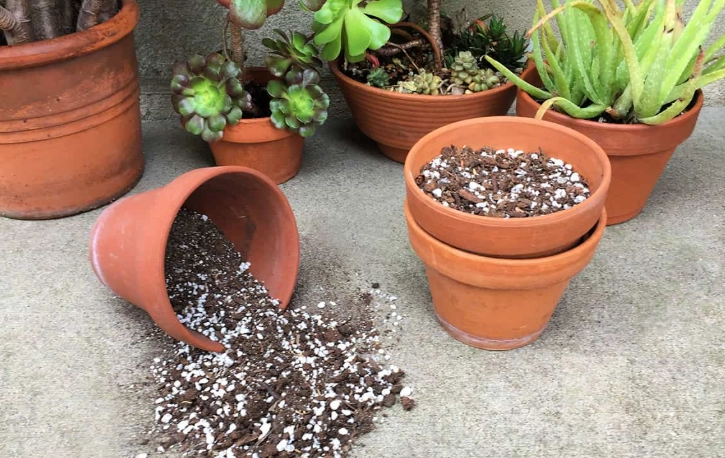
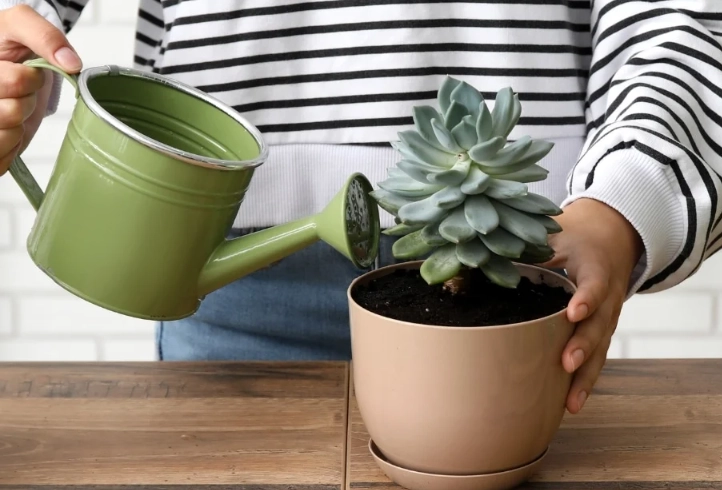
I've killed my share of plants learning this. The most expensive lesson was a beautiful Echeveria 'Lola' I planted in a gorgeous ceramic pot with... regular indoor plant mix. It looked perfect for a month. Then it didn't. The problem was invisible, happening below the surface where moisture lingered for days.
This guide isn't about repeating the simple "use gritty soil" advice. We're going deeper. We'll look at what makes a mix work, how to build your own (or choose a bagged one intelligently), and uncover the subtle mistakes even experienced growers make. Your goal isn't just to keep plants alive, but to have them thrive and propagate.
What's Inside This Guide
The Foundation: What Makes Soil ‘Succulent-Friendly’?
Forget moisture retention. Think drainage and aeration. In their native habitats—arid deserts, rocky slopes, sandy plains—succulents' roots experience a cycle of brief, heavy water availability followed by long, dry periods. The soil in these areas is typically mineral-based (sand, grit, rocks) with very little organic matter that would hold water.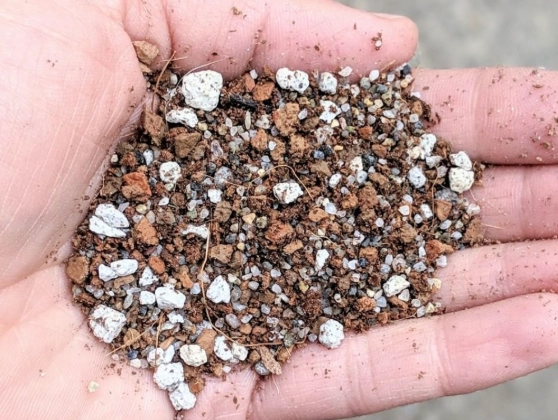
A good well-draining soil for succulents replicates this by creating large pore spaces. Water should soak in quickly when you irrigate, hydrate the roots, and then drain out completely. Air then fills those spaces, allowing roots to breathe and preventing anaerobic conditions that cause rot.
The Non-Consensus Point: Many guides say a 50/50 mix of potting soil and perlite is fine. For beginners in humid climates or with non-porous pots, that's often a death sentence. That "potting soil" component is too variable and often too water-retentive. I recommend starting with a much higher ratio of inorganic grit—think 60-70%—especially if you're unsure about your watering habits.
The physical structure of the mix is more critical than any specific ingredient list. It should be loose and crumbly, not dense or clumpy. If you squeeze a handful of damp mix, it should fall apart easily when you open your hand. If it holds a shape like a snowball, it's too dense.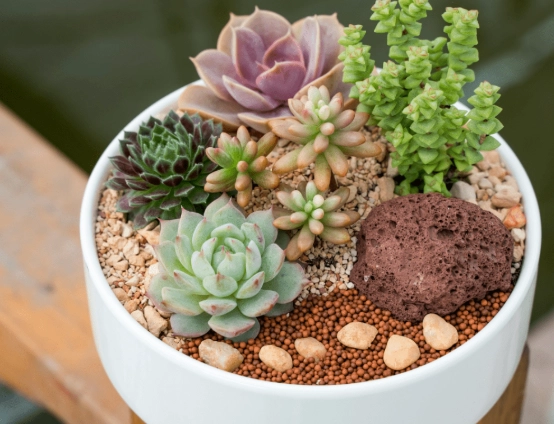
Soil Components: A Detailed Breakdown
Think of building your mix like a recipe. You need ingredients that provide structure (inorganic grit) and some that provide nutrients and slight moisture (organic matter).
The Inorganic Grit (The Drainage Crew)
These materials don't break down quickly, create air pockets, and don't hold nutrients. Their job is to keep the mix open.
| Material | Best For | Watch Out For |
|---|---|---|
| Perlite | Lightweight aeration, budget-friendly. Great for starting out. | It's white, floats to the top with watering, and can be dusty. It's also very fragile and breaks down into powder over a few years. |
| Pumice | My personal favorite. Porous, retains some water/air in its holes, doesn't float, provides weight. | More expensive and heavier than perlite. Can be hard to find in some regions. |
| Coarse Sand (Horticultural/Gritty) | Adds weight and improves drainage. The large particle size is key. | Never use fine beach or play sand. It fills pore spaces and creates concrete-like soil. You want grains 1/8" or larger. |
| Crushed Granite or Chicken Grit | Extreme drainage, very stable and long-lasting. Excellent for lithops and mesembs. | Heavy and can be sharp. Not typically used as the primary grit. |
The Organic Matter (The Nutrient & Structure Crew)
This part feeds your plants but also holds water. The trick is using the right kind and not too much.
Potting Soil (The Base): Don't use garden soil. Use a high-quality, screened potting mix that's light and fluffy. Avoid mixes with lots of twigs or that feel soggy right out of the bag. Many contain wetting agents—chemicals that help peat absorb water—which are the opposite of what we want. Look for a simple, peat or coir-based mix.
Coconut Coir: A sustainable alternative to peat moss. It rewets more easily than peat if it dries out completely, but its water-holding capacity is similar. I find it less messy.
Composted Pine Bark Fines: A secret weapon. Small chunks of bark improve aeration as they decompose slowly, and they help prevent the organic component from compacting into a dense mat over time. A handful mixed into your potting soil base works wonders.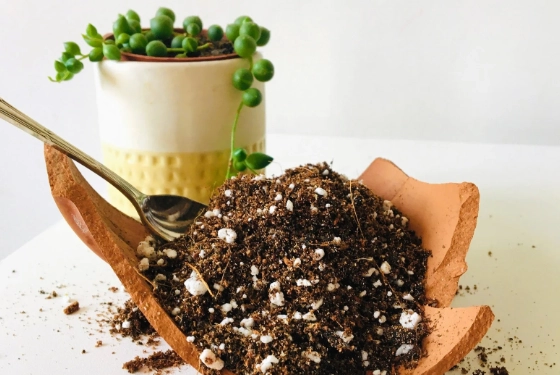
Building Your Own Mix: A Step-by-Step Guide
Here’s a flexible, reliable recipe I've used for years. Adjust based on your climate (add more grit for humid areas) and plant type (more grit for cacti and mesembs).
The All-Purpose Starter Mix:
- 2 parts Inorganic Grit (Pumice or a 50/50 mix of Perlite and Coarse Sand)
- 1 part Potting Soil (or Coconut Coir)
- ½ part Composted Pine Bark Fines (optional but recommended)
How to Mix It:
Do this outdoors or on a large tarp. Wear a mask if you're sensitive to dust (especially from perlite). Dump all your components into a large tub or wheelbarrow. Mix them with your hands or a small hand shovel until the color is uniform—no big streaks of just soil or just perlite. The key is homogeneity.
Pro-Tip for Testing: After mixing, take a cup of your blend and thoroughly wet it. Let it drain for an hour. Then pick up a handful and squeeze. If water streams out, it's too organic. If it just feels damp and crumbles immediately, you're golden.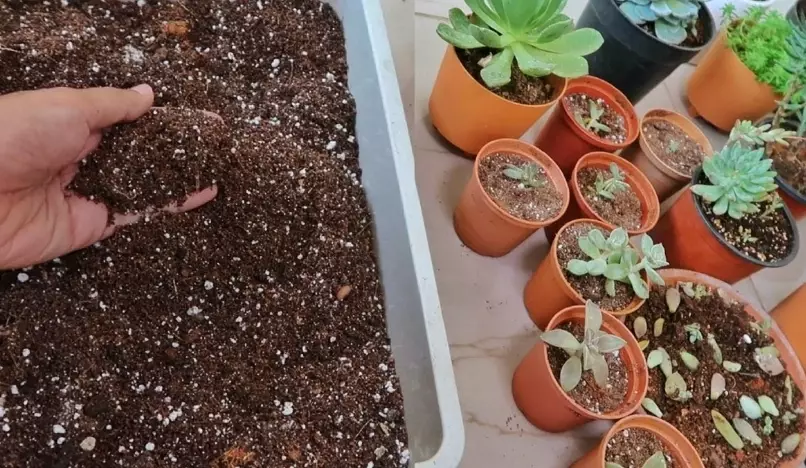
Navigating Bagged Succulent & Cactus Soil
Not everyone wants to mix soil. That's fine. But don't trust the bag label blindly. Most commercial cactus potting mix is still too water-retentive straight out of the bag, especially for indoor growing where evaporation is slower.
Here’s what to do: Treat bagged succulent soil as a base ingredient, not a final product. Buy a bag of perlite or pumice alongside it. When you get home, mix the bagged soil with an additional 25-50% extra grit. This one step will dramatically increase your success rate.
I recently tested three popular brands by saturating them and timing how long they took to dry out in identical conditions. The one labeled "fast-draining" took three days longer than my homemade mix to reach the same dryness level. That's three extra days for roots to sit in moisture.
Advanced Tips & The Pot Connection
Soil doesn't work in isolation. The pot is its partner. A perfect, gritty mix in a glazed ceramic pot with no drainage hole is a bathtub. You've just built a very fancy bathtub.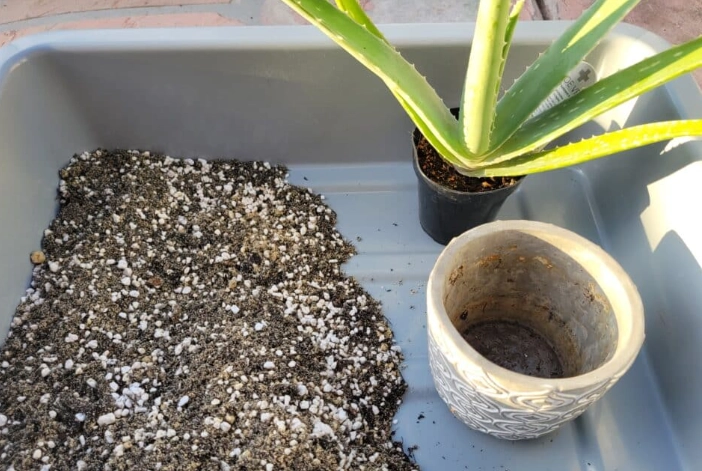
Pot Material Matters:
- Terra Cotta/Clay: Porous, wicks moisture from the soil. Allows you to use a slightly more moisture-retentive mix. Excellent for beginners prone to overwatering.
- Glazed Ceramic/Plastic: Non-porous. Moisture only escapes from the soil surface and drainage hole. Mandatory: Use a grittier mix and ensure superb drainage.
The Repotting Reality: Even the best mix breaks down. Organic components decompose, perlite crushes, and the soil slowly compacts. Plan to repot your succulents and refresh the soil every 2-3 years. When you do, gently shake off the old soil from the roots—you'll often find a dense, muddy core that proves the mix has done its job but is now spent.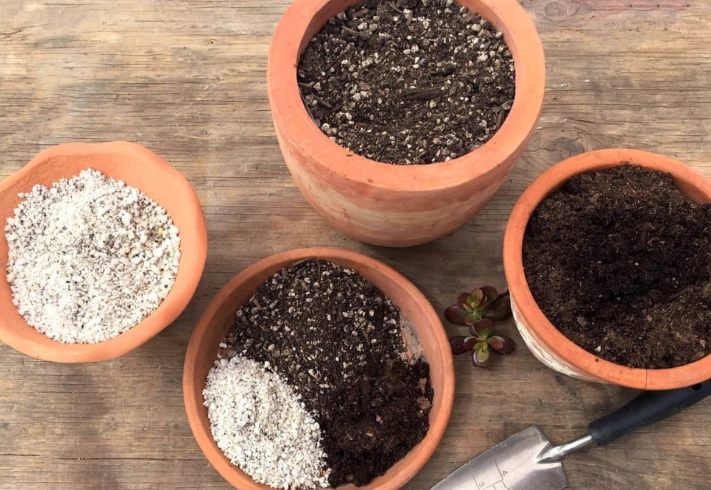
Your Soil Questions, Answered
Why did my plant rot even though I used a store-bought "cactus & succulent" soil mix?
This is the most common frustration. Most commercial mixes are formulated for greenhouses with ideal, high-light, high-airflow conditions, or to keep plants moist during long shipping periods. Indoors, in lower light and humidity, they stay wet too long. The fix is almost always to amend that bagged soil with more inorganic material like perlite or pumice. Think of the bagged mix as a concentrate you need to dilute.
Can I use regular potting soil in a pinch if I'm very careful with watering?
You're setting yourself up for a constant battle. Regular potting soil is designed to hold moisture and resist drying out. Even if you water sparingly, the water you do give will be unevenly distributed, potentially creating wet pockets while other roots stay dry. It also compacts over time, reducing aeration. It's like trying to run a marathon in hiking boots—possible, but why make it so hard? A small bag of perlite to mix in is a cheap insurance policy.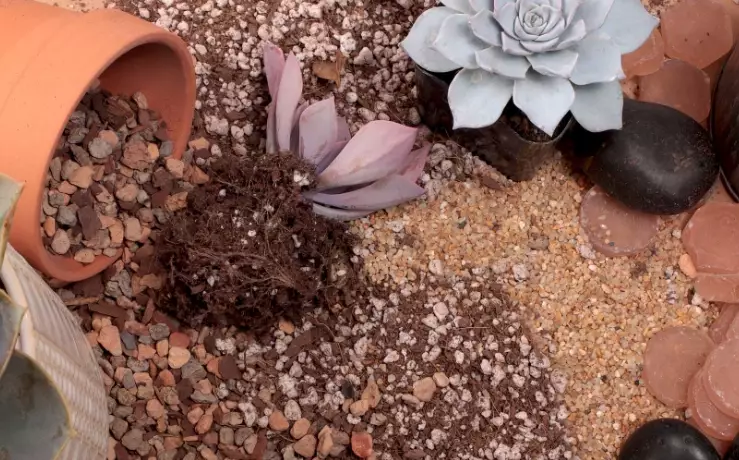
How do I know when my succulent actually needs water? The soil surface is dry.
The surface drying is a useless signal. With a gritty mix, the surface dries in hours. The best method is the "weight test." Lift the pot right after you water and feel its weight. Lift it again every few days. When it feels significantly lighter, it's time to check. For a more precise check, stick a wooden chopstick or skewer deep into the soil near the edge of the pot. Leave it for a minute, pull it out. If it's damp or has soil stuck to it, wait. If it comes out clean and dry, it's likely time to water. Better yet, learn the signs of thirst in your specific plant—slight wrinkling or softening of leaves.
Is it okay to reuse old succulent soil?
It's not ideal, but you can with processing. Old soil is depleted of nutrients, may be compacted, and could harbor pathogens or salt buildup from fertilizers. If you want to reuse it, break up all the old root balls, sift out the fine, dusty material (this is the broken-down organic stuff that causes compaction), and then at minimum mix it 50/50 with fresh inorganic grit. For safety, I'd also sterilize it by baking the moist soil in a covered tray at 200°F (93°C) for 30 minutes, but honestly, fresh components are so cheap it's rarely worth the effort.
My mix dries out incredibly fast. Is that bad?
Fast-drying is the goal! It prevents root rot. The trade-off is you'll need to water more frequently during active growth periods. This is actually a good thing—it allows you to deliver water and dissolved fertilizer to the roots more often without risk, promoting stronger growth. The fear of "fast-drying" soil is a holdover from caring for tropical plants. For succulents, it's a feature, not a bug. If it's drying out in less than 2-3 days, you might have gone overboard on grit for that particular plant type, but it's a far safer problem than soil that stays wet for weeks.
Comments