Let's talk about hanging succulents. You've probably seen those gorgeous photos—a cascade of plump pearls or a curtain of stringy bananas tumbling from a macramé hanger. It looks effortless, right? Then you bring one home, and within months, it's either stretching awkwardly towards the light or dropping leaves like confetti. I've been there. After killing my fair share (RIP, first String of Pearls), I learned that these plants aren't just about looks; they have specific needs most generic advice misses.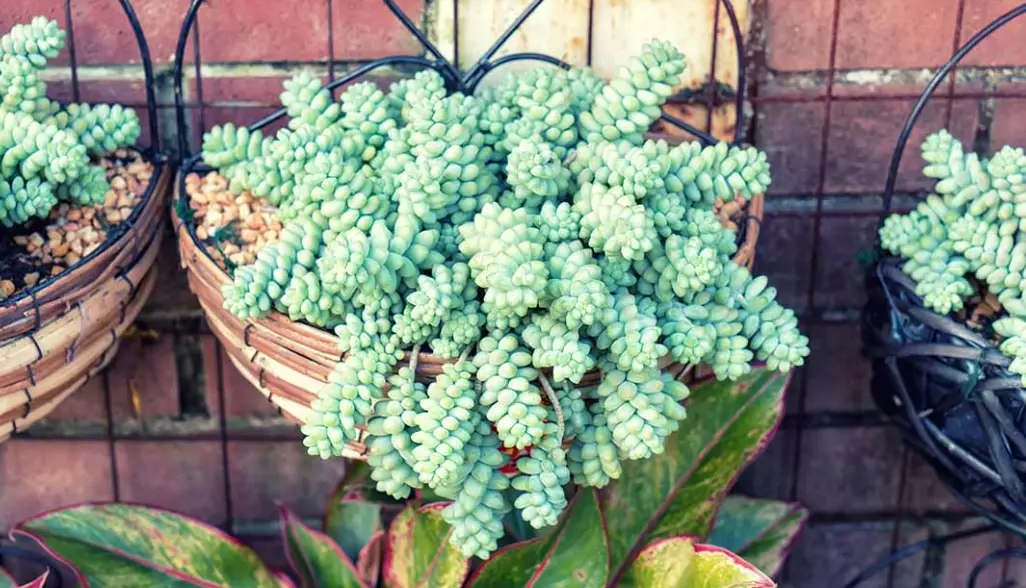
What's Inside This Guide?
What Are Hanging or Trailing Succulents?
They're not a separate species. The term "hanging succulent" refers to any succulent with a natural trailing, creeping, or vining growth habit. Instead of growing upright, their stems grow long and heavy, eventually spilling over the edges of their container. This makes them perfect for hanging planters, tall pots, or shelves where they can drape down.
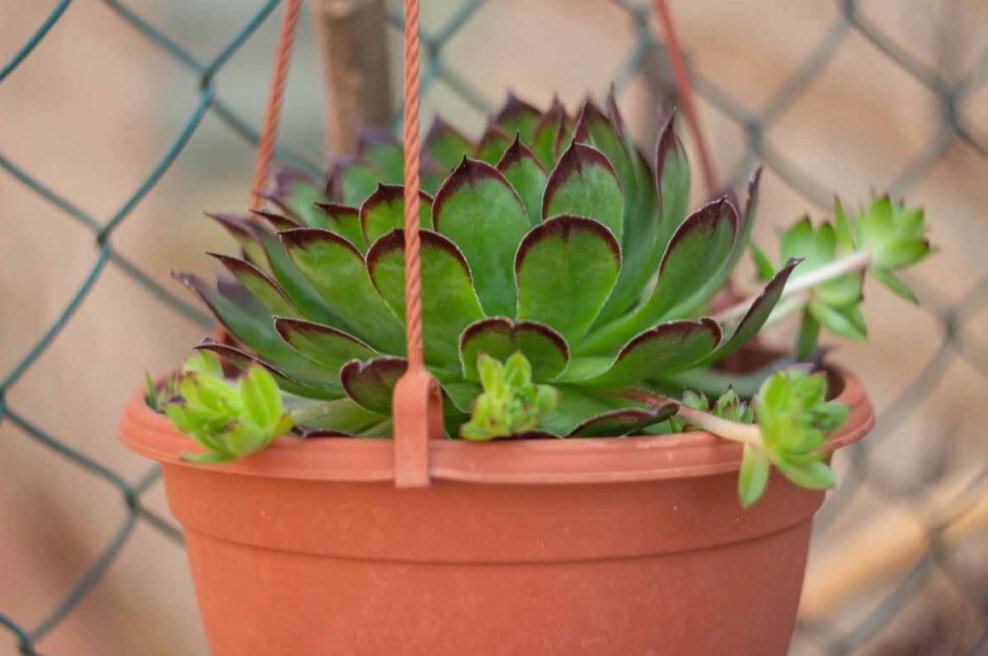
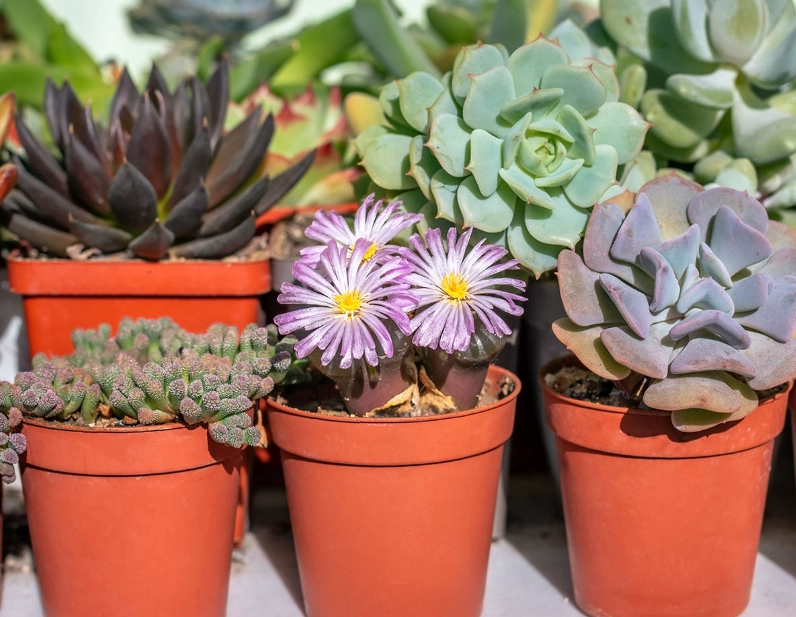
The key difference from other succulents is growth direction. While an Echeveria forms a tight rosette, a String of Hearts sends out meters-long, slender stems. This trailing nature changes their care slightly—especially regarding light exposure on all sides of the pot and how you water a deeper, fuller basket.
Top 5 Hanging Succulent Varieties for Beginners
Starting with the right plant is half the battle. Avoid the finicky ones at first. Here are five forgiving, fast-growing, and visually stunning varieties I recommend to everyone.
| Variety (Common Name) | Scientific Name | Key Characteristics | Ideal Light | Water When... |
|---|---|---|---|---|
| String of Pearls | Senecio rowleyanus | Fast-growing, spherical "pearls" on thin vines. The classic. | Bright, indirect to some direct sun. | Pearls look slightly shriveled (every 10-14 days). |
| Burro's Tail | Sedum morganianum | Plump, blue-green leaves densely packed on thick stems. Dramatic. | Lots of direct sun (4+ hours). | Top inch of soil is bone dry. Leaves feel less firm. |
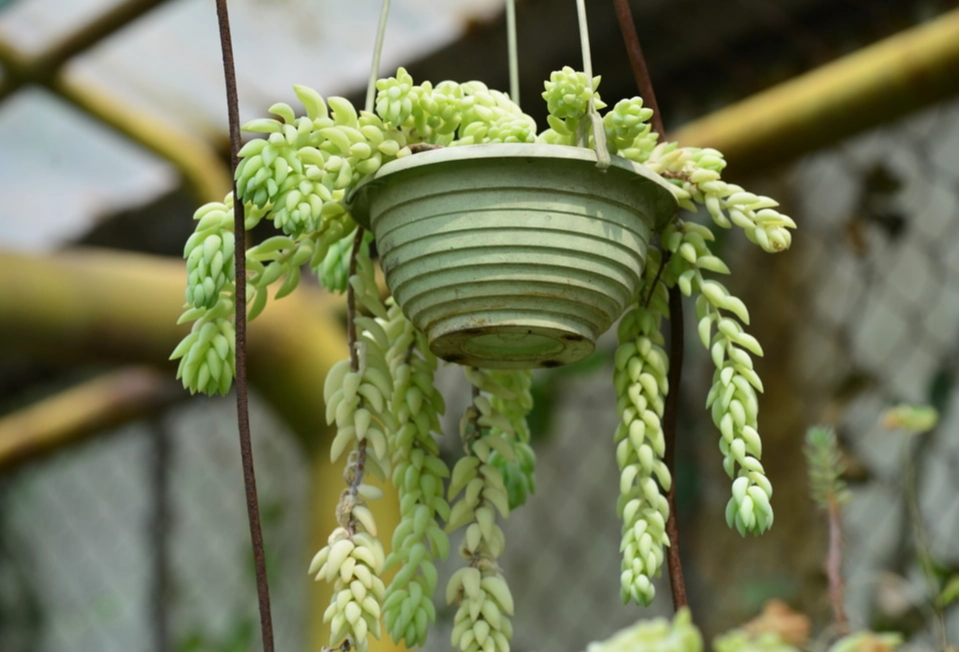
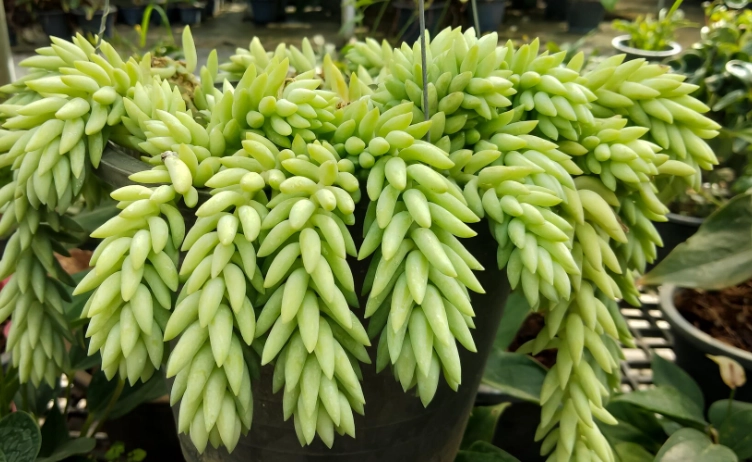
| String of Bananas | Senecio radicans | Curved, banana-shaped leaves. Grows faster and is more forgiving than Pearls. | Bright, indirect light. | Soil is completely dry (about weekly in summer). |
| Ruby Necklace | Othonna capensis | Purple, bean-like leaves that turn bright red/purple in sun. Stunning color. | Direct sun for best color. | Fairly drought tolerant. Let soil dry thoroughly. |
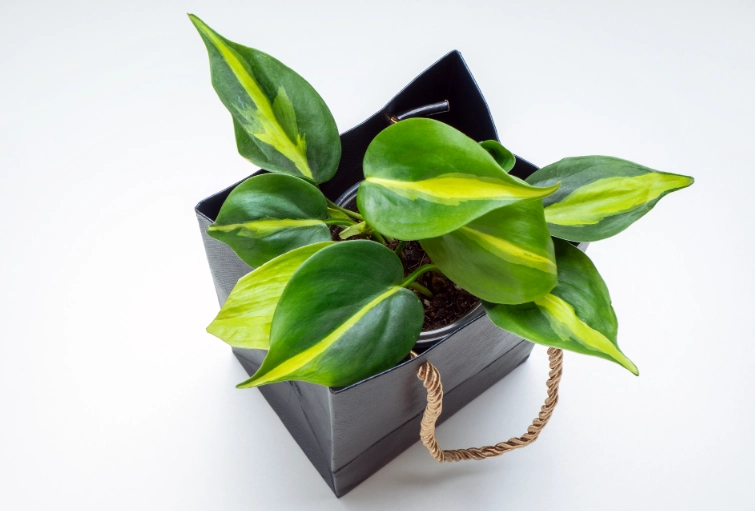
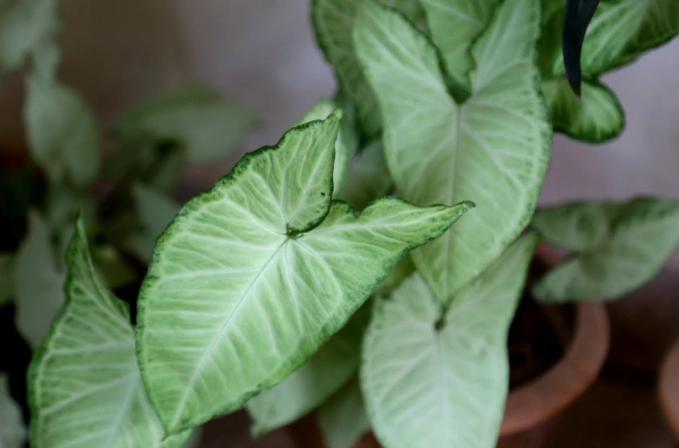
| Heartleaf Philodendron (Honorary Succulent) | Philodendron hederaceum | Not a true succulent, but thrives on similar neglect. Lush, heart-shaped leaves. | Low to bright indirect light. | Top 50% of soil dries out. Very adaptable. |
My personal favorite to start with is String of Bananas. It's less temperamental about watering than String of Pearls and grows so quickly you get that satisfying "look what I made!" feeling. I bought a 4-inch pot two years ago, and now I have cuttings in three rooms.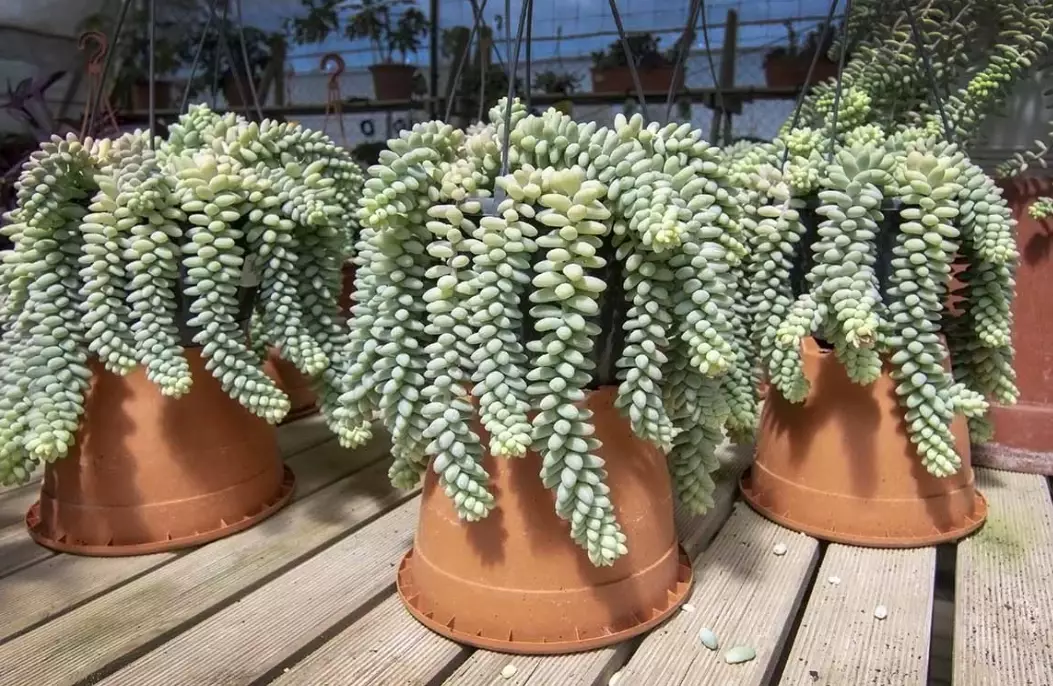
The 3 Biggest Care Mistakes (And How to Fix Them)
Most hanging succulent deaths come from a few repeated errors. Let's cut those out.
Mistake 1: Treating Them Like a Desktop Succulent
You can't just pour a little water in the center. A dense, hanging basket creates a microclimate. The top might look dry, but the core around the roots can be soggy. Conversely, the soil can pull away from the pot edges, causing water to run straight through without being absorbed.
The Fix: Use the "bottom watering" method. Every 3-4 waterings, take the basket down, place it in a sink or bowl with 2-3 inches of water, and let it soak for 20-30 minutes. This ensures the entire root ball gets evenly moist. Then, let it drain completely before re-hanging.
Mistake 2: Ignoring the "Back" of the Plant
Hanging plants often get light from one primary direction (a window). The side facing the wall will etiolate—stretch out with pale, widely spaced leaves—trying to find light. Your full, lush basket becomes lopsided.
The Fix: Rotate the basket a quarter turn every time you water. It's a simple habit that guarantees even growth and prevents that awkward, one-sided bald spot.
Mistake 3: Using the Wrong Soil, Forever
That bag of "cactus mix" from the big-box store? It's often still too moisture-retentive for a deep hanging planter. Over time, organic matter breaks down, compacting the soil and reducing aeration around the roots.
The Fix: Repot every 18-24 months, and make your own gritty mix. A standard recipe is 2 parts cactus potting soil, 1 part perlite, and 1 part coarse sand or pumice. For extra insurance against rot, add a 1-inch layer of lava rock or pebbles at the bottom of the pot before adding soil.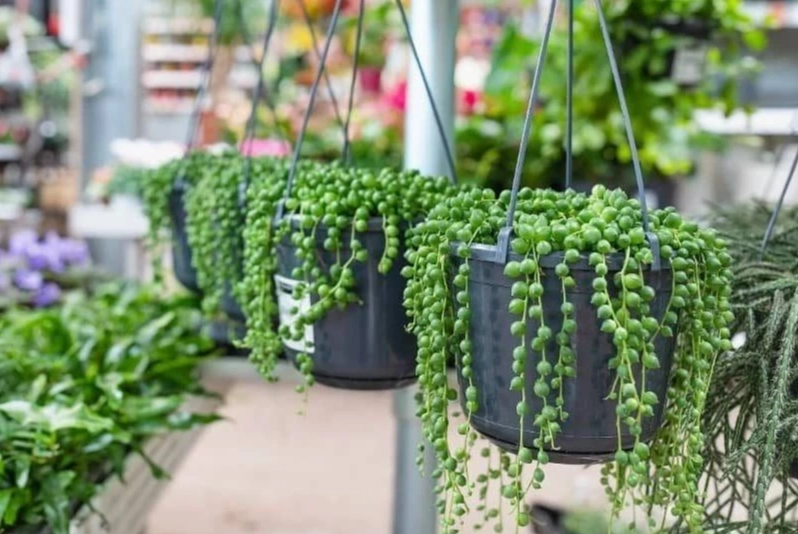
Watering and Light: The Non-Negotiables
Get these two things right, and 90% of your problems vanish.
Light is non-negotiable. Most hanging succulents need bright, indirect light for at least 6 hours a day. A south or east-facing window is ideal. West can work but might be too harsh in summer. North is usually too dim. If your pearls are more than an inch apart on the string, it's begging for more light.
Artificial light works great. I use basic LED grow lights (the strip kind) under some shelves. The plants sit about 6-12 inches away for 12-14 hours a day. They grow slower than in sunlight, but they stay compact and healthy.
Watering is about timing, not a schedule. "Water every two weeks" is a trap. In a hot, dry, sunny room, it might be every 7 days. In a cool, humid bathroom with less light, it could be every 3 weeks.
For fleshy-leaved types (Burro's Tail, Pearls), learn the "taco test" or the "shrug test." Gently pinch a leaf. If it folds easily like a taco or feels soft and gives slightly, it's thirsty. If it's firm and plump, wait. For thinner-leaved types (String of Hearts), wait until the soil is completely dry and the leaves feel a bit limp.
The Perfect Potting Mix & Container
Your container choice matters almost as much as the soil.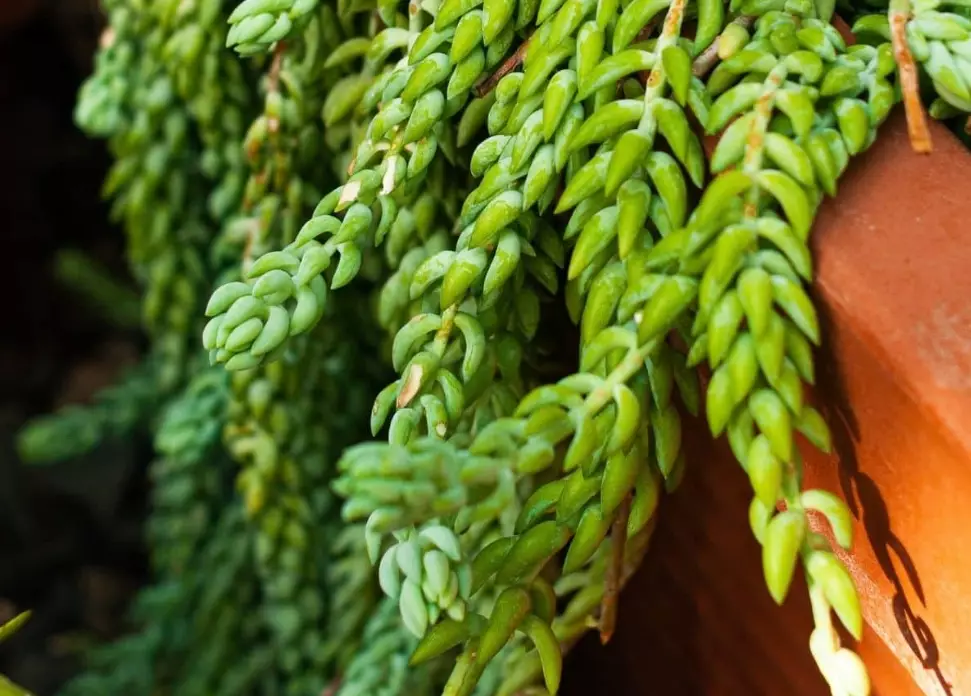
- Material: Unglazed terracotta is the gold standard. It's porous, allowing the soil to dry evenly and preventing soggy bottoms. It's also heavy, which helps counterbalance a top-heavy, trailing plant. Plastic or glazed ceramic pots retain moisture much longer—be extra careful with watering.
- Drainage: This is not optional. The pot must have at least one drainage hole. If you fall in love with a cachepot without a hole, keep the plant in a plain plastic nursery pot with holes inside it, and empty the outer pot after watering.
- Size: Go only 1-2 inches wider than the root ball. A huge pot holds too much wet soil, encouraging root rot. These plants actually like being a bit root-bound.
For the soil mix, I've tweaked the standard recipe. After losing a beautiful Ruby Necklace to stem rot, I now add a handful of horticultural charcoal to my mix. It helps absorb impurities and improves drainage. You can find it at most garden centers.
Creative Display Ideas Beyond the Basket
Hanging baskets are great, but don't stop there. The trailing habit opens up vertical space.
Wall-mounted shelves: Place a series of floating shelves near a window. Let the plants spill over the edges at different heights. It creates a living curtain.
Macramé hangers: They're back for a reason. They allow maximum air circulation around the pot and look beautiful. Use them near windows but not in direct, scorching sun where the cords can fade.
Upside-down pots? I tried those "Topsy Turvy" style planters marketed for tomatoes. For succulents? A disaster. Watering is a mess, and the plant struggles to grow correctly against gravity. Skip it.
A better idea: Use wall pockets or shallow, vertical wall planters designed for succulents. Plant a String of Pearls at the top and let it cascade down. It's stunning. Ensure they are removable for easy watering.
My current favorite display is in my bathroom. I have a String of Hearts in a small terracotta pot on a high shelf. The humidity from the shower gives it a boost, and the morning light from the frosted window is perfect. It's grown over 4 feet long in a year.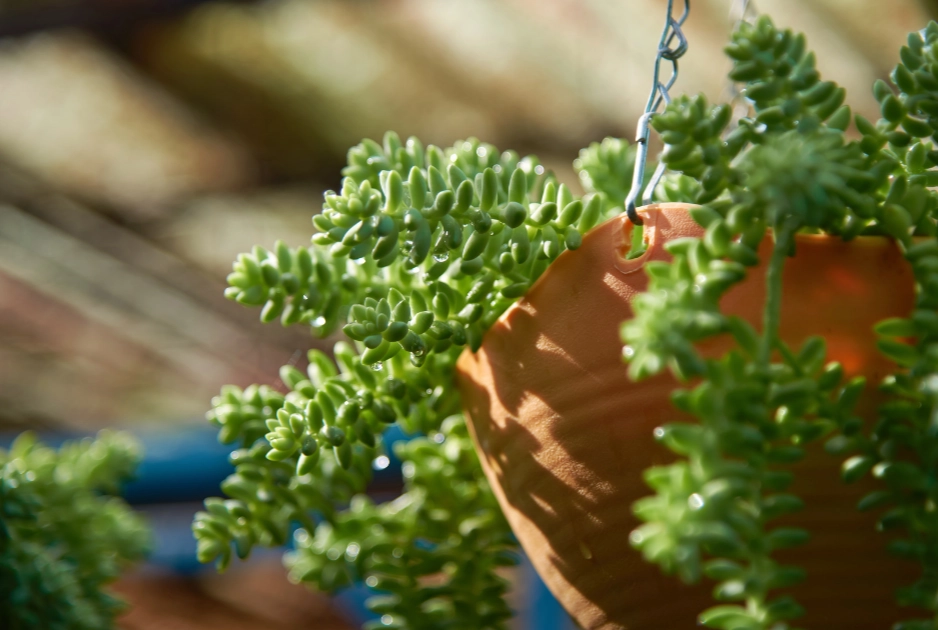
Your Hanging Succulent Questions Answered
 Can hanging succulents live in a low-light room like an office or north-facing bedroom?
 Hanging succulents add a dynamic, architectural element to your space that upright plants can't match. They feel alive as they grow and trail. Start with a forgiving variety like String of Bananas, nail the watering and light, and don't be afraid to prune and propagate. Before you know it, you'll have more vines than you know what to do with—and that's a wonderful problem to have.
Comments