If you're looking for a tree that announces spring louder than any robin, the weeping pussy willow is your pick. Forget the subtle buds on other trees—this one goes straight for the dramatic, fuzzy catkins that look like tiny silver-gray caterpillars clinging to its elegant, cascading branches. I've had one in my garden for over a decade, and it never fails to stop visitors in their tracks. It's not just a plant; it's a seasonal event. But here's the thing most generic guides miss: its reputation for being "easy" can be a trap for new gardeners. Treat it like any other tree, and you might end up with a leggy, sparse mess instead of the lush fountain you envisioned. This guide will walk you through exactly how to avoid that, based on hard-won experience (yes, I killed my first one).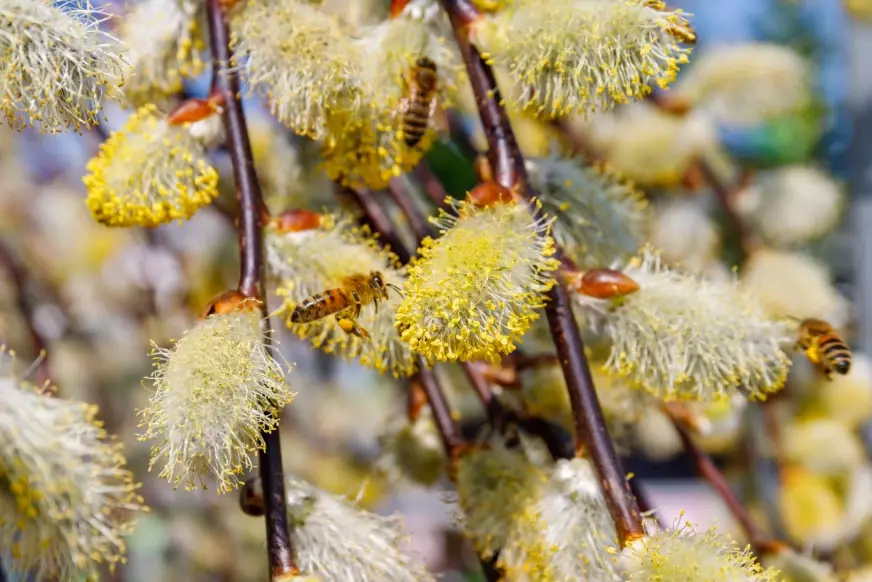
In this article, you'll discover:
What is a Weeping Pussy Willow Tree?
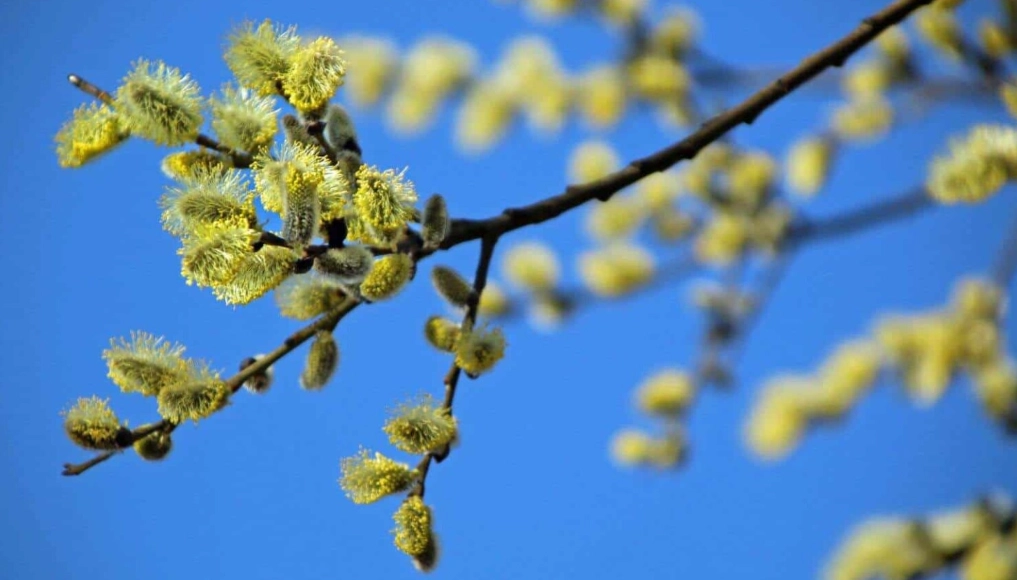
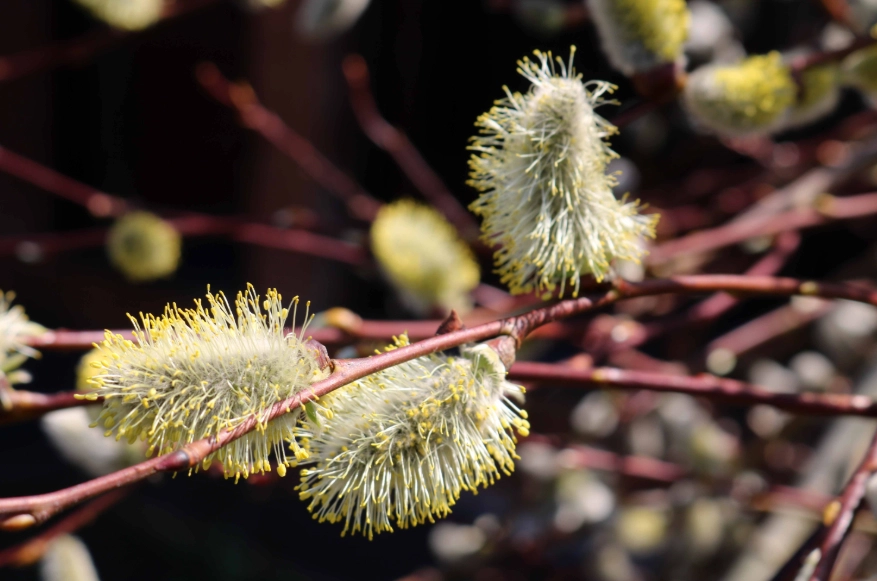
Let's clear up the confusion first. The "weeping pussy willow" isn't one specific species. It's usually a cultivated form, often Salix caprea 'Pendula' (the Goat Willow) or a hybrid, grafted onto a standard rootstock to create that distinctive umbrella-like, weeping form. The "pussy" part refers to the catkins—those soft, furry flower clusters that appear in late winter or early spring before the leaves. They're technically male flowers, loaded with pollen for early bees. After they've done their show, narrow, green leaves emerge, creating a curtain of foliage that lasts until autumn.
I see a lot of people mistake it for a full-sized weeping willow (Salix babylonica). Big difference. A mature weeping willow can dominate a park. A weeping pussy willow is a much more manageable garden-sized specimen, typically growing 6 to 15 feet tall and wide, depending on the rootstock and pruning. It's a tree for smaller spaces, courtyards, or as a focal point near a pond.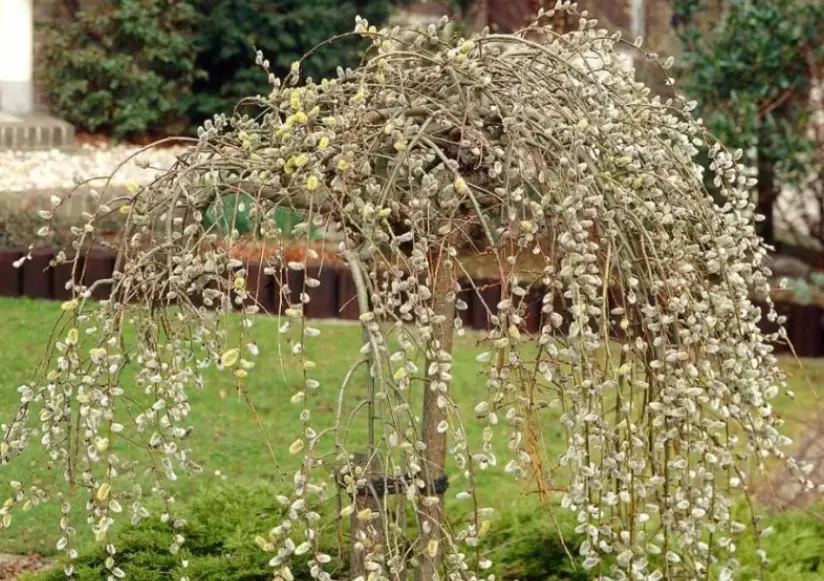
A quick reality check: That beautiful weeping shape you buy at the nursery? It's almost always grafted. Look for a knob or change in bark texture low on the trunk. That's the graft union. Any shoots growing from below that point, or from the roots, will be the vigorous, upright rootstock variety. You must remove them. I let one go for a single season, and it nearly overtook the grafted weeping part.
How to Grow and Care for Your Weeping Pussy Willow
Getting this tree established correctly is 90% of the battle. Do it wrong, and you'll be playing catch-up for years.
Planting: Location is Everything
Willows are water lovers, but "loves wet soil" doesn't mean "plant it in a swamp." For a garden setting, you want moist, well-draining soil. Think of the edge of a stream, not the bottom. Full sun is non-negotiable for the best catkin production—at least 6 hours direct light. More sun equals more flowers and a denser canopy.
Here's my planting ritual: Dig a hole twice as wide as the root ball but no deeper. Roughen up the sides of the hole. Mix some compost into the native soil, but don't go overboard with rich amendments. Place the tree so the graft union is well above the soil line (2-4 inches). Backfill, water deeply to settle, and apply a 3-inch layer of mulch (wood chips, shredded bark) around the base, keeping it away from the trunk. That mulch is crucial for retaining the soil moisture it craves.
Watering, Feeding, and the Soil Game
For the first two years, consistent watering is key. The goal is to keep the soil consistently moist, not soggy. Stick your finger in the soil near the roots. If the top 2 inches are dry, it's time to water deeply. Once established, it's fairly drought-tolerant, but it will look its best with supplemental water during dry spells.
Feeding is simple. A light application of a balanced, slow-release fertilizer in early spring as growth starts is plenty. Over-fertilizing, especially with high-nitrogen mixes, can lead to excessive, weak growth that's prone to pests and flops over. I use a simple compost top-dressing most years.
They tolerate a range of soil pH but prefer slightly acidic to neutral (6.0-7.5). Heavy clay is fine as long as it's not perpetually waterlogged.
Pruning: The Secret to a Spectacular Shape
This is where most people go wrong. They either never prune, leading to a tangled thicket, or they prune at the wrong time and cut off all the catkins.
The golden rule: Prune immediately after the catkins have finished their show and are starting to look ratty, but before the new leaves fully expand. This is usually mid to late spring.
My annual pruning steps:
- Step 1: Sucker Patrol. First, remove any upright shoots (suckers) from below the graft union or from the roots. Cut them off cleanly at their source.
- Step 2: The Haircut. Look at the long, weeping branches. Your goal is to encourage branching and density. Select branches and cut them back by one-third to one-half, making your cut just above a set of buds that are facing outward or upward. Don't just snip the very tips.
- Step 3: Thinning. Remove any dead, diseased, or crossing branches in the canopy to improve air flow.
This post-bloom pruning gives the tree the entire growing season to produce new shoots, which will be the ones that bear next year's catkins. If you prune in late fall or winter, you're cutting off the flower buds.
Pests and Diseases: What to Watch For
Willows can attract bugs. It's a fact. But a healthy tree can handle it. The main culprits are aphids (they love the new growth), scale insects, and caterpillars. A strong blast of water often dislodges aphids. For scale, horticultural oil applied in dormant season helps. Japanese beetles might munch on the leaves. I hand-pick them in the early morning when they're sluggish.
Diseases include willow blight and powdery mildew. Good air circulation (from proper pruning and spacing) is your best defense. Avoid overhead watering. If you see black, dead spots on leaves and stems, prune out the affected areas well back into healthy wood and dispose of the clippings (not in the compost).
Choosing a Variety and Landscape Design Ideas
Not all weeping pussy willows are created equal. Asking for the specific Latin name at the nursery can save you surprise later.
| Variety Name | Key Characteristics | Best For |
|---|---|---|
| Salix caprea 'Pendula' | The classic. Large, silvery catkins. Grows 6-10 ft tall/wide. Very hardy. | Focal point in a small garden, near water features. |
| Salix x 'Curly Locks' | Twisted, corkscrew branches and catkins. More compact growth habit. | Adding whimsical, four-season structural interest. |
| Salix purpurea 'Pendula' | Purple-tinged stems and smaller, reddish-purple catkins. Fine-textured foliage. | Elegant, refined look. Good for containers for a few years. |
How to use it? It's a natural beside a pond or birdbath. It shines as a solitary specimen on a lawn where its form can be appreciated from all sides. You can underplant it with early spring bulbs like crocus or scilla—they'll bloom with the catkins. For a modern look, pair it with ornamental grasses and plants with bold foliage, like hostas. The contrast between the fine, weeping leaves and broad hosta leaves is stunning.
Can you grow it in a container? Yes, for a while. Choose a dwarf variety like 'Curly Locks'. Use a large, sturdy pot with excellent drainage and a quality potting mix. Be prepared to water it almost daily in summer heat, and repot or root-prune every 2-3 years to prevent it from becoming pot-bound. It won't live as long in a pot as in the ground, but you can enjoy it for a good decade.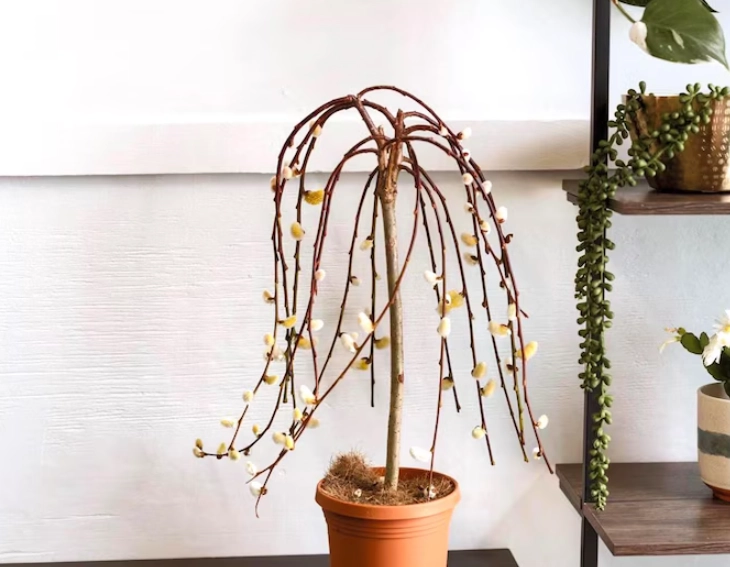
Troubleshooting and Your Questions Answered
My weeping pussy willow isn't producing many catkins. What did I do wrong?
The three most likely culprits are light, pruning time, and age. It needs full sun. Less than that, and catkin production drops dramatically. Did you prune in late winter? You accidentally removed the flower buds. Wait until after the bloom. Also, a very young tree might take 2-3 years after planting to put on a big show. Be patient.
The leaves on my tree are turning yellow and dropping in summer. Is it dying?
Not necessarily dying, but it's stressed. Summer leaf drop is often a reaction to drought. Willows are thirsty, and even established trees will shed leaves to conserve water if they get too dry. Give it a long, deep soak. Conversely, if the soil is constantly soggy, the roots might be suffocating, causing the same symptom. Check your soil moisture first.
Can I propagate a new tree from cuttings of my weeping pussy willow?
You can, but here's the catch: if your tree is grafted (most are), cuttings taken from the weeping branches will not develop a strong, upright trunk. They'll root and grow, but they'll be a sprawling, ground-cover type plant, not a tree with a clear trunk. It's a cool way to create a shrubby willow patch, but not to replicate the tree form. For that, you need grafting expertise.
 Are the roots invasive and will they damage my pipes?
This is a major concern, and it's overblown for this type of willow. The standard weeping pussy willow is not a massive tree. Its root system is seeking moisture, but it's not as aggressively vast as a full-sized weeping willow. However, it's still a smart practice to plant it at least 15-20 feet away from septic fields, leaching beds, or old, fragile water pipes. Near a modern foundation? It's generally low risk, but give it some space.
What's the best way to force catkins indoors for winter decoration?
One of the great joys of this tree! In late winter, when the buds are visibly swollen, cut a few branches. Make long, angled cuts. Bring them inside, smash the cut ends with a hammer (this helps water uptake), and place them in a vase of warm water. Keep them in a cool, bright spot, not in direct heat. Change the water every few days. The warmth will trick them into thinking spring has arrived, and the catkins will emerge in a week or two. It's pure magic in February.
 Look, the weeping pussy willow isn't a "plant it and forget it" tree. It asks for a little attention—mostly in the form of strategic pruning and consistent moisture when young. But what it gives back is a unique, early-season performance that bridges the gap between winter and spring like nothing else in the garden. It's a conversation starter, a wildlife supporter, and if you treat it right, a long-lived, graceful companion. Avoid the common pitfalls I've outlined, and you'll have a stunning focal point for decades.

Comments