Quick Navigation
So you've got yourself a lucky bamboo plant, or you're thinking about getting one. They're everywhere – from office desks to trendy coffee shops, sitting in water and rocks, looking effortlessly chic and supposedly bringing a wave of good fortune. But let's be honest, how many of us have actually managed to keep one alive and thriving for more than a few months? I've been there. I've had my share of lucky bamboo casualties – the yellowing stalks, the mushy roots, the slow, sad decline. It's frustrating because everyone says they're "easy" plants.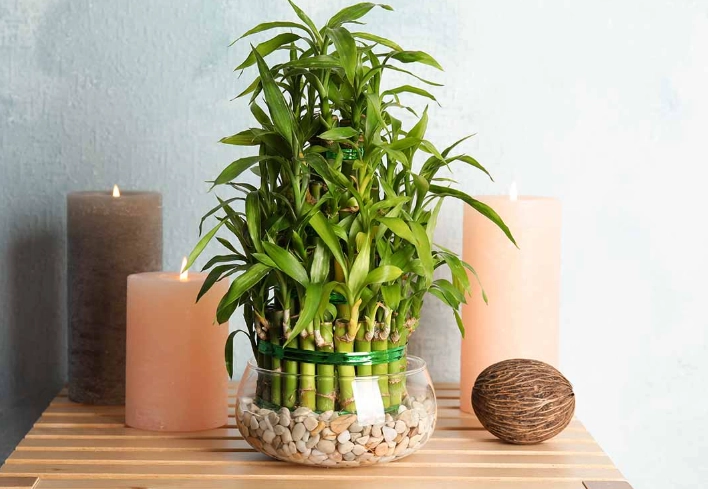
Well, after killing a few (and learning from those expensive mistakes), I decided to dig deep. I talked to nursery owners, read way too many horticulture guides (like the excellent resource from the Clemson University Home & Garden Information Center), and experimented on my own. What I found is that lucky bamboo care isn't rocket science, but it does have some specific, non-negotiable needs that most quick care guides gloss over.
This isn't just another fluffy listicle. This is the guide I wish I had when I started. We're going to move beyond the basics and into the nitty-gritty of what makes a lucky bamboo plant not just survive, but truly flourish. We'll cover everything from the science of watering to the art of shaping, and we'll bust some common myths along the way. Because a healthy plant is the luckiest plant of all.
Your lucky bamboo plant is actually Dracaena sanderiana, a member of the Dracaena family, native to Central Africa. It's a tropical understory plant, which tells us a lot about the conditions it craves: bright, indirect light and consistent warmth. Calling it "bamboo" is just a marketing thing, thanks to its segmented, cane-like appearance. Knowing its true identity is the first step to proper care – you're not caring for a grassy bamboo, you're caring for a tropical Dracaena.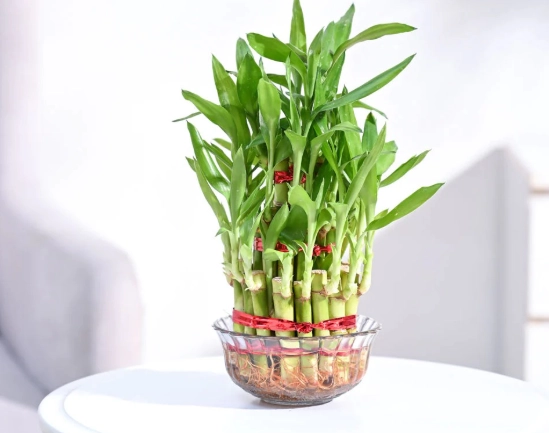
Picking a Winner: How to Choose a Healthy Lucky Bamboo Plant
Your success story starts at the store or nursery. Choosing a weak or sickly plant is setting yourself up for a challenge. Here’s what to look for, and what to run from.
The Green Light: Look for stalks that are a vibrant, uniform green. The leaves should be a lush green from tip to base, firm, and perky. The tops should have active, growing tips. If it's in water, the water should be clear and smell fresh. Roots, if visible, should be a healthy orange or reddish-brown color, not black or slimy.
The Red Flags: Walk away from any plant with yellowing leaves or stalks (a little yellow at the very base of a leaf might be normal aging, but not on the stalk itself). Brown, crispy leaf tips are a sign of low humidity or fluoride/chlorine damage. Check the joints and undersides of leaves for any signs of pests like mealybugs (they look like tiny bits of cotton) or spider mites. A mushy stalk is a death sentence – don't buy it.
I made the mistake once of buying a "bargain" lucky bamboo that had a slightly yellowish tint, thinking I could nurse it back. I couldn't. It just slowly fell apart. Start with a strong candidate.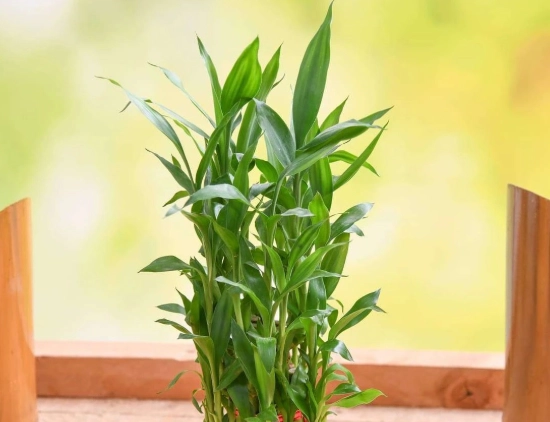
The Core of Lucky Bamboo Plant Care: Light, Water, and Food
This is where most people go wrong. They either drown it in love (and water) or forget about it in a dark corner.
Light: The Goldilocks Zone
Bright, indirect light is the mantra. Think of the dappled light under a forest canopy. A north or east-facing window is often perfect. A spot a few feet back from a south or west window works too.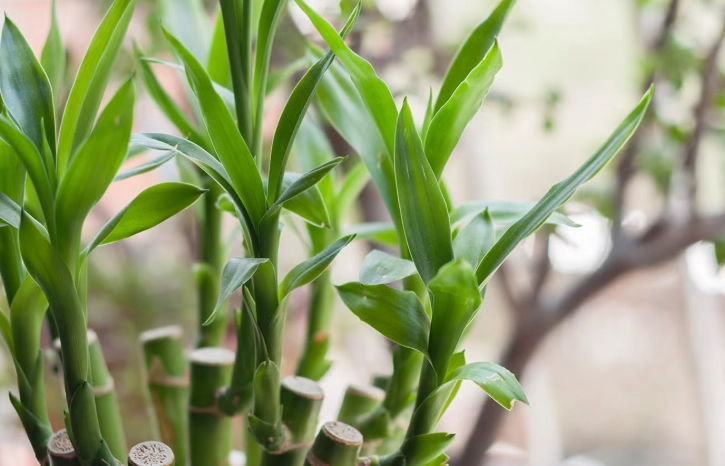
Not enough light? Your lucky bamboo will tell you. Growth will become leggy, with long stretches of stalk between leaves, and the vibrant green will fade to a washed-out yellow-green. It's the plant's way of reaching for more light.
Water: The Biggest Make-or-Break Factor
This is the most critical part of lucky bamboo plant care. If you grow it in water (the most common method), you can't just use tap water and forget it.
**The Problem with Tap Water:** Most municipal tap water contains chlorine, chloramines, and fluoride. Lucky bamboo, like many Dracaenas, is highly sensitive to fluoride and chlorine. These chemicals cause the dreaded brown, crispy leaf tips and margins. It's not a disease; it's chemical burn.
**Your Water Options, Ranked:**
| Water Type | Pros | Cons | Best For |
|---|---|---|---|
| Distilled or Purified Water | Free of chemicals and minerals. The gold standard. | Cost to buy; environmental footprint of bottles. | Ensuring zero chemical issues, reviving sick plants. |
| Rainwater | Free, natural, and soft. | Not always available; requires collection. | The eco-conscious, ideal long-term solution. |
| Tap Water (Left Out) | Convenient and free. | Only evaporates chlorine, NOT fluoride or chloramines. Risk remains. | If you have confirmed fluoride-free water. |
| Filtered Water | Removes many contaminants. | Check if your filter removes fluoride. Many pitcher filters do not. | A good middle ground if the filter is comprehensive. |
I switched to using distilled water for my lucky bamboo plants, and the difference was night and day. The chronic brown tips simply stopped. It was that simple.
**Water Level & Changes:** Keep the water level consistent, covering the roots by about an inch. Change the water completely every 7-10 days. Stagnant water becomes a breeding ground for bacteria and algae, which leads to root rot. When you change it, rinse the container and the pebbles/rocks. Give the roots a gentle rinse under lukewarm water to wash off any biofilm.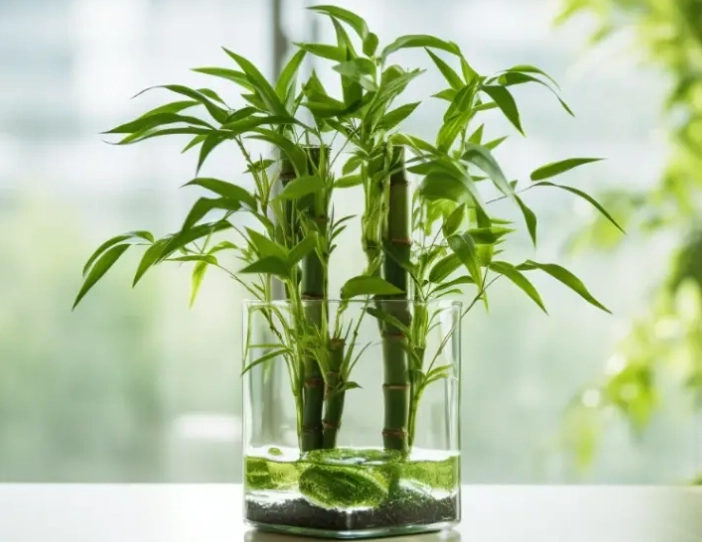
Fertilizer: Less is Infinitely More
A lucky bamboo plant in water has very low nutritional needs. Over-fertilizing is a surefire way to burn the roots and cause leaf burn.
During fall and winter, when growth naturally slows, don't fertilize at all. Let the plant rest.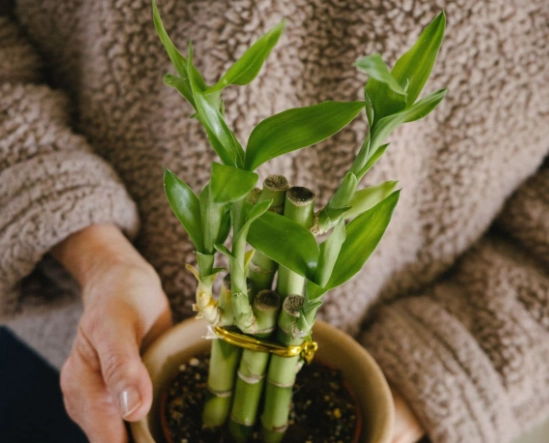
Beyond the Basics: Temperature, Humidity, and Common Problems
Your home's environment plays a huge role. Lucky bamboo likes it warm and somewhat humid, mimicking its tropical origins.
Temperature: Keep it between 65°F and 90°F (18°C - 32°C). Avoid cold drafts from windows, doors, or air conditioning vents. Temperatures below 50°F (10°C) can cause serious damage. I lost a beautiful spiral one winter because it was on a windowsill that got too cold at night.
Humidity: Average home humidity is usually okay, but if your air is very dry (common with central heating), the leaf tips may brown. You can group plants together, use a humidifier, or place the pot on a pebble tray with water (ensure the pot isn't sitting *in* the water). Misting doesn't do much and can promote fungal issues on the leaves if overdone.
Diagnosing Your Lucky Bamboo's SOS Signals
- Yellow Leaves/Stalks: This is the big one. Usually caused by too much fertilizer or poor water quality (chemicals). It can also be a sign of root rot from stagnant water. If a stalk turns yellow, it's often a goner. Cut it out to prevent potential spread.
- Brown Leaf Tips: Almost always fluoride/chlorine in water or low humidity. Switch your water source first.
- Soft, Mushy Stalks: Root rot. Usually from bacteria in old water. The stalk is rotting from the inside. You might be able to save the plant by cutting off the healthy green top above the rot and re-rooting it in fresh water.
- Stretched, Pale Growth: Not enough light. Move it to a brighter spot (indirectly).
The Art of Shaping and Styling Your Lucky Bamboo Plant
Those fancy spirals, braids, and hearts aren't natural. They're created by manipulating the plant's growth towards light. You can do it too, with patience.
The Spiral: This is done by placing the plant in a box with one side open, forcing it to grow towards the light source. The grower periodically rotates the box, so the plant continually bends towards the new light direction, creating the spiral effect over time. At home, you can try this with a careful three-sided screen.
Braids and Weaves: These are simply multiple young, flexible stalks physically braided or woven together as they grow. They will eventually fuse and grow as one unit. Start with stalks of similar thickness and be gentle.
Pruning and Propagation: Don't be afraid to prune! If your plant gets too tall or leggy, you can cut the stalk. Use a clean, sharp knife or pruners. You can cut the top off (at least a few inches long with a few leaf nodes) and root it in water to create a new plant. The original stalk will often sprout one or two new side shoots from a node just below the cut, making it bushier.
Lucky Bamboo Plant Meaning and Feng Shui
Let's talk about the "lucky" part. In Feng Shui, it's believed to attract positive energy (chi), prosperity, and good fortune. The number of stalks is said to have specific meanings:
- 1 Stalk: Simple life, steadfastness.
- 2 Stalks: Love and double luck (often given as a gift to couples).
- 3 Stalks: Fu (happiness), Lu (wealth), and Shou (long life) – the three core blessings.
- 5 Stalks: Attracts the five areas of life that influence wealth.
- 6 Stalks: For prosperity and smooth progress in life.
- 7 Stalks: Associated with good health.
- 8 Stalks: Growth, wealth, and abundance.
- 9 Stalks: Great luck and fortune.
- 10 Stalks: Perfection and completeness.
- 21 Stalks: A powerful blessing for profound wealth and enduring health.
Whether you subscribe to the symbolism or not, there's no denying that a healthy, vibrant plant adds life and a sense of calm to any space. That, in itself, feels pretty lucky.
Your Lucky Bamboo Questions, Answered
At the end of the day, caring for a lucky bamboo plant is a lesson in paying attention. It's not demanding, but it is specific. It asks for clean water, gentle light, and a watchful eye. When you get it right, it rewards you with years of serene, graceful growth. And who knows? Maybe a little extra luck, too. But even without the fortune, the satisfaction of keeping something alive and beautiful is its own kind of reward. Give it what it truly needs, not just what you think it wants, and you'll have a companion for a long, long time.
Comments