You brought home an air plant. It looked so cool, so sculptural, so easy. Now it's sitting there, and you're staring at it, wondering if you're supposed to just... look at it. The internet says they're low-maintenance, but yours seems to be turning brown at the tips, or maybe it's just looking a bit sad. Sound familiar? Let's cut through the noise. Caring for Tillandsia isn't about following a rigid schedule; it's about understanding how they live in the wild and translating that to your home. I've killed my share of them figuring this out, so let's get yours thriving.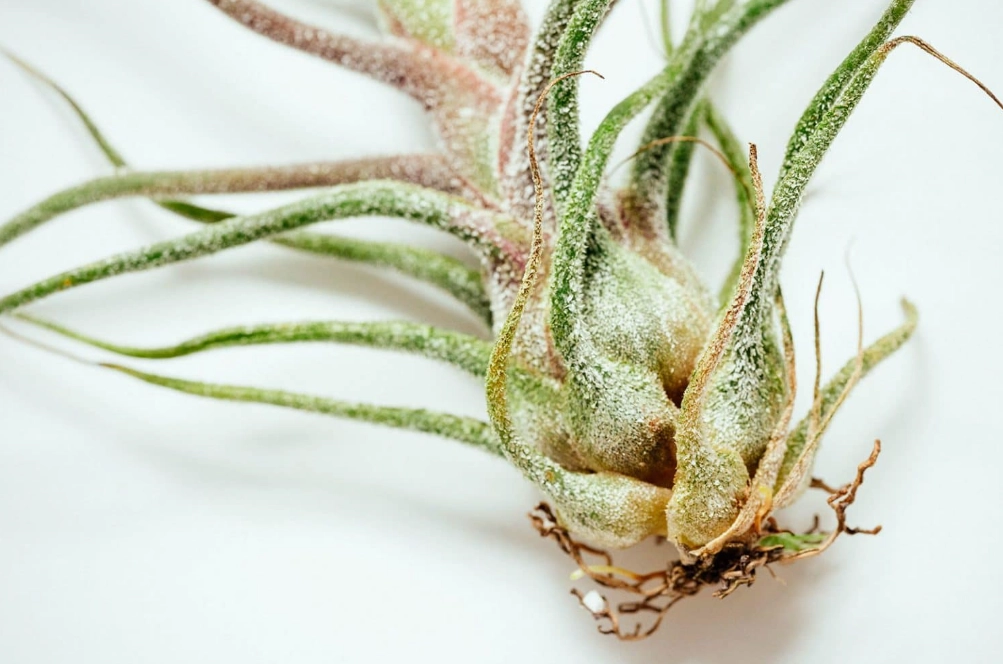
What's Inside This Guide
How to Water Air Plants Correctly (The Soak Method)
This is where most people go wrong. Misting your Tillandsia with a spray bottle is like offering a person in the desert a single ice cube. It might provide momentary relief, but it won't sustain them. In their native habitats—think forest canopies in South America or the southern US—they get drenched by rainstorms, then dry out completely in the breeze.
You need to replicate that soak-and-dry cycle.
The Weekly Soak: Once a week, submerge your entire air plant in a bowl, sink, or container of room-temperature water. Use rainwater, filtered water, or pond water if you can. Tap water is okay if you let it sit out overnight to allow chlorine to evaporate, but hard water (high in minerals) can clog the plant's trichomes over time. Let it soak for 30-60 minutes. For thicker-leaved varieties like Tillandsia xerographica, you can go up to an hour. For finer-leaved ones like Tillandsia ionantha, 30 minutes is plenty.
After the bath, this is the most critical step: drying. Shake the plant gently upside-down to dislodge water from the base and between the leaves. Place it upside-down on a towel in a spot with good air flow for at least 4 hours. Let me be clear: Misting alone is not enough. It's a supplemental boost in very dry climates between soaks, but it should never be your primary watering method.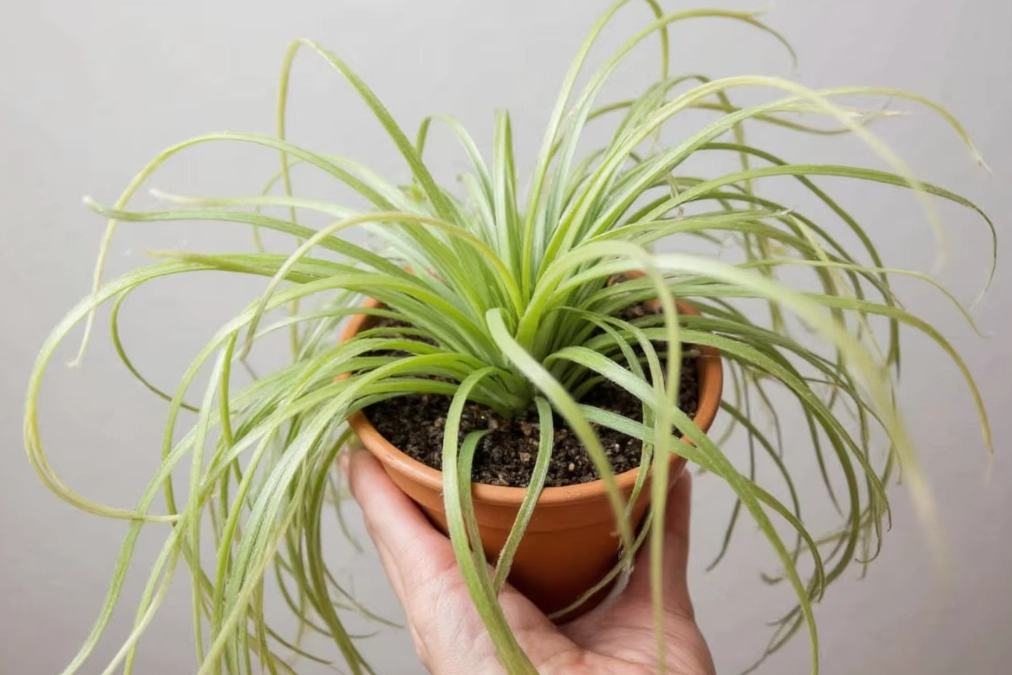
Signs You're Underwatering or Overwatering
It's easy to confuse the two because both can cause browning.
- Underwatered: Leaves feel brittle, curl inwards dramatically, and the browning starts at the very tips, feeling dry and papery. The plant looks shriveled.
- Overwatered (Rot): The base of the plant (where the leaves meet) turns dark brown or black, feels mushy, and may fall apart. Leaves may fall out easily. This is often fatal and is caused by water being trapped in the plant's core after improper drying.
Finding the Perfect Light for Your Tillandsia
"Bright, indirect light" is the mantra, but what does that actually mean? They need a lot of light to photosynthesize, but their delicate leaves can scorch under the harsh, direct afternoon sun of a south-facing window.
An east-facing window is often ideal—it gets the gentle morning sun. A west-facing window can work if filtered by a sheer curtain. A north-facing window is usually too dim. If you only have a south window, place the plant a few feet back from the glass or use a curtain as a diffuser.
Here's a trick: if your Tillandsia is getting enough light, it will often blush with color (reds, pinks, purples) before it blooms. If it's staying a uniform green and growing very slowly, it probably wants more light.
| Tillandsia Type | Light Preference | Good Indoor Spot |
|---|---|---|
| Silver-leafed (e.g., T. xerographica, T. harrisii) | Higher, brighter indirect light. Can tolerate some direct morning sun. | East window sill, or a bright spot near a South/West window. |
| Green-leafed (e.g., T. cyanea, T. butzii) | Medium to bright indirect light. More sensitive to direct sun. | A few feet back from a South/West window, or directly in an East window. |
| Fine, grassy types (e.g., T. usneoides/Spanish Moss) | Bright, filtered light. Can handle more direct exposure if kept very humid. | Hanging in a bright bathroom window or under a skylight. |
The Silent Killer: Why Air Circulation is Non-Negotiable
This is the element most care guides gloss over, and it's why people lose plants to rot even when they think they're watering correctly. Tillandsia are called air plants for a reason. In the wild, they're constantly buffeted by breezes that dry them rapidly after rain.
Placing your plant in a completely sealed terrarium or a deep, narrow vase with no air holes is a death sentence. Moisture gets trapped, stagnation sets in, and rot follows.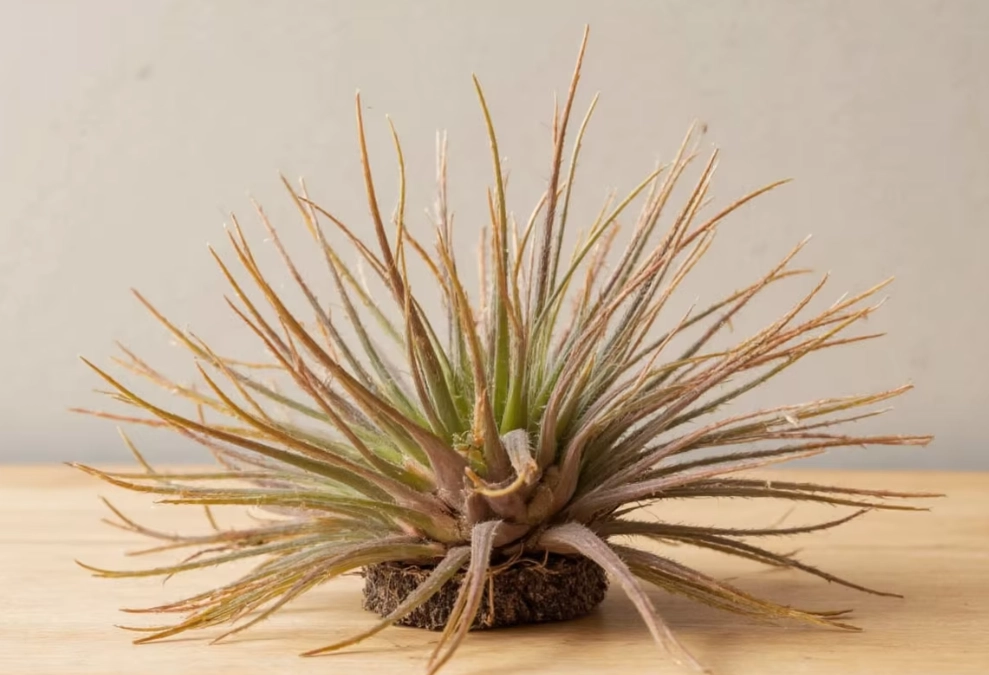
My Personal Rule: After watering, your Tillandsia should be bone-dry to the touch within 4 hours. If it's not, you need more air flow. A small fan on a low setting in the room can make a world of difference, especially in humid climates.
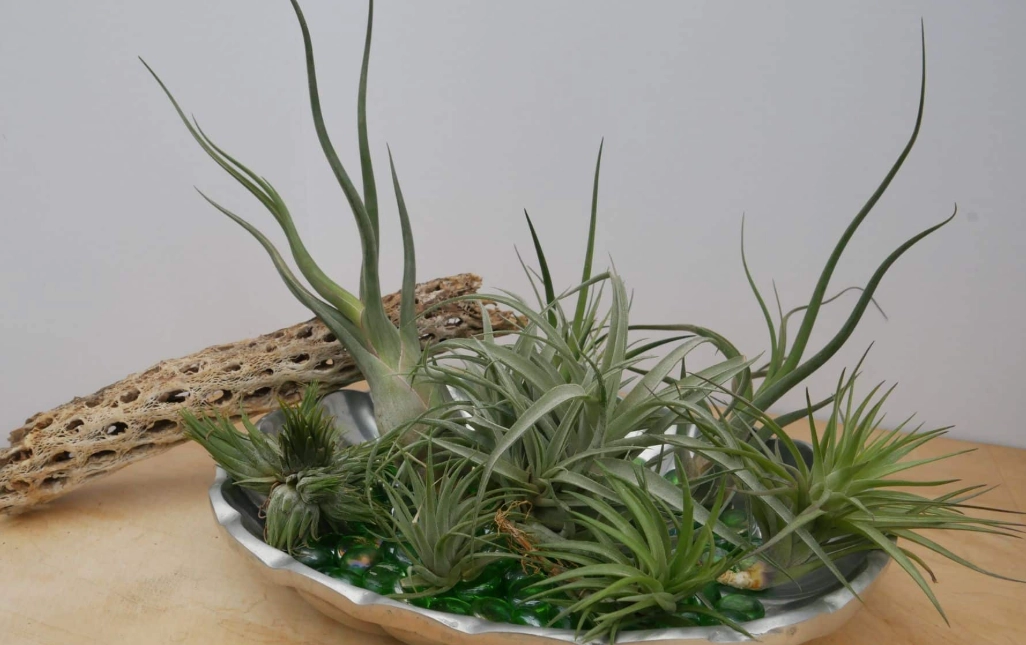
Display them in open containers, on stands, or mounted on driftwood or cork bark where air can circulate freely around all sides.
Should You Feed Your Air Plant?
They can live without fertilizer, but they'll truly thrive with it. Feeding promotes growth, stronger pups (baby plants), and more vibrant blooms. The key is using the right product and not overdoing it.
You must use a fertilizer formulated for bromeliads or air plants. These are low in copper, which is toxic to Tillandsia, and are often nitrogen-rich in a form they can absorb through their leaves (like urea). Regular houseplant fertilizer can harm them.
How to do it: Add the fertilizer to your soaking water at ¼ strength of the recommended dose on the bottle, once a month during the growing season (spring and summer). Skip it in fall and winter. It's that simple. Over-fertilizing will burn the leaves.
Top 5 Tillandsia Care Mistakes (And How to Fix Them)
Let's get specific about where things go wrong. I've made the first three myself.
- Glueing them in place. Hot glue or super glue on the base blocks water absorption and can chemically burn the plant. Use non-toxic, water-resistant glue like E6000 sparingly on a few outer leaves only, or better yet, use fishing line or clear wire to attach them.
- Forgetting they need to dry upside-down. Water pools in the base (the cup) and causes rot. Always shake and dry inverted.
- Treating them like a decoration, not a plant. Sticking them in a dark corner or a closed jar because it looks good. Find a display spot that also meets their light and air needs.
- Using softened water. Water softeners add salts that will coat and kill the trichomes. If you have a softener, use bottled or filtered water.
- Giving up on a plant with brown tips. Brown leaf tips are often just cosmetic from past underwatering or mineral buildup. You can snip the brown tips off at an angle with clean scissors. Focus on the overall health of the plant—if the base is firm and there's new green growth, it's fine.
Your Tillandsia Questions, Answered
My air plant's leaves are curling in tightly. Is this bad?
It's a distress signal, usually for thirst. A healthy, hydrated Tillandsia has leaves that are open and slightly curved. When they curl in like a tight ball, the plant is conserving moisture. Give it a good, long soak (closer to the 60-minute mark) and make sure your watering frequency is adequate for your home's humidity.
Can I just keep my Tillandsia in the bathroom for humidity?
A bathroom can be a great spot if it has a window. The humidity from showers is beneficial, but without sufficient light, the plant will slowly weaken and stretch. The high humidity also means you might need to water less frequently (maybe every 10 days), but you still must soak it properly. A bright bathroom window is a prime location.
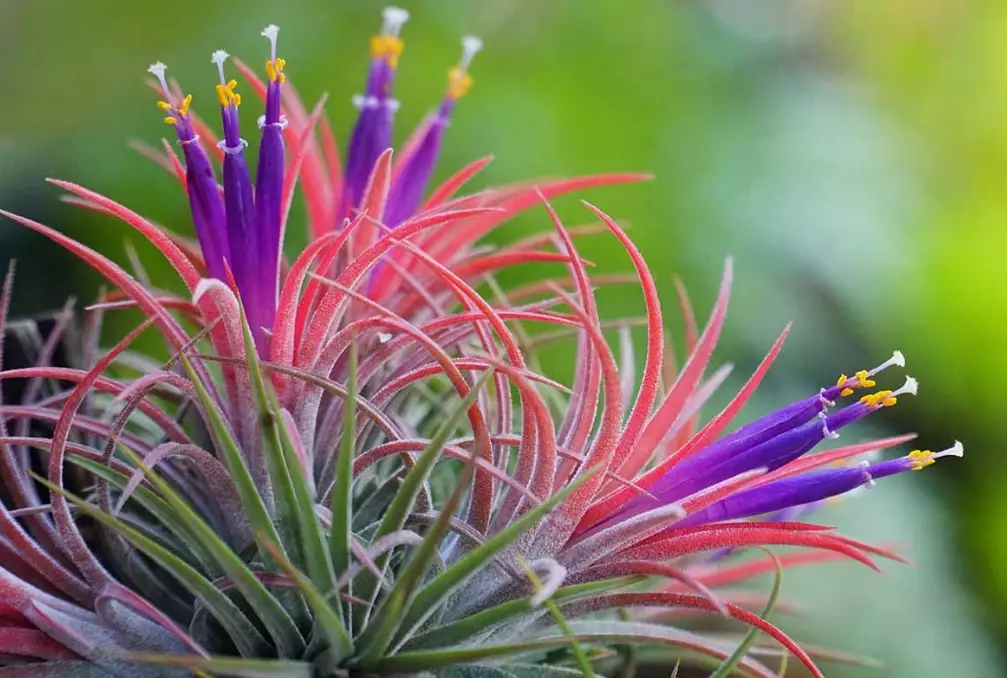 What do I do when my air plant flowers?
Enjoy it! The bloom can last from days to weeks. This is the plant's peak reproductive stage. The big news is what happens next: after flowering, the main plant (called the "mother") will slowly begin to decline over the next year or two, but it will produce 1-3 offsets, called "pups." Keep caring for the mother as usual. Once the pups are about one-third the size of the mother, you can gently twist them off to propagate, or leave them attached to form a clump.
Why is my Spanish moss (Tillandsia usneoides) constantly turning brown and crispy?
Spanish moss is the high-maintenance diva of the air plant world, despite its rugged appearance. It needs exceptional air circulation and more frequent hydration than most. In a dry home, misting it heavily 2-3 times a week might be necessary, in addition to a weekly 20-minute soak. It also prefers to be hung where air moves around it constantly. A still, dry corner is its worst enemy.
Is it normal for the bottom leaves to dry up and die?
Yes, to an extent. As the plant grows from the center, the oldest outer leaves will naturally dry out and can be gently pulled away. However, if multiple inner leaves are browning or coming loose, that's a sign of rot from overwatering or poor drying. Differentiate between natural, slow senescence of the outermost layer and rapid decay from the center outwards.
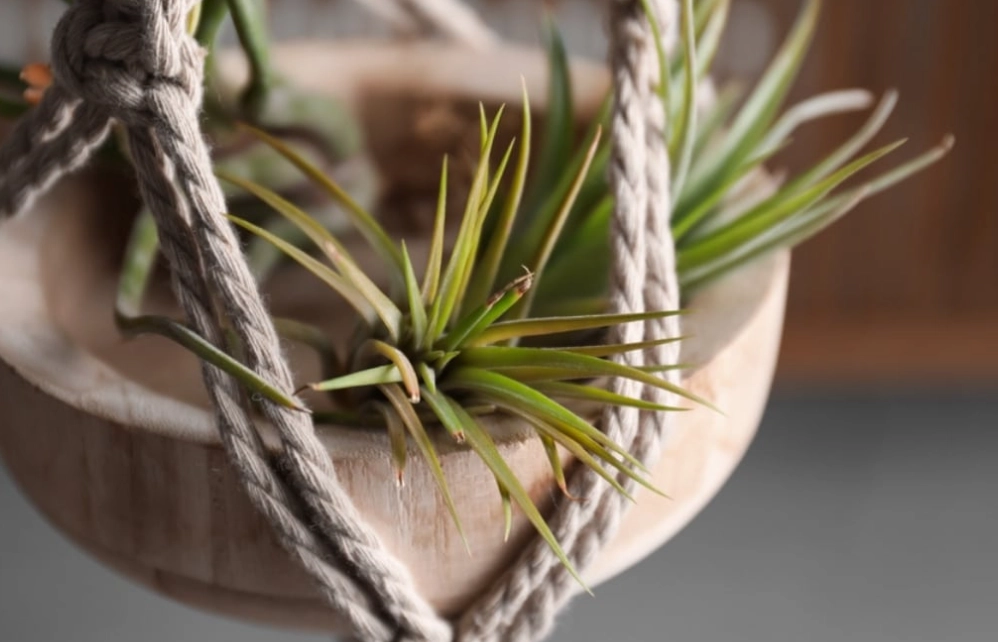 The bottom line with Tillandsia care is observation. Your home's environment is unique. Start with the weekly soak, bright indirect light, and strong air flow. Then, watch your plant. Is it plump and green? Is it growing? Adjust from there. It's not about being perfect; it's about providing the core elements they've evolved to need. Do that, and these fascinating plants will reward you with years of unique, sculptural beauty.


Comments