Let's be honest. You bought that gorgeous rubber plant (Ficus elastica) because it looks like a million bucks. Those big, glossy leaves can turn any corner into a jungle-inspired sanctuary. But now it's sitting in your living room, and you're starting to worry. Is it getting enough light? Why is the bottom leaf looking a bit sad? Relax. I've killed a few plants to learn this, so you don't have to. This isn't just another generic care sheet. This is the guide from someone who's nursed rubber plants from sad, big-box store specimens into towering, leaf-popping monsters.
The secret? They're tougher than they look, but they have a few non-negotiable needs most guides gloss over. We're going past the "water when dry" advice and into the real-world details of light positioning, soil feel, and the one watering mistake that accounts for 90% of failures.
What's Inside: Your Rubber Plant Roadmap
Why a Rubber Plant is Your Best Indoor Bet
Beyond the obvious looks, this plant works for you. It's on NASA's Clean Air Study list for filtering common indoor pollutants like formaldehyde. But more practically, it's a moderate grower. You won't be repotting it every six months, but you'll get noticeable new leaves every season if you treat it right. It's also surprisingly forgiving of occasional lapses in care compared to, say, a fiddle leaf fig (its more dramatic cousin).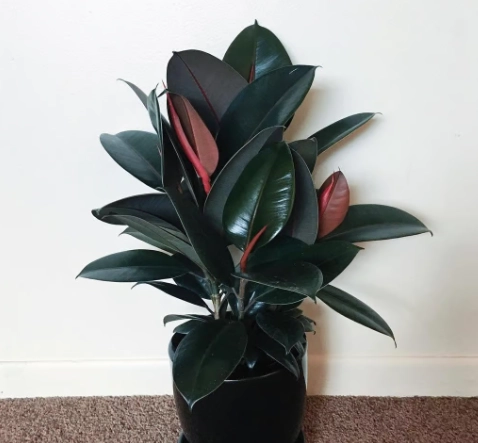
My first one survived a two-week vacation with just a good soak beforehand. Try that with a fern.
How Much Light Does a Rubber Plant Really Need?
Here's the first non-consensus point: rubber plants are often labeled "low light." That's a trap. They tolerate low light, but they thrive in bright, indirect light. In low light, growth slows to a crawl, the plant stretches out awkwardly, and the new leaves come in small and pale.
The sweet spot is near an east-facing window, or a few feet back from a south or west window. A sheer curtain is perfect. Direct, hot afternoon sun will scorch those beautiful leaves, leaving ugly brown patches.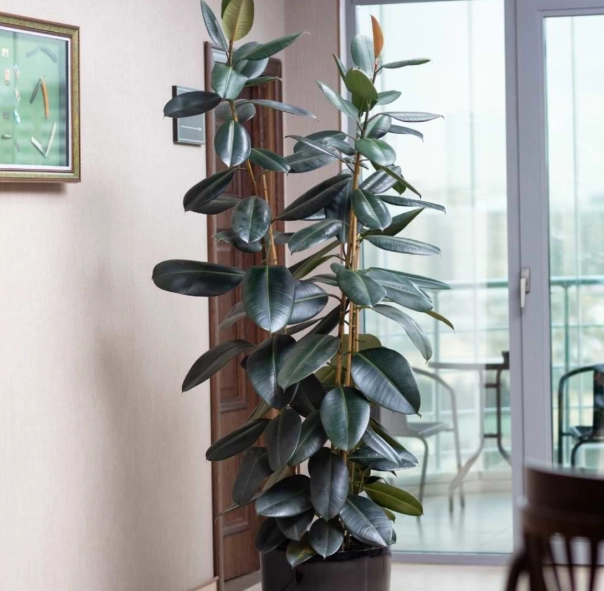
Signs Your Light is Wrong
- Too much light: Leaves look faded, washed out, or have crispy brown spots in the center.
- Too little light: New growth is sparse, leaves are smaller than older ones, and the stem gets leggy (long gaps between leaves).
I rotated mine a quarter turn every time I watered. It sounds fussy, but it kept growth even and prevented a lopsided plant reaching for the window.
Watering Your Rubber Plant: The One Rule to Rule Them All
This is where most people fail. Overwatering. It's the silent killer. Rubber plants store water in their thick stems and leaves, making them drought-tolerant. Soggy soil, however, rots the roots fast.
Forget the calendar. The "water when the top inch is dry" advice is okay, but it's better to feel the soil. Stick your finger into the potting mix up to your second knuckle. If it feels dry at that depth, it's time to water. If it's still cool or damp, wait.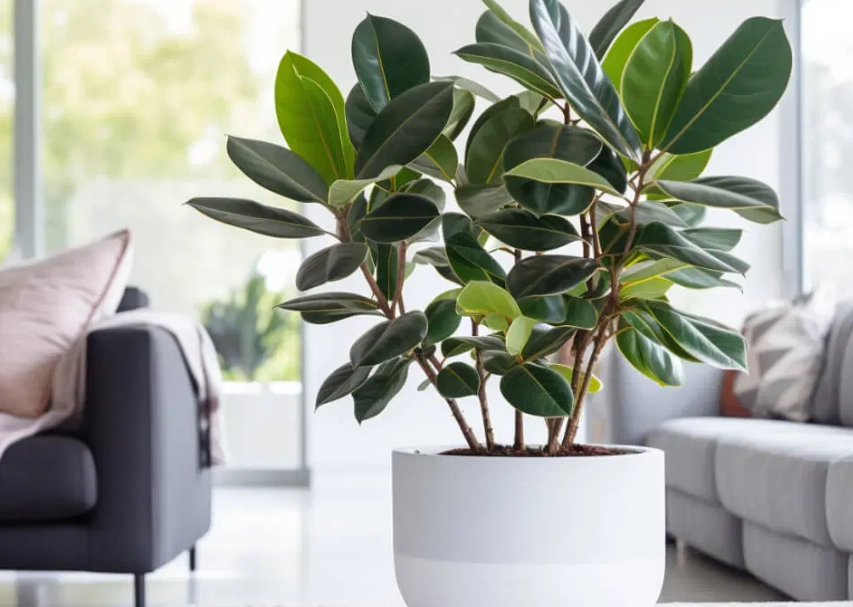
When you do water, do it thoroughly. Take it to the sink or use a watering can until water runs freely out of the drainage holes. Let it drain completely before putting it back in its decorative pot. Never let it sit in a saucer of water.
Soil, Pots, and the Repotting Conversation
Rubber plants need well-draining soil that still holds some moisture. A standard potting mix is too dense on its own. I make my own blend: 2 parts all-purpose potting soil, 1 part perlite, and 1 part orchid bark or coco coir. This creates air pockets and prevents compaction.
Terracotta pots are excellent for beginners because they're porous and help soil dry out more evenly, reducing overwatering risk. Plastic pots retain moisture longer, so you need to be more careful with your watering.
When to repot? Only when it's root-bound. You'll see roots circling the bottom of the pot or poking out of the drainage holes. Growth might also stall. Typically, this is every 2-3 years. When you do repot, only go up one pot size (e.g., from a 6-inch to an 8-inch pot). A pot that's too large holds too much wet soil around the roots.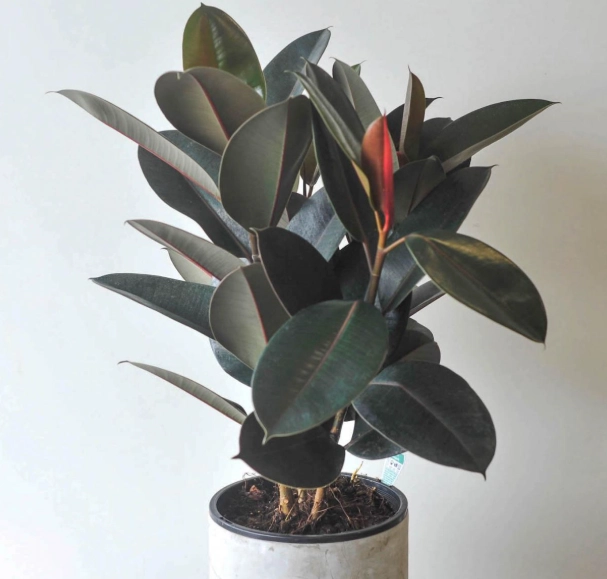
Humidity & Temperature: The Comfort Zone
Rubber plants prefer average to high humidity (40-60%), but they adapt to typical home humidity better than many tropicals. You'll see browning leaf tips if your air is extremely dry (like in winter with heating on).
Here's my unpopular take: don't bother with misting. It raises humidity for about 5 minutes and can promote fungal issues on leaves. Instead, group plants together, use a pebble tray, or run a humidifier if your air is desert-dry.
They like room temperature between 60-80°F (15-27°C). Keep them away from cold drafts (air conditioners, drafty windows in winter) and hot air vents.
Pruning and Shaping: Make It Bushy, Not Leggy
A single-stem rubber plant can get tall and skinny. To encourage a bushier, fuller plant, you need to prune. The best time is in spring or early summer when growth is most active.
Simply cut the main stem just above a leaf node (the bump where a leaf attaches). You can use clean, sharp pruners. This will signal the plant to send out new branches from nodes lower down on the stem. Don't be afraid to cut. I took 12 inches off a 4-foot plant once, and it came back with three new branches.
You can also notch the stem. Make a small, shallow cut just above a node you want to activate. This can sometimes stimulate branching without removing the top.
How to Propagate Your Rubber Plant for Free Plants
This is the fun part. Those pieces you prune off? Don't throw them away. You can root them. Stem cuttings are the easiest method.
- Take a cutting with at least 2-3 leaves and a few nodes.
- Let the cut end callous over for an hour or two. This helps prevent rot.
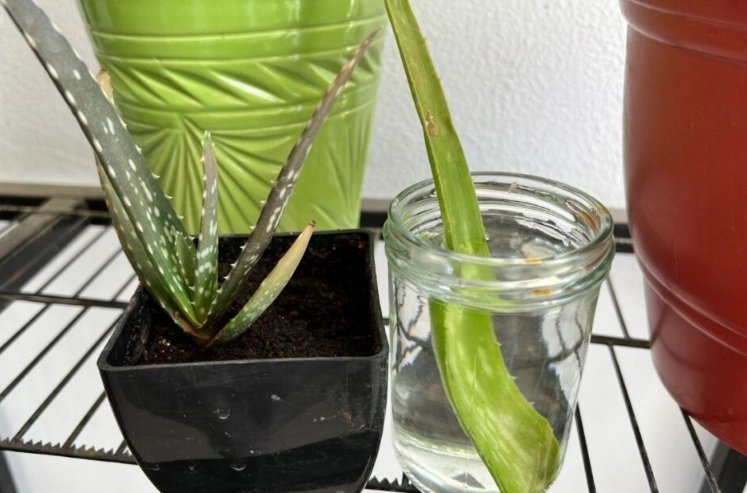
- Place the cutting in a glass of water, ensuring at least one node is submerged. Change the water weekly.
- In 4-8 weeks, you should see roots. Wait until they're a couple of inches long before potting in soil.
You can also root directly in moist potting mix, but water propagation lets you see the progress, which is more satisfying for beginners.
Troubleshooting: Reading Your Plant's Leaves
The leaves tell you everything. Here's a quick decoder ring.
| Symptom | Likely Cause | Quick Fix |
|---|---|---|
| Yellow leaves, especially lower ones | Overwatering / Root rot | Check soil moisture. Let dry out deeply. Consider repotting if soil is soggy. |
| Brown, crispy leaf edges | Low humidity or underwatering | Check soil dryness cycle. Increase ambient humidity (pebble tray). |
| Dropping leaves suddenly | Sudden change (draft, move, temperature) | Identify and remove the stressor. Be patient, it will stabilize. |
| Small, pale new leaves | Not enough light | Move to a brighter location (indirect light). |
| Dusty, dull leaves | Dust buildup | Wipe leaves gently with a damp cloth every month. This helps it breathe and photosynthesize. |
Pests like spider mites or mealybugs can happen. Isolate the plant, wipe leaves with insecticidal soap or neem oil solution, and repeat weekly until gone. Prevention through regular leaf wiping is key.
Your Rubber Plant Questions, Answered
Nine times out of ten, this is overwatering. Rubber plants are built for drought. When roots sit in wet soil, they suffocate and rot, which cuts off water supply to the leaves—ironically causing symptoms that look like thirst. First, stop watering. Check the soil deep down. If it's soggy, you might need to take it out of the pot, remove any black/mushy roots, and repot in fresh, dry, well-draining mix. Going forward, always let the soil dry out significantly between waterings.
It can survive, but it won't be happy or grow much. The humidity from showers is great, but without sufficient light, it will become leggy and drop leaves over time. If your bathroom has a window, even a small one, it might work. For a windowless bathroom, consider a ZZ plant or a snake plant instead. They're the true low-light champions.
You have to force it by pruning. In spring, identify where you want new branches to start. Cut the main stem about 1/4 inch above a leaf node. This removes the apical dominance (the plant's focus on growing upward) and redirects energy to lateral buds. It can take a few weeks, but you should see new growth points forming near the cut and lower on the stem. Good light after pruning is essential to support this new growth.
The milky latex sap can be a skin irritant for some people, causing itchiness or rash, and it's mildly toxic if ingested. It's not a major hazard, but wear gloves when pruning or propagating, and keep cuttings away from pets and kids. The sap also drips and can be sticky, so lay down some paper when you prune.
Stalled growth almost always points to one of three things: insufficient light, being root-bound, or it's the dormant season (fall/winter). First, assess the light. If it's in a dim corner, move it. Second, check if roots are circling the pot's bottom—time to repot. If it's winter, just be patient. Reduce watering and wait for spring. Fertilizing a plant in low light or during dormancy won't help and can harm it.
Stick with these principles—prioritizing light and mastering the watering—and your rubber plant will do more than survive. It'll become a resilient, growing piece of your home. Start by finding its forever spot near that bright window, and put the watering can down until you've checked the soil. You've got this.
Comments