So you brought home a bromeliad. Maybe it was a gift, or its striking, architectural form caught your eye at the nursery. That vibrant flower spike (which is actually a colorful bract, not the true flower) looks incredible. But now you're staring at it, wondering, "How do I actually keep this thing alive?" Don't worry. Bromeliads have a reputation for being tricky, but that's mostly because their needs are different from your average pothos or snake plant. Once you understand a few key rules, they're surprisingly resilient and rewarding. I've killed my share of plants over the years, and bromeliads taught me some of my most valuable lessons. Let's get straight to the point: bromeliad care revolves around mimicking their natural tropical habitat—think tree canopies, not forest floors. The biggest mistakes happen with watering and light. Get those right, and you're 90% of the way there.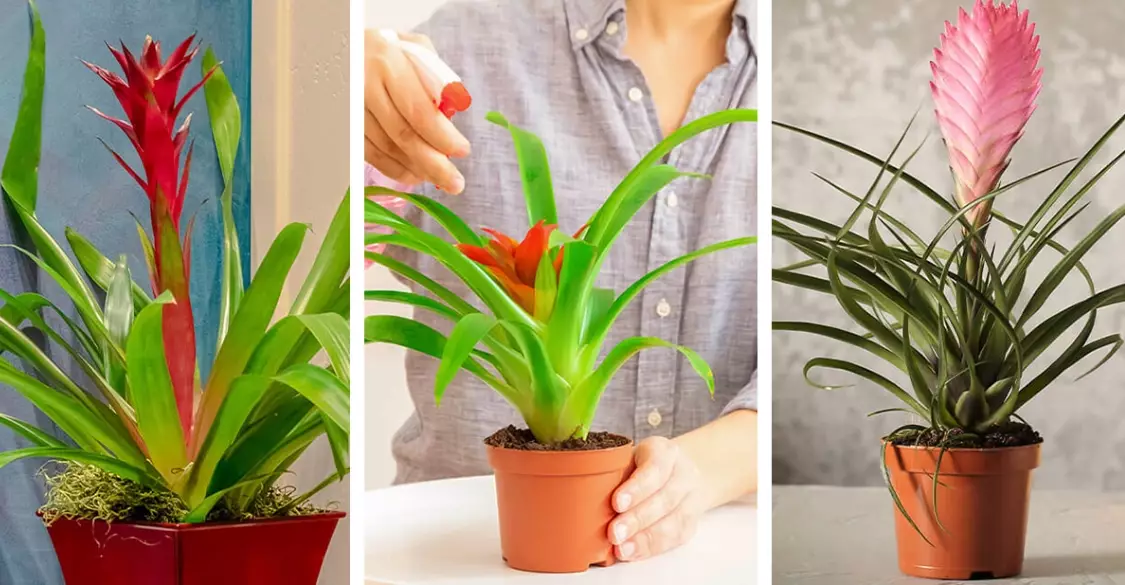
What You'll Learn in This Guide
- How to Water Bromeliads Correctly (The Biggest Mistake!)
- Finding the Perfect Light for Your Bromeliad
- Temperature & Humidity: Creating a Tropical Bubble
- Soil, Potting, and a Minimalist Approach to Fertilizer
- Solving Common Bromeliad Problems (Yellow Leaves, Brown Tips)
- What to Do After Your Bromeliad Flowers (The Lifecycle)
How to Water Bromeliads Correctly (The Biggest Mistake!)
This is where most people go wrong. You can't treat a bromeliad like other houseplants. They are epiphytes in the wild, meaning they grow on other plants (like trees), not in the ground. They've evolved to collect water in a central cup formed by their leaves.
The Core Method: Water the Cup, Not Just the Soil.
Fill the central "vase" or "tank" of the plant with water. Use filtered, distilled, or rainwater if your tap water is hard. Tap water can leave mineral deposits and cause the tip of the leaves to brown. Keep that cup about 1/4 to 1/2 full. Don't let it go completely dry for weeks on end.
Here's the critical expert tip everyone misses: you must flush the cup regularly. Every 3-4 weeks, tip the plant over and empty out the old water. Refill it with fresh water. Why? Stagnant water in that cup becomes a breeding ground for bacteria and mosquitoes, and it can cause the core of the plant to rot. I learned this the hard way with my first Guzmania—it developed a foul smell and a mushy center because I just kept topping up the water.
The Soil's Role. The potting mix should be kept lightly moist, but never soggy. Water the soil only when the top inch feels dry to the touch. Overwatering the soil is the fastest way to kill the roots. Think of it this way: the cup is their primary water source, the soil is just for anchorage and occasional moisture.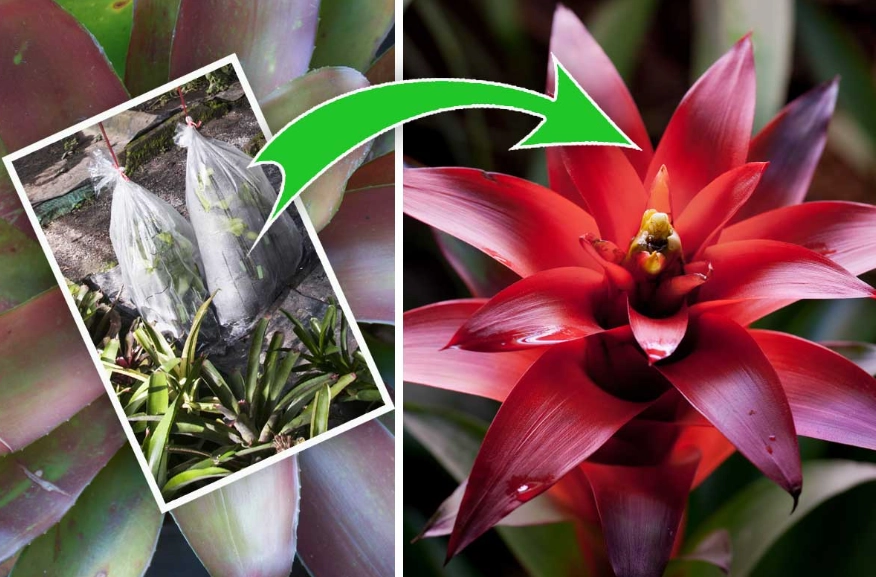
Finding the Perfect Light for Your Bromeliad
Bromeliads are often marketed as "low light" plants. This is misleading. They tolerate lower light, but they won't thrive or produce vibrant colors. Their needs vary by type.
Bright, Indirect Light is the Sweet Spot. A spot near an east or north-facing window is ideal. A few feet back from a south or west window with a sheer curtain also works perfectly. You want lots of light, but minimal direct, hot sunbeams hitting the leaves, which can scorch them (you'll see bleached, pale patches).
My Neoregelia 'Fireball' sits about three feet from a south-facing window. It gets bright light all day but never a direct ray. Its red coloration is intense. If I moved it into a dark corner, it would turn a dull green.
Signs of Light Issues:
- Too much light: Leaves look faded, washed out, or have crispy brown patches.
- Too little light: Leaves become deep green and elongated (stretching for light), the plant stops growing, and any colorful bracts will fade to green.
Temperature & Humidity: Creating a Tropical Bubble
Bromeliads aren't fans of the cold. They prefer the same temperatures you do.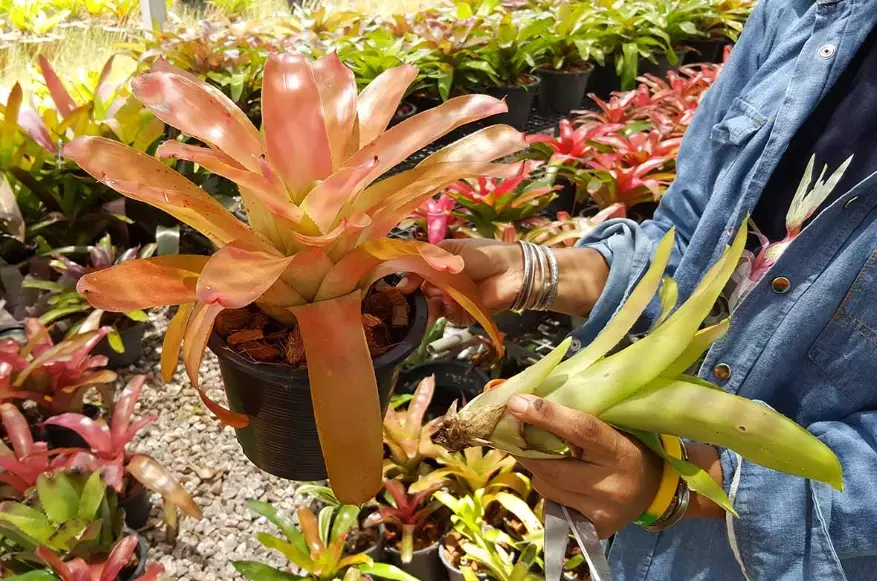
Temperature: Aim for a consistent range between 60°F (15°C) and 80°F (27°C). Protect them from drafts—both cold drafts from windows in winter and hot, dry blasts from heating or air conditioning vents. Temperatures below 50°F (10°C) can cause damage.
Humidity: This is the second most important factor after watering. Most homes are too dry, especially in winter. Bromeliads love humidity above 50%.
You don't need a fancy humidifier, though they help. Simple tricks:
- Place the pot on a pebble tray filled with water (ensure the pot sits above the water line).
- Group it with other plants. They create a microclimate of shared transpiration.
- Mist the leaves lightly in the morning, but don't rely on this alone. Misting is a temporary boost, not a solution for low humidity.
Soil, Potting, and a Minimalist Approach to Fertilizer
Bromeliads have small, shallow root systems. They hate sitting in dense, water-retentive soil.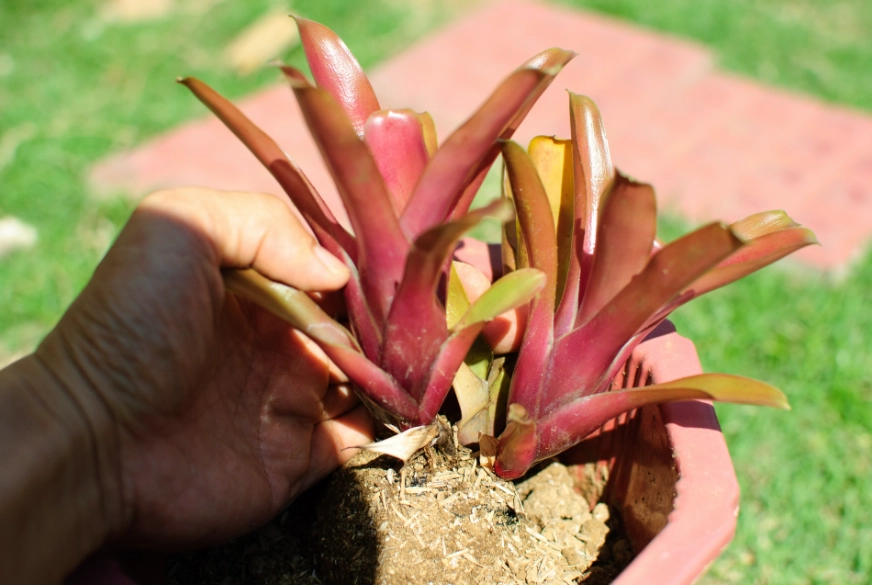
The Perfect Mix: Use a loose, fast-draining, airy potting medium. A ready-made orchid mix (bark-based) is excellent. You can also make your own with equal parts regular potting soil, orchid bark, and perlite. The goal is for water to run through it quickly.
Potting: Choose a pot with excellent drainage holes. The pot doesn't need to be deep. In fact, a relatively shallow pot is often better as it prevents too much wet soil below the roots. Repotting is rarely needed unless the plant becomes top-heavy or the mix completely breaks down.
Fertilizer: Less is More. Bromeliads are not heavy feeders. In nature, they get minimal nutrients from debris and rain. Over-fertilizing will harm them.
- Method: Use a balanced, water-soluble fertilizer (like a 10-10-10 or 20-20-20) but dilute it to 1/4 or 1/2 the strength recommended on the label.
- Timing: Apply this weak solution only to the soil during the growing season (spring and summer), about once a month. You can also add a tiny amount to the water in the central cup, but change that water more frequently.
- Winter: Don't fertilize at all.
Solving Common Bromeliad Problems
Let's diagnose the issues you're probably seeing.
| Symptom | Likely Cause | How to Fix It |
|---|---|---|
| Brown, crispy leaf tips | Low humidity or salts/minerals from tap water. | Increase humidity (pebble tray, humidifier). Use filtered/rain water to fill the cup. You can trim the brown tips off with clean scissors. |
| Leaves turning yellow at the base | This is often natural. Older outer leaves die back as the plant grows. | Only worry if many leaves are yellowing rapidly or the yellowing starts in the center. That could mean overwatering (soil) or rot (cup). |
| Mushy, brown center (cup) | Rot from stagnant water in the central cup. | Unfortunately, this is often fatal for the main plant. Empty the cup immediately. If the center is completely rotten, the plant is likely a loss, but check for healthy pups (babies) around the base. |
| Faded leaf color (loss of red/pink) | Not enough light. | Move the plant to a brighter location with indirect light. |
| Small bugs on leaves/soil | Common pests like mealybugs (white cottony spots) or scale (brown bumps). | Wipe leaves with a cotton swab dipped in rubbing alcohol. For larger infestations, use insecticidal soap or neem oil, avoiding the central cup. |
What to Do After Your Bromeliad Flowers
This is the part that surprises new owners. The spectacular bloom of a bromeliad can last for months. But once it finally fades, the mother plant that produced the flower will slowly die. This is a natural part of their lifecycle, not a failure on your part.
Don't throw the plant away! As it begins to decline, it puts energy into producing new plants called "pups" or "offsets" around its base.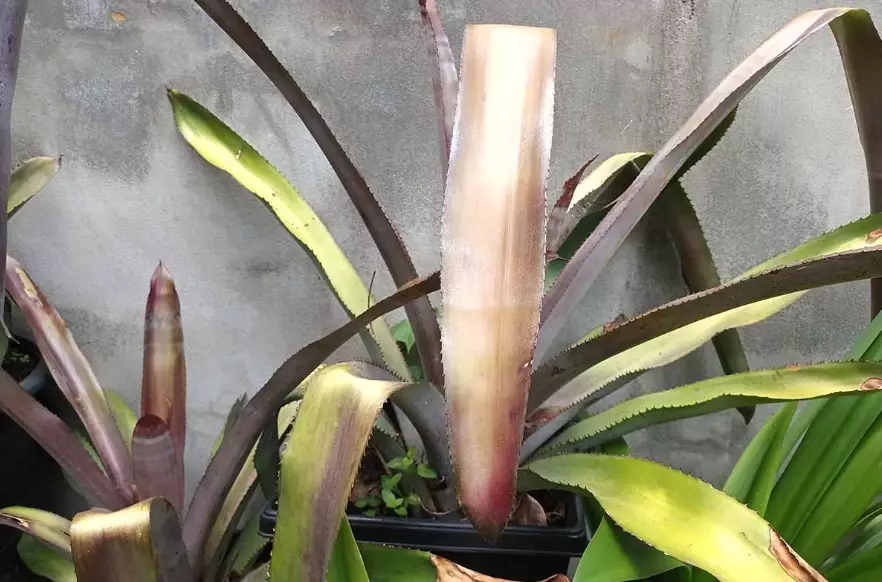
Your Action Plan:
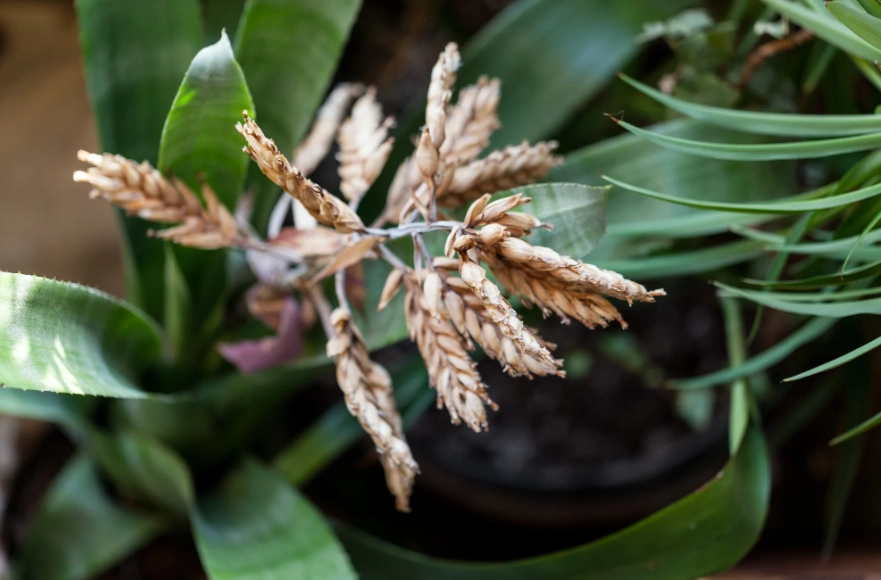
- Once the flower bract is completely brown and ugly, cut it off at the base with a clean knife or shears.
- Continue caring for the mother plant as usual—water the cup, provide light. This keeps it healthy enough to support the growing pups.
- Wait until the pups are about one-third to one-half the size of the mother plant. They should have their own root system forming.
- Carefully separate the pup from the mother using a clean, sharp knife. You can pot it up in its own small container with a bromeliad/orchid mix. Keep it slightly more humid as it establishes.
- The mother plant will eventually wither completely. You can remove it then.
This is how you keep your bromeliad collection going. That first plant can become many over the years.
Your Bromeliad Questions, Answered
My bromeliad's leaves are all green and it hasn't flowered. What's wrong?
It likely needs more light. Colorful bracts (the "flower") are often triggered by sufficient bright light. Some varieties, like Aechmea or Guzmania, may also need a maturity of 2-3 years before they're ready to bloom. You can sometimes force blooming by placing a ripe apple near the plant in a sealed plastic bag for a week (the ethylene gas can act as a trigger), but providing optimal light year-round is the best strategy.
Can I plant my bromeliad outside?
Only if you live in a frost-free climate (USDA zones 10-11). In warmer areas, they make stunning additions to shaded patios or mounted on trees. In temperate zones, keep them as indoor or summer patio plants, bringing them inside well before the first frost.
 Is it okay to use ice cubes to water the central cup?
I strongly advise against it. The idea is that ice melts slowly and prevents overwatering, but placing ice directly on tropical plant tissue can cause cold damage and shock. It's an unnatural method. Using room-temperature water and following the flush-and-fill method is far safer and mimics natural rainfall.
How often should I repot my bromeliad?
Rarely. They have minimal roots and prefer to be slightly pot-bound. Only repot if the potting mix has decomposed and turned soggy, if the plant is severely tipping over, or when you are potting up a mature pup. When you do, only go up one pot size at most.
Are bromeliads pet-safe?
According to the ASPCA, most common bromeliads (like Aechmea, Guzmania, Vriesea) are considered non-toxic to cats and dogs. However, ingesting any plant material can cause mild stomach upset. It's always best to keep plants out of reach of curious pets.
 Bromeliad care boils down to understanding their unique structure. They're not difficult, just different. Focus on watering the cup correctly (and flushing it!), providing bright indirect light, and boosting humidity. Do that, and you'll not only keep that stunning plant alive but also enjoy its fascinating lifecycle for years to come as it produces new pups for your collection. Forget the fear—enjoy the unique, sculptural beauty they bring to your space.

Comments