Let's be honest, the string of pearls plant (Senecio rowleyanus) is stunning, but it has a reputation for being fussy. You see those perfect, cascading strands of plump green beads on social media and think, "I need that." Then you bring one home, and within months it's a string of regrets—shriveled, sparse, or just plain dead. I've been there. I've killed my fair share of these plants before figuring out the trick. It's not about having a green thumb; it's about understanding what this quirky succulent actually wants, which is often the opposite of what our instincts tell us. This guide cuts through the generic advice and gives you the specific, actionable steps to not just keep your string of pearls alive, but to make it thrive.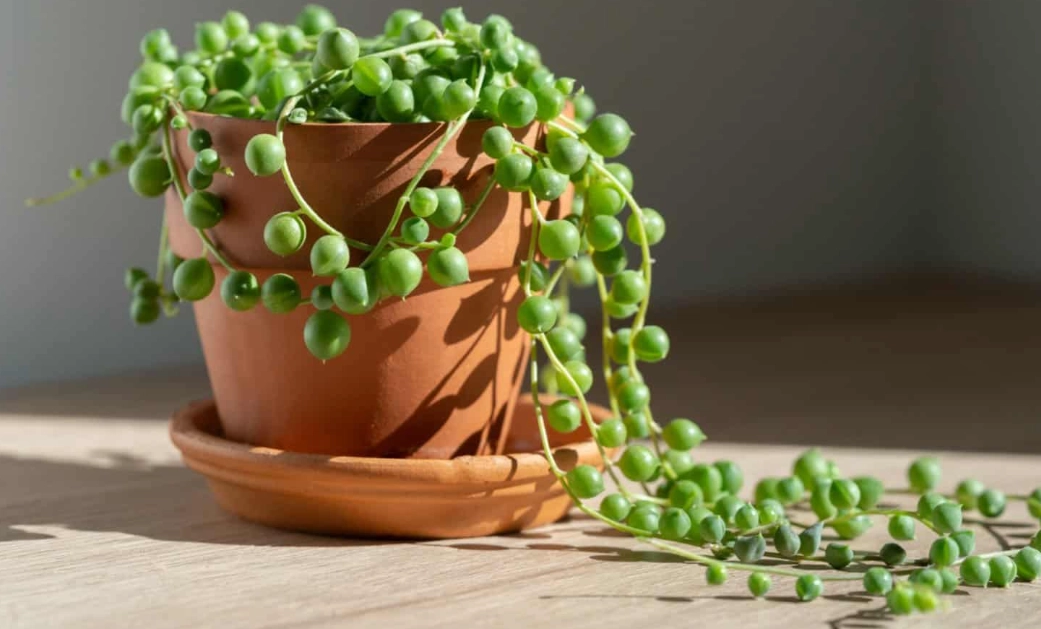
What You'll Learn in This Guide
- Understanding the String of Pearls Plant
- How to Care for Your String of Pearls: The Non-Negotiables
- The Two Biggest Mistakes That Kill String of Pearls (And How to Avoid Them)
- How to Propagate String of Pearls for More Free Plants
- Troubleshooting Common String of Pearls Problems
- Frequently Asked Questions (From Real Plant Parents)
Understanding the String of Pearls Plant
This isn't your average leafy houseplant. The string of pearls is a succulent native to the arid, rocky regions of southwest Africa. Every one of those cute "pearls" is a modified leaf, designed to store water. The thin, trailing stem is its lifeline. In the wild, it crawls along the ground, rooting where it touches and forming a dense mat to reduce water loss. That's your first clue: it hates wet feet and loves bright, dappled light.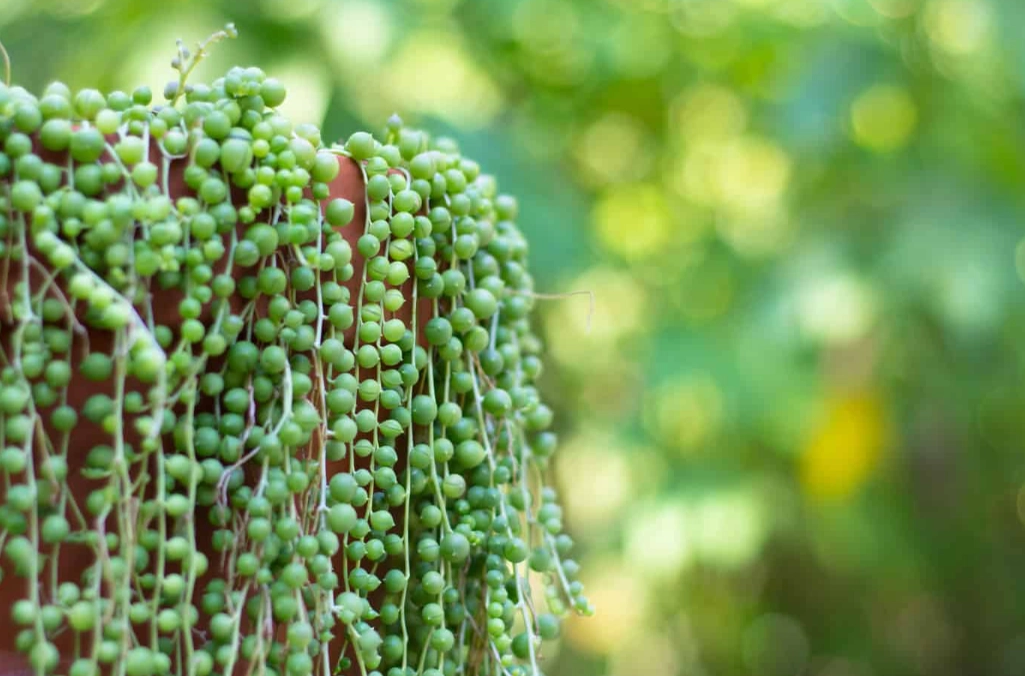
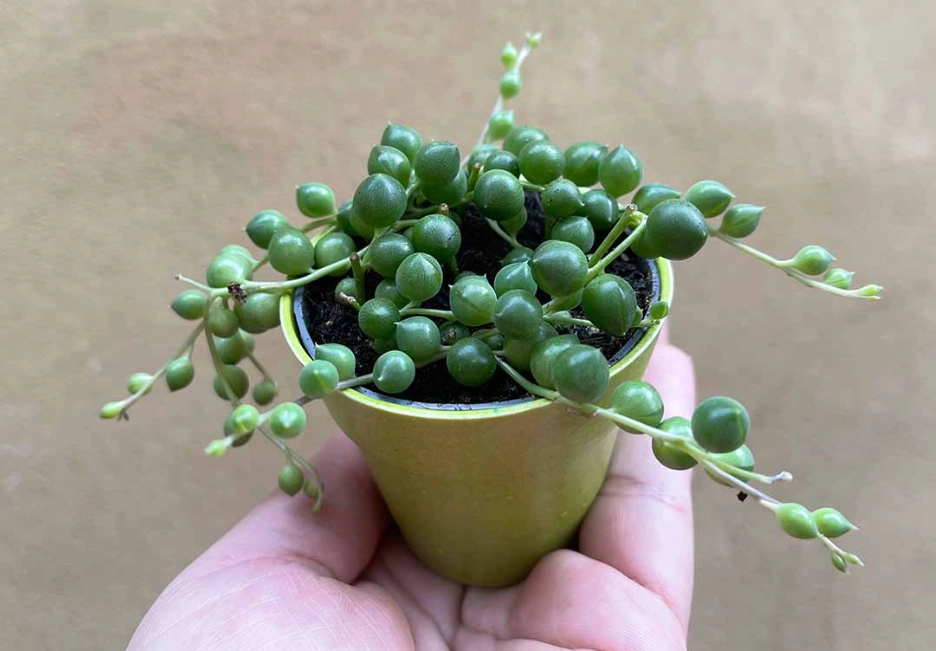
Quick Profile: Scientific name: Senecio rowleyanus. Family: Asteraceae. Native habitat: Southwest Africa (Namibia, South Africa). Growth habit: Trailing/cascading succulent. Key feature: Spherical, water-storing leaves with a translucent "window" on top for light absorption.
Most advice online is too generic. "Bright, indirect light" and "water when dry" doesn't cut it. The difference between a thriving plant and a dying one is in the specifics of how you interpret those phrases.
How to Care for Your String of Pearls: The Non-Negotiables
Think of this as the plant's rulebook. Deviate too far, and you'll see the consequences quickly.
Light: It's All About the "Window"
Those pearls have a thin, translucent stripe running along the top. That's called an epidermal window. It's not just for looks—it's a sophisticated lens that directs light deep into the leaf's interior where photosynthesis happens. For this mechanism to work optimally, the plant needs very bright light.
An east-facing window is often the sweet spot, providing several hours of gentle morning sun. A south or west window is great, but you might need to diffuse the harsh afternoon sun with a sheer curtain in summer to prevent scorching. North windows are usually too dim. If the pearls start stretching out, becoming more oval than round (a condition called etiolation), it's screaming for more light.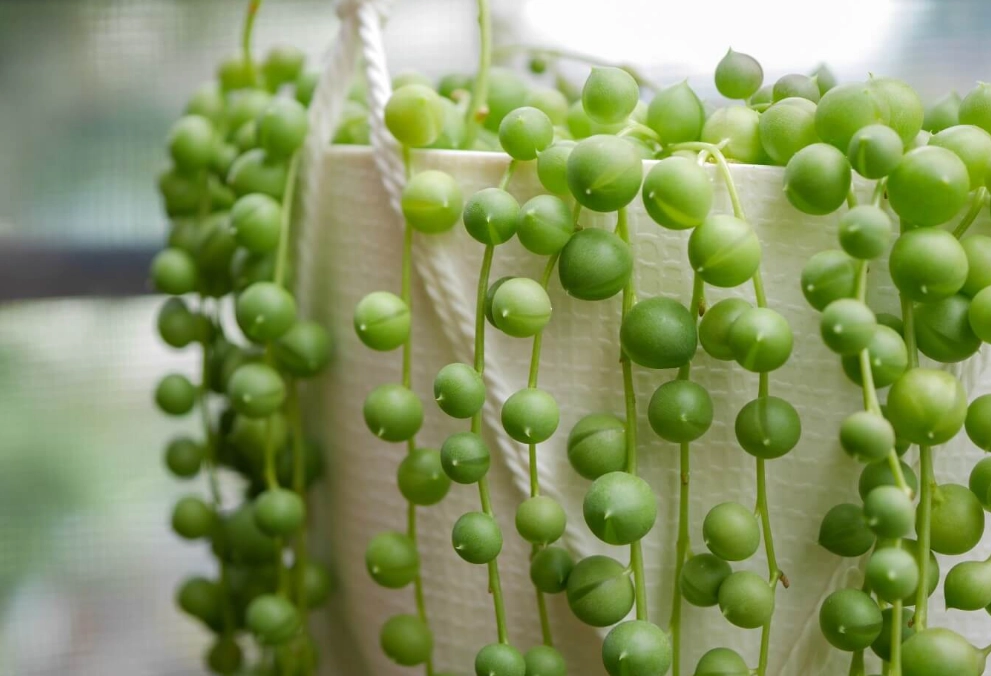
Watering: The Make-or-Break Factor
This is where most people fail. The string of pearls is drought-adapted. Overwatering leads to mushy, yellow pearls and root rot—a death sentence. Underwatering causes the pearls to shrivel and dry out.
The correct method: Soak it thoroughly, then let it dry out almost completely. Don't just sprinkle a little water on top. Take the pot to the sink and water until it runs freely out the drainage hole. Then, let all excess water drain away. Now, the crucial part: wait. Wait until the soil is dry at least an inch down, and the pearls feel slightly less firm to a gentle squeeze. In winter, this might mean watering only once a month. In a hot, bright summer, maybe every two weeks.
Forget the weekly schedule. Your plant's thirst depends on light, temperature, and humidity. A moisture meter is a worthwhile investment to take the guesswork out.
Soil and Pot: Building the Right Foundation
Fast-draining soil is non-negotiable. A standard cactus/succulent mix is a good start, but I prefer to make it even grittier. A simple DIY mix: 2 parts cactus soil, 1 part perlite, 1 part coarse sand or pumice. This ensures water flows through instantly, leaving air around the roots.
The pot matters too. Always use a pot with a drainage hole. Terracotta pots are excellent because they're porous and help wick away moisture from the soil. The pot shouldn't be too large—a plant swimming in soil will hold moisture for too long around its relatively small root system.
Temperature and Humidity
They like room temperatures between 70-80°F (21-27°C) and can tolerate down to about 50°F (10°C). Average household humidity is fine. They don't need misting—in fact, misting can promote rot on the pearls.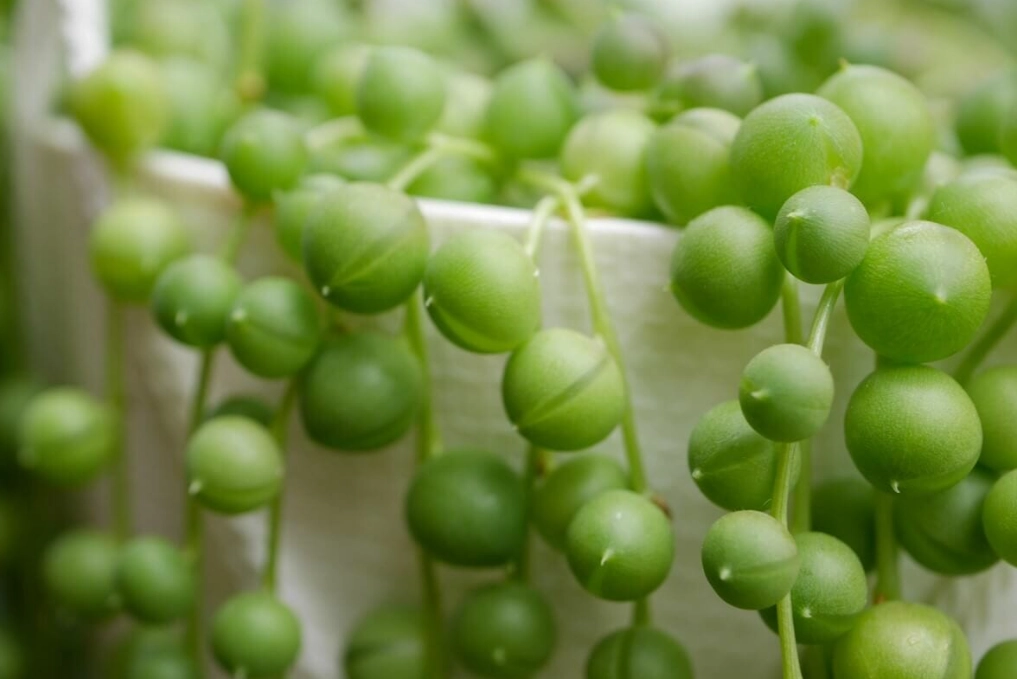
The Two Biggest Mistakes That Kill String of Pearls (And How to Avoid Them)
After talking to dozens of frustrated plant owners, two errors come up again and again.
Mistake 1: Treating it like a tropical vine. This means watering on a schedule (e.g., every Saturday), using rich, moisture-retentive soil, and keeping it in a medium-light bathroom. This creates a constantly damp environment that rots the stems from the soil line up. The plant literally melts.
The Fix: Recalibrate your brain. This is a desert creeper. Use gritty soil, water only on signs of need (not the calendar), and give it the sunniest spot you have.
Mistake 2: The "top-down only" light placement. We hang these in macramé hangers in the middle of a room because they look gorgeous. But light comes from the window, hitting the top of the plant. The pearls lower down the strand, and more importantly, the crown of the plant (where new growth emerges from the soil), get shaded out. The crown weakens, and the plant becomes top-heavy and sparse.
The Fix: Place the plant so the crown gets light. This often means the top of the pot should be close to the light source, not just the trailing strands. A high shelf where the pot sits near the window, or a hook placed closer to the window pane, is better than a hanger in the center of the room.
How to Propagate String of Pearls for More Free Plants
The easiest way is by stem cuttings. It's almost foolproof if you do it right.
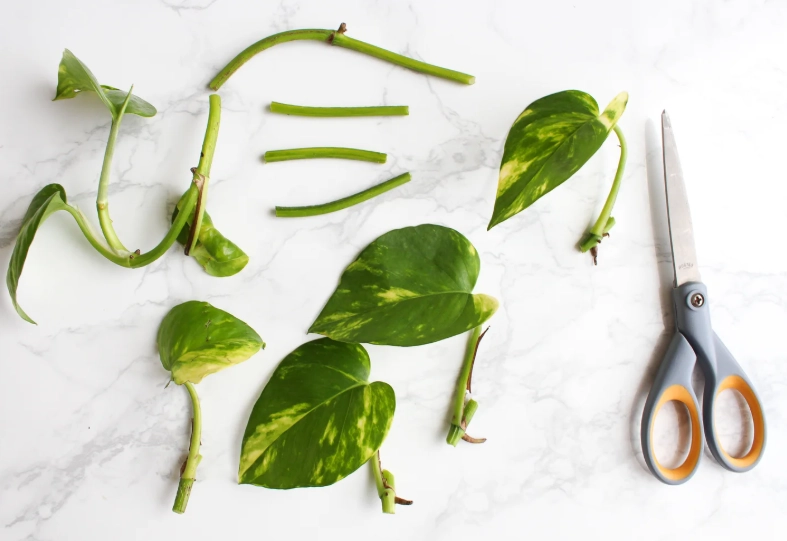
Step 1: Take a healthy cutting, at least 3-4 inches long. Use clean scissors.
Step 2: Remove a few pearls from the bottom inch of the stem to expose the nodes (little bumps where the pearls were attached). This is where roots will form.
Step 3 (The Key Step most miss): Let the cut end callous over. Lay the cutting on a paper towel out of direct sun for 1-2 days. This seals the wound and prevents rot when you plant it.
Step 4: Coil the cutting on top of a small pot filled with your gritty succulent mix. Gently press the nodes into the soil. You can use a bent paperclip to pin them down if needed. Don't bury the pearls, just the stem.
Step 5: Water lightly just around the planted nodes to settle the soil. Then, wait. Keep the soil barely moist (not wet) and in bright, indirect light. In 2-4 weeks, you should feel resistance when you give a gentle tug—roots have formed.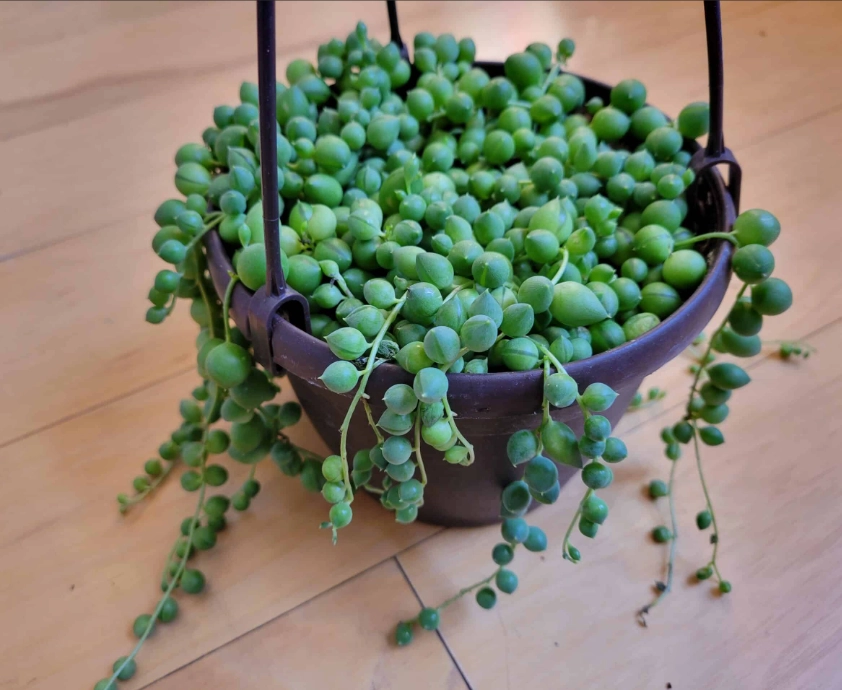
Troubleshooting Common String of Pearls Problems
Here’s a quick-reference table to diagnose what's going wrong.
| Symptom | Likely Cause | Immediate Action |
|---|---|---|
| Pearls are shriveling and dry | Underwatering. The plant is using its stored water reserves. | Give the pot a thorough soak. If the soil is bone dry and hydrophobic, you may need to bottom-water by placing the pot in a tray of water for 20 minutes. |
| Pearls are mushy, yellow, or translucent | Overwatering / Root Rot. | STOP watering. Check the roots. If they are brown and mushy, cut away all rot, let the plant dry out for a few days, and repot in fresh, dry, gritty mix. Propagate healthy stems as a backup. |
| Pearls are spaced far apart on the stem (leggy growth) | Insufficient light (Etiolation). | Gradually move the plant to a brighter location. You can't fix the stretched part, but new growth will be compact if the light is right. |
| Brown, dry spots on the pearls | Sunburn from too much direct, harsh sun. | Move the plant to a spot with bright but filtered light (e.g., behind a sheer curtain). |
| Plant is thinning out at the crown (soil surface) | Crown isn't getting enough light, or old stems have died back. | Ensure the top of the pot gets light. Take cuttings and propagate them right back into the same pot to fill it out. |
| Little flying insects around the plant | Fungus gnats. They thrive in moist soil. | Let the soil dry out more between waterings. Use yellow sticky traps. As a last resort, treat the soil with Bacillus thuringiensis israelensis (BTI), a biological control. A reliable source for information on biological controls is the UC Statewide Integrated Pest Management Program. |
Frequently Asked Questions (From Real Plant Parents)
Why are the pearls on my new string of pearls plant suddenly shriveling after I brought it home?
This is classic transplant shock combined with a change in environment. The plant was likely in perfect conditions at the nursery (high light, controlled watering). Your home is different. It often goes through an adjustment period where it may lose some pearls. Don't panic and overwater. Stick to the soak-and-dry method in a bright spot, and it should stabilize and put out new growth in a few weeks.
Can I grow a string of pearls in water long-term?
You can root cuttings in water, but I don't recommend keeping it in water permanently. While the cuttings may survive for a while, they are not adapted to an aquatic environment. The roots that form in water (water roots) are different from soil roots and are prone to rot if transferred to soil later. For a healthy, long-lived plant, soil is the way to go.
 My string of pearls is growing, but very slowly. Is that normal?
In lower light conditions, growth will be very slow. In ideal, bright light with warm temperatures, they can grow surprisingly fast—several inches in a growing season. If growth is glacial, reassess your light situation first. A gentle fertilizer at half-strength during the spring and summer (like a balanced 10-10-10) can also help, but never fertilize a stressed or dormant plant.
Should I trim the long strands to make the plant bushier?
Absolutely. Trimming encourages branching from the point you cut. Don't just discard those trimmings—propagate them! You can root them and add them back into the top of the mother pot to create a denser, fuller plant. It's the secret to those incredibly lush specimens you see online.
Is the string of pearls toxic to pets?
Yes. According to the ASPCA, Senecio rowleyanus is toxic to cats, dogs, and horses if ingested. It contains pyrrolizidine alkaloids, which can cause vomiting, diarrhea, drooling, and lethargy. Keep it in a hanging basket well out of reach of curious pets.
Final Pro Tip: The best thing you can do for your string of pearls is to observe it closely. Get used to how the firm pearls feel when hydrated. Notice the weight of the pot when it's dry versus watered. This hands-on familiarity will tell you more than any rigid schedule ever could. Good luck!
Comments