Quick Navigation
- Getting to Know Your Haworthia: More Than Just a Zebra Plant
- The Deep Dive: What Your Haworthia is Really Trying to Tell You
- The Soil and Potting Masterclass
- Popular Haworthia Varieties: A Curated Selection
- Propagation: Making More Plant Friends
- Common Problems & Solutions: A Troubleshooting Guide
- Answering Your Haworthia Questions
Let's be honest, sometimes you just want a plant that won't give you a guilt trip if you forget about it for a week (or three). You want something with personality, something that looks cool on your desk without demanding a PhD in botany to keep alive. That's where the haworthia plant comes in. It's the quiet, resilient friend of the succulent world.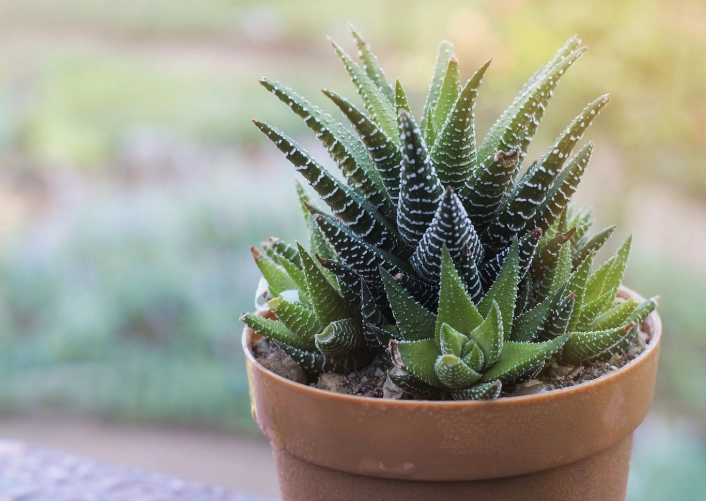
I killed my first one. There, I said it. I treated it like a cactus from a cartoon desert, gave it blazing sun and a sip of water every blue moon, and wondered why it shriveled up. Turns out, I had it all wrong. Haworthias are more nuanced than that. They're not your typical sun-worshipping succulents, and understanding that little twist is the key to a lifelong friendship.
This guide is everything I wish I'd known back then. We're going to move past the basic "don't overwater it" advice and dig into the real details that make these plants tick. Whether you're eyeing a classic Haworthia fasciata (the Zebra Plant) or a translucent Haworthia cooperi, this is your roadmap.
Getting to Know Your Haworthia: More Than Just a Zebra Plant
When people say "haworthia," they're usually picturing the one with the white horizontal stripes. But the genus is surprisingly diverse. Some look like they're made of polished green glass, others form geometric rosettes so perfect they seem fake, and some even mimic miniature aloes. What ties them all together is their generally slow, compact growth and their incredible adaptability to indoor life.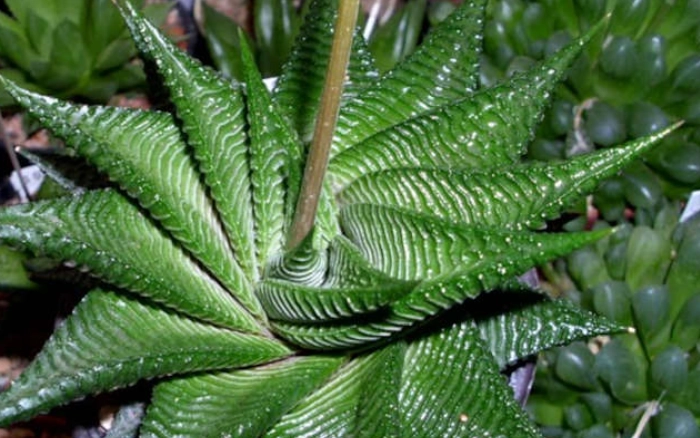
They're part of the Asphodelaceae family, cousins to aloes and gasterias. One of their best features? They're almost exclusively propagated by offsets, those cute little "pups" that grow from the base of the mother plant. This means the haworthia plant you buy is likely a clone, grown for stability and those perfect traits we love. You can learn more about their botanical background from reputable sources like the South African National Biodiversity Institute (SANBI), which provides detailed information on South Africa's native flora.
The Core Care Rules (Where Most Guides Stop)
Okay, let's get the fundamentals out of the way. But I promise we'll go deeper right after.
- Light: Bright, indirect light is king. An east or north-facing window is often ideal. A west or south window is fine if filtered by a sheer curtain. Direct afternoon sun can scorch their leaves, turning them red, brown, or white.
- Water: The golden rule: soak thoroughly, then let the soil dry out completely. I mean it. Stick your finger in the soil. Is it dry two inches down? Good, now wait another few days. Then water. In winter, you might only water once a month.
- Soil: They need fast-draining stuff. A standard cactus/succulent mix is a good start, but I like to add extra perlite or pumice (like 50/50 mix) to make it even grittier.
- Pot: Always, always a pot with a drainage hole. Terracotta is fantastic because it wicks away extra moisture.
See? That's the basic spiel. But here's where we go beyond.
The Deep Dive: What Your Haworthia is Really Trying to Tell You
Your plant communicates through its leaves. Learning this language is what separates a surviving haworthia from a thriving one.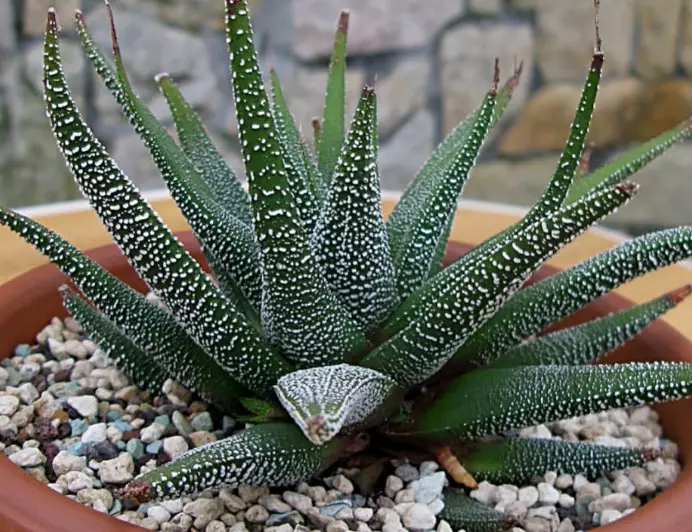
Decoding Leaf Signals
Let's play plant detective.
Soft, Mushy, Translucent Leaves: This is the classic sign of overwatering. The cells are literally bursting. If the base of the plant is mushy, it might be root rot, which is an emergency. Unpot, cut away any black/brown mushy roots, let it dry for a day or two, and repot in fresh, dry mix. Don't water for a week.
Shriveled, Thin, Wrinkled Leaves: The plant is using up its internal water reserves. It's thirsty. Give it a good soak. A well-watered haworthia plant will have plump, firm leaves.
Red or Purple Tints: Often a sign of sun stress. A little bit can be attractive (some people even aim for it), but if it's combined with crispy, sunken patches, it's a sunburn. Move it to a less intense spot.
Brown, Crispy Leaf Tips: Could be low humidity, but more often it's a sign of minerals or salts building up in the soil from tap water. Try watering with filtered or rainwater every so often, or make sure you're flushing the soil thoroughly when you water (let water run out the bottom).
The Soil and Potting Masterclass
This is arguably the most important part of haworthia care, and where most failures begin. You can't just use dirt from your backyard.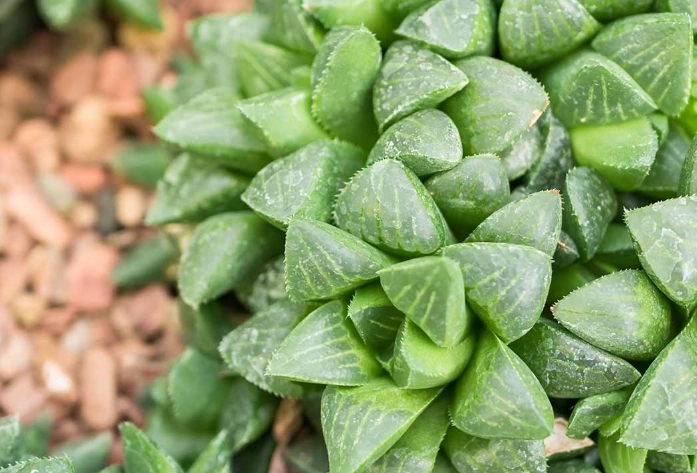
Think of their natural habitat: rocky, sandy, with water that drains away in seconds. Your potting mix needs to mimic that. Here's a simple, effective recipe I've used for years:
- 2 parts bagged cactus & succulent potting mix
- 1 part perlite
- 1 part pumice or coarse sand (horticultural grit, not beach sand)
Mix it all up. It should feel gritty, not dense or peat-heavy. When you water it, the water should immediately soak in and drain right through. If it sits on top or the pot feels heavy and soggy days later, you need more grit.
Popular Haworthia Varieties: A Curated Selection
Not all haworthias are created equal. Some are easier, some are more striking. Here’s a look at some of the most sought-after types you’re likely to encounter.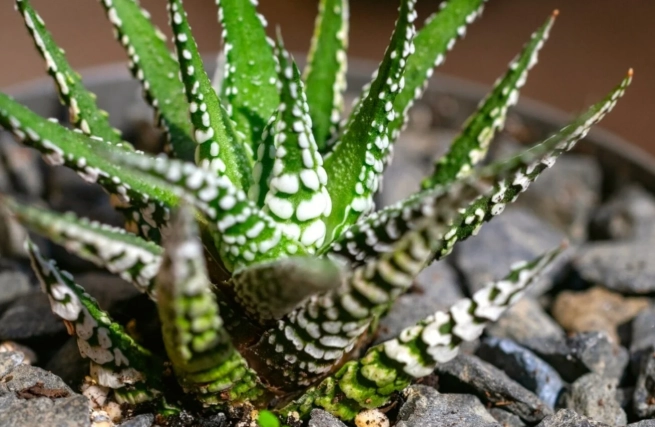
| Variety Name | Common Name | Key Characteristics | Care Note |
|---|---|---|---|
| Haworthia fasciata | Zebra Plant | Dark green, pointed leaves with thick, white horizontal bands on the outside. The classic. | Very forgiving. The best beginner haworthia plant. |
| Haworthia attenuata | Zebra Haworthia | Often confused with fasciata, but has white tubercles (bumps) on both sides of the leaf. More common in stores. | Grows faster, produces offsets prolifically. Almost indestructible. |
| Haworthia cooperi | Cooper's Haworthia | Has translucent "leaf windows" at the tips. Forms clumps of plump, round leaves. Looks like little green grapes. | Needs a bit more careful watering. The translucent tips can rot if water sits in them. |
| Haworthia limifolia | Fairy Washboard | Distinctive, pronounced horizontal ridges on the leaves, like a washboard. Deep green color. | Extremely tough and architectural. Tolerates slightly lower light. |
| Haworthia truncata | Horse's Teeth | Radical appearance. Leaves look like they were cut off flat at the top, arranged in a distichous (fan-like) row. | Collector's favorite. Slow-growing. Needs excellent drainage and bright light. |
| Haworthia cymbiformis | Cats Tongue, Window Haworthia | Soft, fleshy, boat-shaped leaves that are often translucent at the tips. Forms dense clusters. | Very easy to grow and propagate. A gentle, friendly-looking plant. |
My personal favorite has to be the Haworthia cooperi varieties. There's something magical about how those windowed leaves channel light down into the plant's body. It feels like a tiny piece of functional art.
Propagation: Making More Plant Friends
This is the fun part. Haworthias are incredibly easy to propagate, which is great because they're often slow to grow from seed. The main method is through offsets, those baby plants that pop up around the base.
Here's how to do it safely:
- Wait for a Good-Sized Pup: Let the offset grow until it's at least one-third the size of the mother plant. It will have a better chance of surviving on its own.
- Unpot the Family: Gently remove the entire plant from its pot. Brush away soil so you can see where the pup connects to the mother.
- Separate with a Clean Cut: Use a clean, sharp knife or your fingers to gently twist and separate the pup. Try to get some roots with it if possible. If not, it's okay—it can grow new ones.
- Callus Over: This is crucial. Let the cut end of the pup dry out and form a callus for 1-3 days. This prevents rot when you plant it.
- Plant in Dry Mix: Place the callused pup in a small pot with your dry, gritty mix. Don't water it.
- Wait for Roots: Place it in bright, indirect light and wait. After about a week or two, give the plant a very gentle tug. If there's resistance, roots have formed. Now you can give it its first light watering.
And just like that, you've doubled your haworthia collection. It's deeply satisfying.
Common Problems & Solutions: A Troubleshooting Guide
Even with the best care, things can happen. Here's a quick-reference guide for the most common issues.
- Mealybugs: Those little white, cottony pests love to hide in the tight spaces between leaves. Spot treat with a cotton swab dipped in rubbing alcohol (isopropyl alcohol). Repeat weekly until gone. For a severe infestation, you might need a systemic insecticide.
- Fungus Gnats: Tiny black flies that love moist organic soil. The best prevention is letting your soil dry out completely between waterings. Yellow sticky traps catch the adults. Letting the soil stay dry kills the larvae.
- Root Rot: The silent killer. Caused by soil staying wet for too long. Prevention is everything: gritty soil, drainage hole, careful watering. If it happens, act fast as described earlier.
- Leaves Losing Color/Going Pale: Usually not enough light. The plant is struggling to produce chlorophyll. Gradually move it to a brighter spot.
I keep a bottle of 70% isopropyl alcohol and a pack of cotton swabs right on my plant shelf. It's the first line of defense.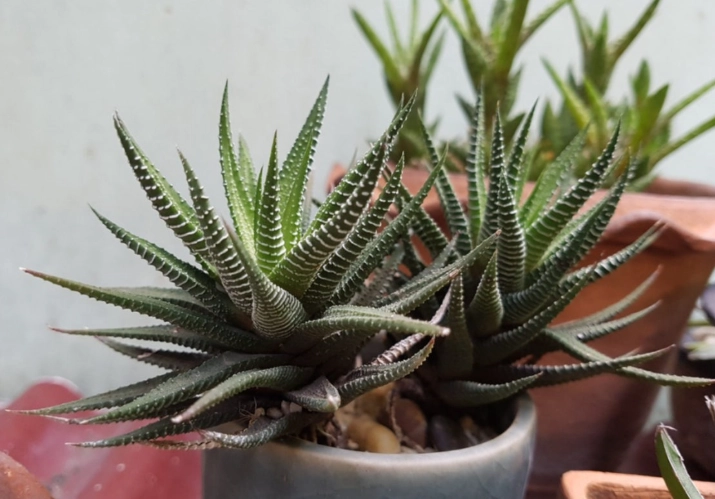
Answering Your Haworthia Questions
I get a lot of questions from friends about their plants. Here are the ones that come up again and again.
How often should I really water my haworthia?
Throw away the calendar. It depends on your home's temperature, humidity, light, and pot type. The "finger test" is your best friend. In a typical indoor setting during summer, it might be every 2-3 weeks. In winter, it could be 4-6 weeks or longer. When in doubt, wait.
Can haworthias grow in low light?
They are among the best succulents for lower light conditions (like a north-facing window or the middle of a bright room), but "low light" doesn't mean "no light." They still need some ambient brightness to maintain their shape and color. In true low light, they will etiolate and become weak.
Should I fertilize my haworthia plant?
You can, but sparingly. They are not heavy feeders. A diluted, balanced fertilizer (like a 10-10-10) or one formulated for cacti/succulents, applied once in early spring and once in mid-summer, is plenty. Do not fertilize in fall or winter. More fertilizer is not better—it can burn the roots and cause weak, unnatural growth.
Why isn't my haworthia producing pups?
Patience. Some varieties offset freely, others are slower or more solitary. Maturity is a factor—a very young plant may not be ready. Also, a slightly root-bound plant is often triggered to produce offsets as a survival mechanism. If your plant is very happy and spacious, it might just be content being itself for a while.
Is my plant flowering? What do I do?
Yes! Mature haworthias will send up a long, thin, wiry flower stalk with small, usually white or pale pink, tubular flowers. It's a sign of good health. The flowers are modest, not showy. You can leave the stalk until it dries up, then snip it off at the base. Flowering takes energy, so some people cut the stalk early to direct energy back to the leaves. I usually let mine bloom—the bees (if outdoors) and I enjoy it.
Good luck, and don't be afraid to get your hands a little dirty.


Comments