Quick Guide
- What Exactly Is a Pink Arrowhead Plant?
- The Pink Parade: Popular Varieties to Know
- Your No-Stress Guide to Pink Arrowhead Plant Care
- Common Problems and How to Fix Them (For Real)
- Pruning, Propagating, and Making More Plants!
- Is the Pink Arrowhead Plant Pet Safe?
- Creative Ways to Style Your Pink Syngonium
- Your Pink Arrowhead Plant Questions, Answered
I remember the first time I saw a truly stunning pink arrowhead plant. It wasn't in some fancy magazine, but crammed on a shelf in a local nursery, its leaves almost glowing under the fluorescent lights. I bought it on the spot, of course. Who could resist? That was years ago, and let me tell you, the journey with this plant hasn't always been a smooth, Instagram-worthy pink dream. I've had my share of crispy leaves, fading color, and the occasional pest scare. But figuring it out? That's the real joy.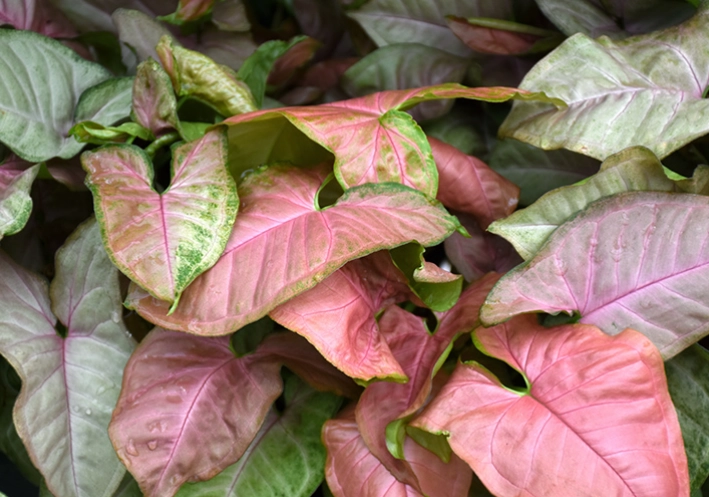
So you're thinking about getting one, or maybe you already have one that's giving you side-eye. This guide is everything I wish I'd known back then, packed with the practical, nitty-gritty details that actually matter when you're trying to keep a living thing happy on your windowsill.
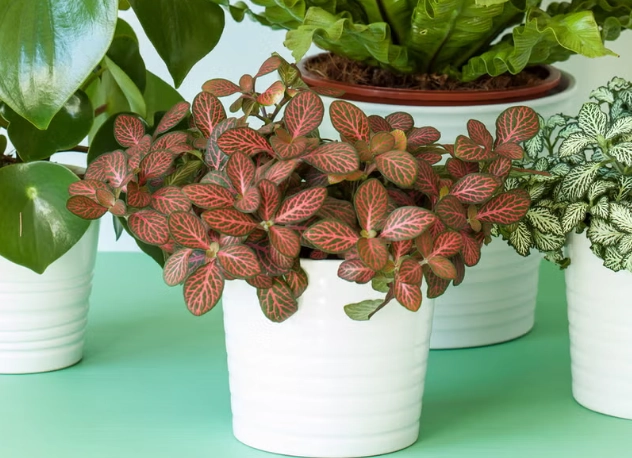
Let's just get this out of the way: the "pink arrowhead plant" isn't one single thing. It's a common name for a group of varieties from the species Syngonium podophyllum. They're also called pink syngonium, pink arrowhead vine, or Nephthytis. But whatever you call it, that arrow-shaped leaf with splashes of pink, cream, and green is unmistakable.
What Exactly Is a Pink Arrowhead Plant?
Think of it as nature's artwork. A tropical vine that's happiest climbing up a moss pole or trailing elegantly from a shelf. The "arrowhead" name comes from the juvenile leaf shape—sharp and pointed. As the plant matures, especially if it's allowed to climb, the leaves can split into multiple lobes, looking more like a goosefoot. That's a sign it's feeling great and getting enough light.
The pink color? That's the magic. It's not in the flowers (which are rare indoors anyway, looking like a pale green spathe). The pink comes from a lack of green chlorophyll in certain parts of the leaf, allowing other pigments (anthocyanins) to show through. The amount of pink depends heavily on two things: the specific variety and the light it gets.
More light usually equals more pink. But it's a delicate dance.
These plants hail from the rainforests of Central and South America. That tells you a lot about what they want: warmth, humidity, and dappled light filtered through taller trees. They're not sunbathers, and they're not cactus. They're understory plants, which makes them surprisingly adaptable to indoor life.
The Pink Parade: Popular Varieties to Know
Not all pink arrowhead plants are created equal. The color intensity and pattern vary wildly. Here's a rundown of the ones you're most likely to encounter, from the classic to the collector's dream.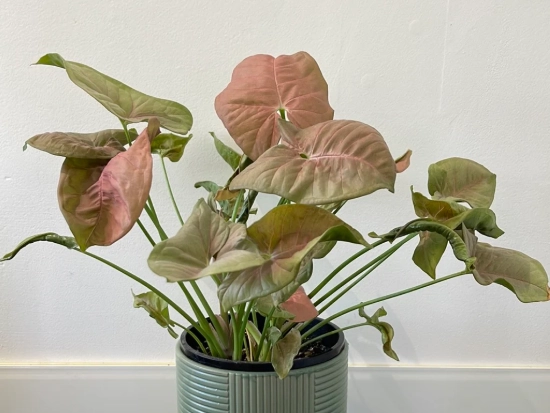
| Variety Name | Key Features | My Personal Notes |
|---|---|---|
| Syngonium 'Neon Robusta' | Almost entirely solid, bright bubblegum pink on new leaves, maturing to a deeper pink-green. | The real showstopper. Needs excellent light to stay neon. New growth is a total wow moment. |
| Syngonium 'Pink Allusion' | Light green leaves with soft pink veins and a pinkish blush across the leaf. | Super common and for good reason. Very forgiving, less demanding light-wise. A perfect beginner pink syngonium. |
| Syngonium 'Pink Splash' / 'Confetti' | Dark green leaves covered in random, paint-splash spots of pink and cream. | Every leaf is a surprise. The variegation is unstable, so you might get a mostly green shoot now and then. Part of the fun. |
| Syngonium 'Pink Spot' | Similar to 'Pink Splash' but with more distinct, larger pink spots rather than tiny speckles. | Easier to find than it used to be. Makes a really full, bushy plant. The spots seem to hold well. |
| Syngonium 'Strawberry Ice' | Creamy white and green leaves with stunning pink edges and veins. | High-maintenance diva. Needs consistent, bright indirect light to keep those pink edges crisp. Not for low-light corners. |
See what I mean? If you walk into a store asking for a "pink arrowhead plant," you could walk out with any of these. Knowing the name helps, but more importantly, look at the plant. Pick one whose current color you love, because that's what it's adapted to in your local conditions.
Quick Tip: The fancier the variegation (like 'Strawberry Ice'), the more light it generally needs to sustain it. A 'Pink Allusion' will be much more chill about a north-facing window.
Your No-Stress Guide to Pink Arrowhead Plant Care
Okay, let's get into the meat of it. How do you keep this thing alive and pink? I'm going to break it down into the big five: light, water, soil, food, and humidity.
Light: The Pink Maker
This is the most important factor for color. No light, no pink. It's that simple. But what does "bright indirect light" actually mean?
Imagine a spot where you can read a book comfortably all day without turning on a lamp, but where the sun's rays never directly hit the leaves. An east-facing window is gold. A few feet back from a south or west window (maybe with a sheer curtain) is also perfect. A north window can work for the less pink-heavy varieties like 'Pink Allusion'.
Signs it's not getting enough light:
- New leaves are mostly or all green.
- The plant becomes leggy, with long stretches of stem between leaves.
- Growth slows to a crawl.
Signs it's getting too much light:
- Leaves look washed out or bleached.
- The pink might turn crispy and brown at the edges.
- Leaves develop brown, sunburned patches.
I made the too-much-light mistake with my first one. I thought "more light, more pink!" and put it in a southern bay window. It got pale and cranky within weeks. Lesson learned.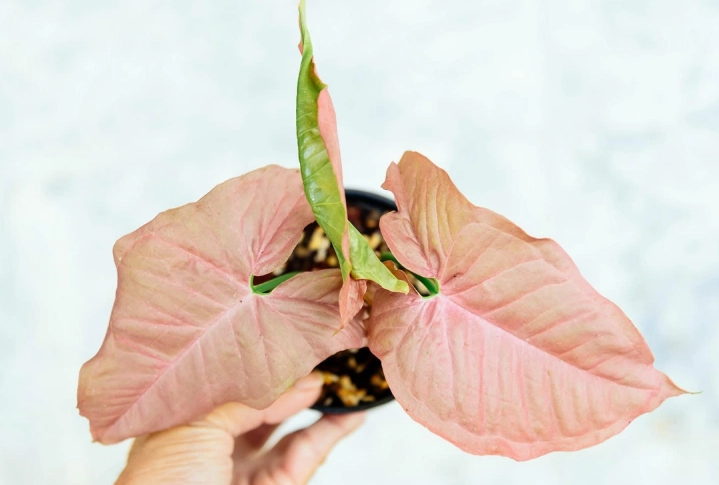
Watering: Don't Love It to Death
Overwatering is the #1 killer of houseplants, and pink arrowhead plants are no exception. They like to dry out a bit between drinks.
The Finger Test is Your Best Friend: Stick your finger into the soil up to the first knuckle. If it feels dry, it's time to water. If it feels damp, wait. In winter, you might only need to water every 2-3 weeks. In summer, maybe once a week. It depends on your home's heat and light.
When you do water, do it thoroughly. Take it to the sink and pour water until it runs freely out of the drainage holes. Let it drain completely before putting it back in its decorative pot. Never let it sit in a saucer of water—that's a direct ticket to root rot city.
Yellowing leaves? Check your watering habits first.
Soil and Potting: The Foundation
These plants want a mix that holds some moisture but drains excellently. A standard, good-quality potting mix is a fine start, but I like to beef it up. My go-to recipe is:
- 60% all-purpose potting soil
- 30% perlite or pumice (for drainage)
- 10% orchid bark or coco chips (for aeration)
This mix prevents the soil from becoming a soggy brick. As for pots, always, always choose one with drainage holes. Terracotta is great because it wicks away extra moisture, but plastic or ceramic works fine if you're careful with watering.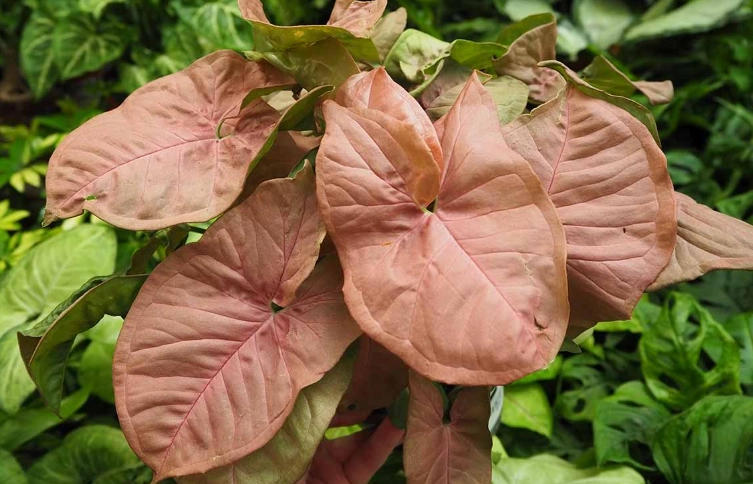
Humidity and Temperature: Creating a Mini Jungle
Coming from the tropics, they appreciate humidity above 50%. But here's a secret: they adapt to average home humidity (around 40%) surprisingly well, especially the tougher varieties.
If your air is super dry (hello, winter heating), you might see some brown, crispy leaf tips. To help:
- Group it with other plants. They create their own humid microclimate.
- Use a pebble tray. Fill a tray with pebbles and water, set the pot on top (not in the water).
- A humidifier is the ultimate solution, especially if you have a lot of tropical plants.
Misting? I find it does very little to raise humidity and can promote fungal issues if water sits on the leaves. I skip it.
Temperature-wise, keep it between 60-85°F (16-29°C). Avoid cold drafts from windows or hot blasts from heaters/air vents.
Feeding: A Light Diet
You don't need to go crazy with fertilizer. During the active growing season (spring and summer), feed it once a month with a balanced, water-soluble fertilizer diluted to half the recommended strength. I use a simple 10-10-10 formula.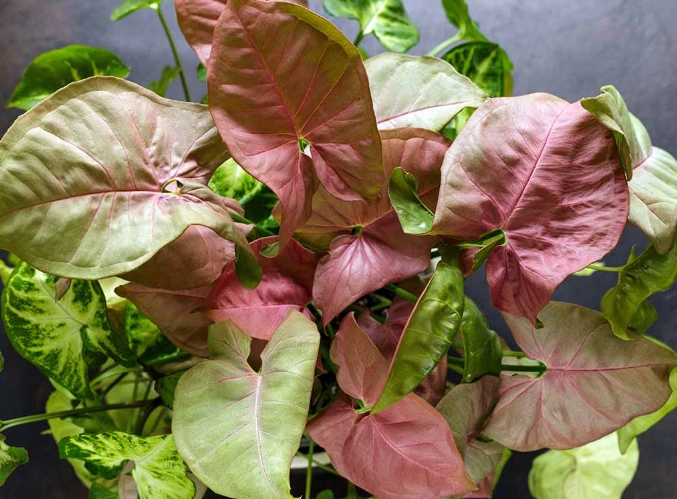
Warning: Over-fertilizing can cause salt buildup in the soil, which burns the roots and can ironically cause the leaves to lose their vibrant color. In fall and winter, stop fertilizing altogether. The plant is resting.
Common Problems and How to Fix Them (For Real)
Things will go wrong. It's part of the hobby. Here's how to diagnose and fix the most common issues with your pink arrowhead plant.
Why Are the Leaves Turning Yellow?
This is the classic distress signal. The cause is usually one of three things:
- Overwatering: The most common culprit. Soggy soil suffocates roots. Check the soil! If it's wet, let it dry out deeply. In severe cases, you may need to repot into fresh, dry soil and trim any black, mushy roots.
- Underwatering: Less common, but possible. The plant will look wilted and the soil will be dusty dry. A good soak usually revives it.
- Nutrient Deficiency: If you haven't repotted or fertilized in years, the soil might be exhausted. A light feed or repotting can help.
Why Is My Plant Losing Its Pink Color?
New leaves coming in green? Don't panic. This is almost always a light issue. The plant isn't getting enough bright, indirect light to produce the pigments. Gradually move it to a brighter spot. Be patient—the existing leaves won't turn pink, but the new ones should.
Sometimes, too much fertilizer (especially high-nitrogen formulas) can push rapid green growth at the expense of color. Stick to that half-strength, balanced feed.
Pests: The Uninvited Guests
Spider mites and mealybugs are the main annoyances. Spider mites love dry conditions and create fine webbing, especially under leaves. Mealybugs look like tiny bits of white cotton.
My first line of defense is always a shower. Take the plant to the sink or shower and spray it down thoroughly with lukewarm water, focusing under the leaves. This knocks off most pests. For persistent problems, insecticidal soap or neem oil (follow the label!) works well. Isolate the sick plant from your others until the pests are gone.
Brown, Crispy Leaf Edges or Tips
Usually a sign of low humidity or inconsistent watering (letting the plant get too dry, then overcompensating). It can also be from fertilizer burn or tap water chemicals like fluoride. If your tap water is hard, try using filtered or rainwater. Snip off the brown tips with clean scissors for aesthetics.
Pruning, Propagating, and Making More Plants!
One of the best things about a pink arrowhead plant is how easy it is to make more. Pruning keeps it bushy, and the cuttings are free plants!
Pruning: If your plant gets leggy, don't be afraid to chop. Cut the stem just above a leaf node (the little bump where a leaf grows). This encourages the plant to branch out from that point, creating a fuller shape. You can prune any time, but spring is best.
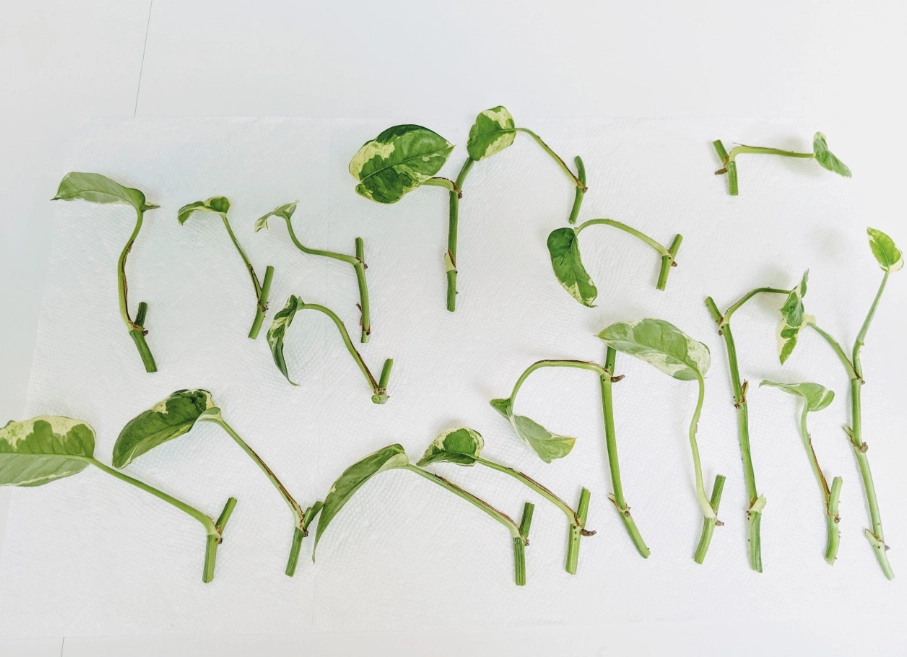
Propagating in Water: This is foolproof. Take a cutting with at least one node (the node is where roots will grow). Remove any leaves that would be submerged. Pop it in a glass of water. Place it in bright, indirect light. Change the water every few days. In 2-4 weeks, you'll see white roots. Wait until they're a couple inches long before potting in soil.
Propagating in Soil: You can also stick cuttings directly into moist potting mix. Keep the soil slightly moist (not wet) and cover the pot with a plastic bag to create humidity. This method skips the water-to-soil transition shock.
Giving away pink arrowhead plant babies as gifts is seriously rewarding.
Is the Pink Arrowhead Plant Pet Safe?
This is crucial. No. The pink arrowhead plant is toxic to cats and dogs if ingested. All parts of the plant contain calcium oxalate crystals, which can cause oral irritation, drooling, vomiting, and difficulty swallowing.
If you have curious pets, place this plant well out of reach—on a high shelf, in a hanging planter, or in a room they can't access. The American Society for the Prevention of Cruelty to Animals (ASPCA) lists Syngonium podophyllum as toxic on their website, which is a trusted resource for checking plant safety.
Serious Note: If you suspect your pet has eaten any part of this plant, contact your veterinarian or the ASPCA Animal Poison Control Center immediately. Better safe than sorry.
Creative Ways to Style Your Pink Syngonium
This plant is a decorator's dream. Its versatility is part of the charm.
- The Trailer: Let it spill gracefully from a shelf, bookcase, or macramé hanger. The vines can grow several feet long.
- The Climber: Give it a moss pole or coir totem. It will attach its aerial roots and grow upwards, producing those large, mature lobed leaves. This gives it a really bold, sculptural look.
- The Tabletop Bush: With regular pinching of the growing tips, you can encourage it to stay bushy and compact in a small pot on a desk or side table.
- The Terrarium Star: Smaller varieties can do well in large, open terrariums where the humidity is high.
Pair it with a pot that complements the pink—soft grey, terracotta, matte black, or even a bold contrasting color like navy blue. It looks good in almost anything.
Your Pink Arrowhead Plant Questions, Answered
Look, the pink arrowhead plant is a fantastic choice. It's relatively forgiving, stunning to look at, and gives you that instant hit of tropical vibes. It's not a "set it and forget it" plant, but it's not a finicky orchid either. It's the perfect middle ground—a plant you can actually have a relationship with. You learn its signals, it responds to your care, and together you make your space a little more alive and a lot more pink.
Start with a 'Pink Allusion' if you're nervous. Get the hang of it. Then maybe hunt down that dazzling 'Neon Robusta'. The world of pink syngoniums is deep and wonderful. Happy growing!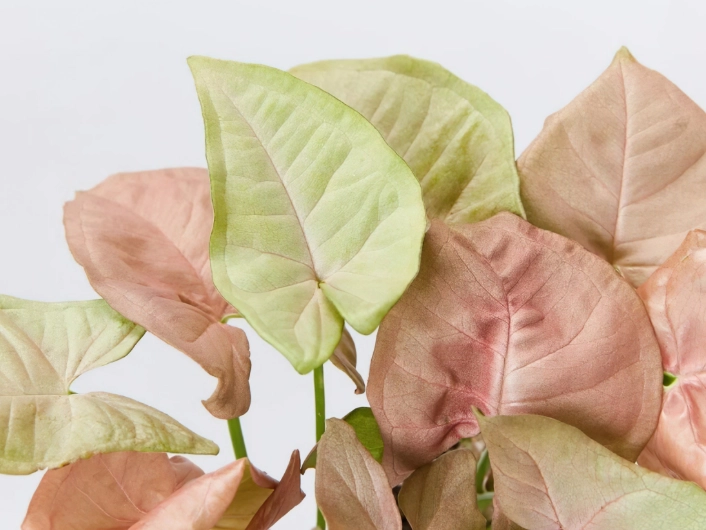

Comments