Let's be honest. You see those stunning walls of magenta and purple on Pinterest, you bring home a bougainvillea full of promise, and a few months later you're staring at a leggy, green stick with maybe three sad papery bracts. I've been there. For years, I followed the generic advice—"full sun, let it dry out"—and got mediocre results. Then I spent a season volunteering at a botanical garden with a world-class bougainvillea collection, and the head horticulturist shared insights that flipped everything I knew on its head. Caring for bougainvillea plants isn't about constant coddling; it's about understanding their Mediterranean, drought-adapted personality and knowing the precise triggers for that explosive color. This guide strips away the fluff and gives you the actionable, often overlooked details that bridge the gap between survival and a show-stopping display.
Your Quick Guide to Bougainvillea Success
- Sunlight Mastery: The Non-Negotiable Rule
- The Watering Dance: Less is More (Until It's Not)
- Soil & Fertilizer: The Bloom-Boosting Foundation
- Pruning & Shaping: Strategic Cuts for Maximum Color
- Troubleshooting Common Bougainvillea Problems
- Bougainvillea Variety Showdown: Picking Your Performer
- Your Bougainvillea Questions, Answered
Sunlight Mastery: The Non-Negotiable Rule
Every source says "full sun." It's the first tip. But here's the nuance most miss: "Full sun" for bougainvillea means a minimum of 6 hours of direct, unfiltered, blazing sunlight. Not dappled light through a tree. Not bright indirect light from a south-facing window (though that's better than nothing). We're talking sunburn-your-arms rays.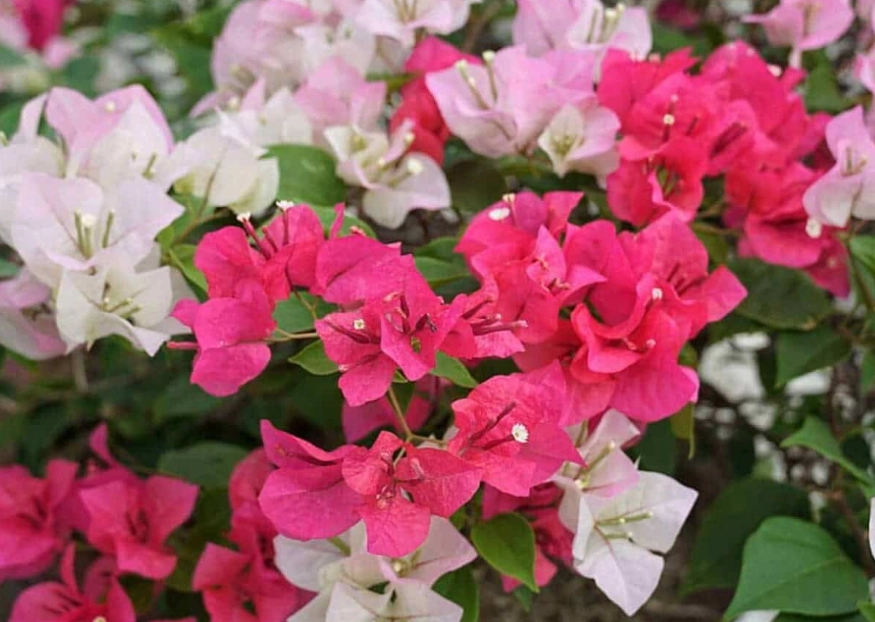
In my coastal garden, I had one plant against a west-facing fence getting 7 hours of sun and another in the middle of a gravel bed getting a full 10+. The difference was staggering. The one with 10+ hours was a compact, dense mound of color from spring to fall. The other grew taller, searching for light, and its blooms were sporadic and pale. If your plant is stretching out with long gaps between leaves (internodal elongation), it's screaming for more light.
Pro Tip: Track the sun in your yard for a full day. Use an app like Sun Seeker or just observe. That corner you think is sunny might only get 4 good hours. Bougainvillea will survive in 4-5 hours, but it will never thrive. For epic blooms, find the hottest, sunniest spot you have—even if it means moving other plants.
The Watering Dance: Less is More (Until It's Not)
Overwatering is the fastest way to kill a bougainvillea. Their roots are prone to rot in soggy soil. The classic advice is "water deeply, then let the soil dry out completely." That's correct, but incomplete.
The secret is in reading the plant's stress signals. A slightly thirsty bougainvillea is a blooming bougainvillea. You want to let the top few inches of soil dry out, and then wait another day or two. The leaves will feel slightly less turgid, but not wilted. That's your cue. When you do water, flood the root zone until water runs freely from the drainage holes. Then, walk away.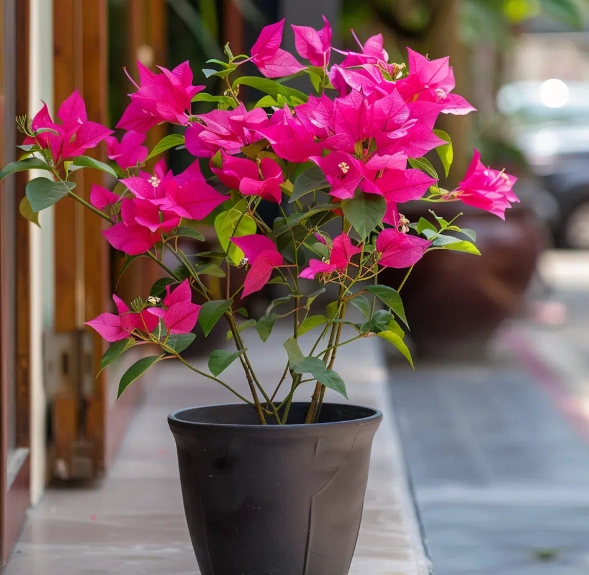
Here's the twist everyone forgets: Potted bougainvilleas need more frequent watering than in-ground plants. A small pot in full sun can bake dry in a day. Check pots daily in summer. In-ground plants, once established, are incredibly drought-tolerant and might only need a soak every 2-3 weeks in the absence of rain.
The Big Mistake: People see leaf drop and assume it needs water. Often, it's the opposite—soggy roots causing stress. Check the soil first! Yellowing leaves that fall off easily usually point to overwatering.
Soil & Fertilizer: The Bloom-Boosting Foundation
Bougainvilleas aren't picky eaters, but they have specific preferences. They abhor heavy, water-retentive clay. The ideal mix is fast-draining, slightly acidic to neutral, and not too rich.
- In Ground: Amend clay soil with a large amount of coarse sand, pumice, or fine gravel (at least 30-50% by volume) and some compost to improve structure.
- In Pots: Use a high-quality cactus/succulent mix, or make your own with 2 parts potting soil, 1 part perlite, and 1 part coarse sand.
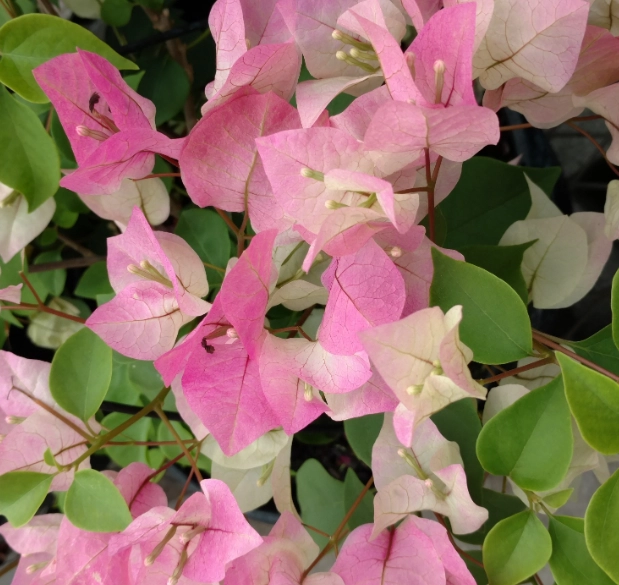
Now, fertilizer. This is where you can make or break the bloom cycle. Bougainvilleas are not heavy nitrogen feeders. Nitrogen promotes green, leafy growth at the expense of flowers.
You want a fertilizer with a higher middle number (Phosphorus) and a good amount of Potassium. Something like a 6-8-10, 10-20-10, or a bloom-booster formula. I've had fantastic results with a slow-release fertilizer formulated for flowering shrubs applied in early spring, supplemented monthly with a liquid bloom food during the growing season. Stop fertilizing in late fall to let the plant harden off.
Pruning & Shaping: Strategic Cuts for Maximum Color
Pruning isn't just about size control; it's the primary way you stimulate new growth, and bougainvilleas bloom on new growth. The most common error is timid pruning. You need to be decisive.
When to Prune: The best time is late winter or early spring, just before the new growth flush. You can do light tip-pruning throughout the growing season to shape and encourage branching.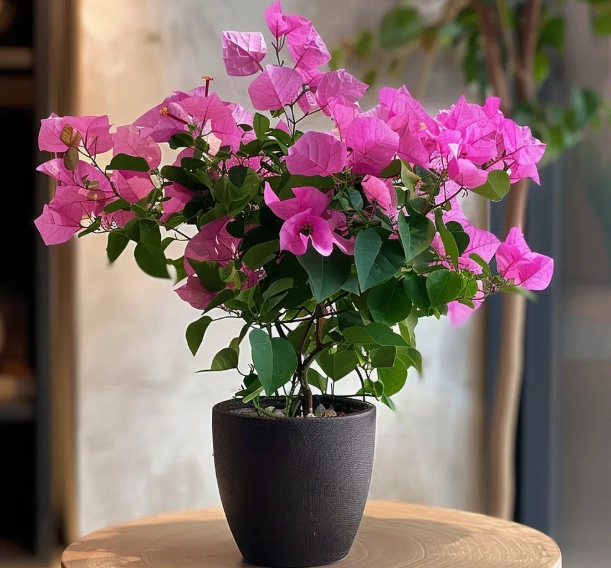
How to Prune for Blooms:
- First, remove any dead, diseased, or spindly wood.
- To encourage a bushier plant, cut back long, leggy stems by one-third to one-half. Make your cut just above a leaf node (the bump where a leaf grows).
- Don't be afraid to cut back hard if the plant is overgrown. It will bounce back with vigor.
- After a bloom cycle finishes, prune back the flowering stems by a few inches to prompt the next round of flowers.
Want a standard (tree-form) bougainvillea? Select one strong, central leader, stake it, and remove all side shoots from the bottom two-thirds as it grows. It takes patience but creates a stunning focal point.
Troubleshooting Common Bougainvillea Problems
Let's diagnose the main issues you'll likely face.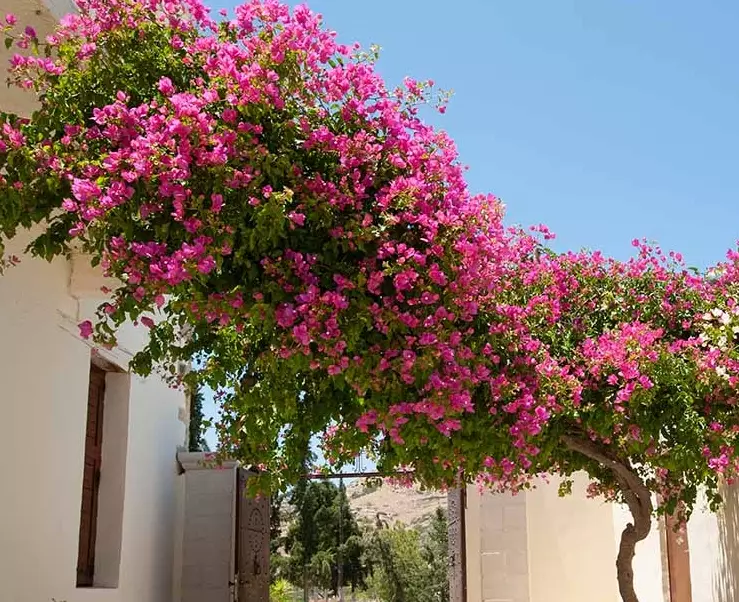
- No Blooms / Few Blooms: This is 99% due to insufficient sunlight. The other 1% is usually over-fertilizing with nitrogen or overwatering. Move it to a sunnier spot, switch to a bloom booster, and let the soil get drier between waterings.
- Yellow Leaves:
- Older leaves yellowing uniformly: Could be a natural shed or a sign of magnesium deficiency. Try adding a tablespoon of Epsom salts to a gallon of water and applying monthly.
- New leaves yellow with green veins (chlorosis): Often an iron deficiency due to soil pH being too high (alkaline). Apply a chelated iron supplement according to label directions.
- Widespread yellowing and leaf drop: Classic overwatering. Let it dry out thoroughly.
- Pests: Aphids, caterpillars, and bougainvillea loopers can munch on leaves. A strong blast of water often dislodges aphids. For caterpillars, hand-pick or use Bacillus thuringiensis (Bt), a natural bacterial insecticide. Spider mites can be a problem in dry, dusty conditions; increase humidity with occasional misting and rinse leaves.
Bougainvillea Variety Showdown: Picking Your Performer
Not all bougainvilleas are created equal. Choosing the right one for your space and style is half the battle. Here’s a breakdown of some popular and reliable cultivars.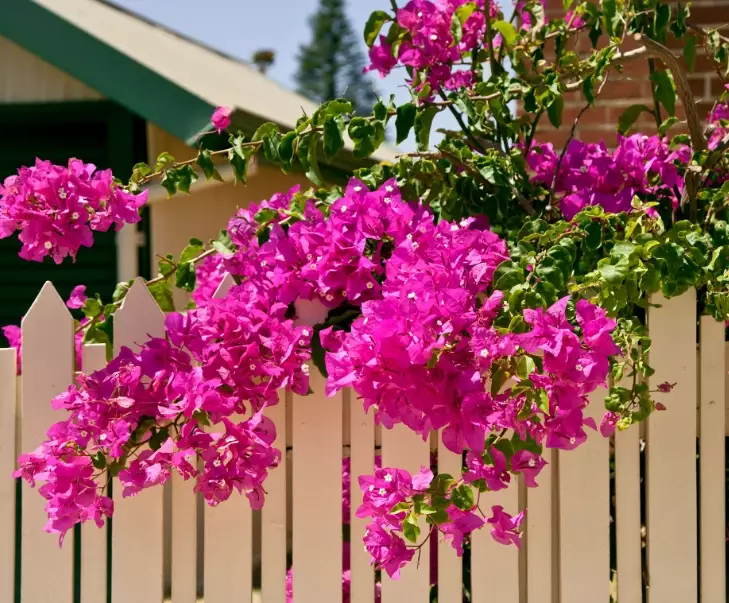
| Variety | Color | Growth Habit & Size | Best For | Special Notes |
|---|---|---|---|---|
| 'Barbara Karst' | Vivid Magenta-Red | Vigorous vine/shrub. Can reach 20-30 ft. | Covering large walls, fences, arbors. | Extremely hardy and reliable bloomer. A classic. |
| 'California Gold' | Golden Yellow | Large shrub/vine, 15-25 ft. | Adding warm color against a blue wall or sky. | Color can fade to cream in intense heat. Still stunning. |
| 'Raspberry Ice' | Deep Pink/Magenta | Compact shrub, 4-6 ft. | Containers, small gardens, low hedges. | Variegated cream-and-green foliage adds interest even when not in bloom. |
| 'Miss Alice' (White) | Pure White | Semi-dwarf, spreading shrub, 2-5 ft. | Ground cover, spilling over walls, containers. | Nearly thornless! A great choice for areas near walkways. |
| 'Vera Deep Purple' | Rich, Royal Purple | Moderate vine/shrub, 10-15 ft. | Creating dramatic, bold statements. | The color is exceptionally deep and holds well. Less rampant than some. |
Your Bougainvillea Questions, Answered
My bougainvillea gets plenty of sun but still won't bloom. What's the deal?
Check your fertilizer. Are you using a generic, high-nitrogen lawn or all-purpose plant food? That's telling it to grow leaves, not flowers. Switch to a low-nitrogen, high-phosphorus bloom booster. Also, reassess your watering. If you're keeping it constantly moist, try introducing more drought stress between waterings. Finally, give it time after a heavy pruning; it needs to push new growth before it can flower.
Can I grow bougainvillea in a colder climate?
Yes, but as a seasonal container plant. Bougainvilleas are hardy only in USDA zones 9-11. In colder zones, grow them in pots. Bring them indoors well before the first frost to a very sunny spot (a greenhouse is ideal, a south-facing window is minimum). They will likely go semi-dormant, losing some leaves. Water very sparingly over winter—just enough to keep the stems from shriveling. Prune it back in late winter and move it back outside after all danger of frost has passed. It will rebound.
The thorns are vicious! Any tips for handling and pruning safely?
This is a real pain point. Always wear thick, forearm-covering gloves (like rose pruning gloves) and long sleeves. When pruning, use sharp bypass pruners for clean cuts. For disposing of cuttings, don't just grab them with your hands—use a rake or carefully gather them into a tarp. Consider planting thornless varieties like 'Miss Alice' or 'Singapore Pink' in high-traffic areas.
Is it true that bougainvilleas like to be root-bound?
This is a pervasive myth with a kernel of truth. Bougainvilleas bloom better under some stress, and being slightly pot-bound can be one form of stress that encourages flowering. However, being severely root-bound to the point where roots are circling densely and the plant dries out daily will eventually harm it. Repot every 2-3 years into a container only 1-2 inches larger in diameter. If you want to maintain size, you can root-prune and refresh the soil without going up a pot size.
What's the difference between the colorful parts and the actual flower?
The vibrant pink, purple, red, or orange parts are modified leaves called bracts. They are papery and long-lasting. The actual flower is the tiny, white, tubular structure in the center of three bracts. The plant's energy goes into producing these showy bracts to attract pollinators to the insignificant true flowers.
The bottom line with bougainvillea care is this: stop babying it. Embrace its tough, sun-worshipping, drought-loving nature. Give it the hottest spot, water it like you almost forgot about it, feed it for flowers not foliage, and prune with confidence. When you get these elements in sync, the plant responds not with mere survival, but with a performance of color that makes all the effort—or lack of excessive effort—absolutely worth it.

Comments