Let's talk about floor plants. You know, those big, beautiful, leafy companions that sit directly on your floor and completely transform a room. They're not just decoration; they're architecture. A well-chosen floor plant adds height, texture, and a living energy that no piece of furniture can match. But here's the thing most beginner guides gloss over: picking the wrong one for your specific spot is the fastest way to kill your enthusiasm (and the plant). I've seen too many gorgeous Fiddle Leaf Figs turn into leafless sticks in dark corners. This guide cuts through the hype and gives you the practical, from-the-ground-up knowledge to succeed.
What's Inside?
- Why Floor Plants Are a Game Changer (Beyond Just Looks)
- How to Choose the Perfect Floor Plant: The 3-Step Checklist
- My Top 5 Floor Plant Picks for Real Homes (Not Just Instagram)
- The Art of Perfect Placement: Light, Flow & Drama
- Essential Care That Most People Get Wrong
- Troubleshooting: Reading Your Plant's Signals
Why Floor Plants Are a Game Changer (Beyond Just Looks)
Sure, they're pretty. But the real value of a large indoor plant is functional. A tall Dracaena or a broad Bird of Paradise can act as a natural room divider in an open-plan space, defining areas without building walls. They improve air quality—NASA's famous Clean Air Study highlighted several common floor plants like the Peace Lily and Snake Plant for filtering toxins. On a psychological level, studies have linked indoor plants to reduced stress and increased focus. Personally, I find the routine of caring for them grounding. But the biggest mistake is treating them like a sculpture you buy and forget. They're living things with needs, and understanding that is step one.
How to Choose the Perfect Floor Plant: The 3-Step Checklist
Skip the plant that's trending online. Start here instead.
1. Interrogate Your Light (Honestly)
"Bright indirect light" is the most misunderstood term. Hold your hand where the plant will go around midday. A sharp, well-defined shadow? That's direct sun, great for cacti but harsh for many tropicals. A soft, fuzzy shadow? That's your gold standard bright indirect light. No real shadow at all? That's low light. Most homes have low to medium light. Be brutally honest. A north-facing room or a spot more than 8 feet from a window is low light.
2. Measure Your Space & Consider Traffic
Check the plant's mature size on the tag, not its nursery pot size. A Monstera can spread 6 feet wide. Allow at least a foot of space between the plant's full-grown width and any walls or furniture. Think about foot traffic. Spiky Yuccas in narrow hallways are a shin-banging hazard. A soft, billowy Philodendron is a friendlier choice for tighter spaces.
3. Audit Your Lifestyle
How often do you realistically want to water? If you travel frequently or tend to forget, a ZZ Plant or Snake Plant is your ally. If you love the ritual of daily plant-checking, a Majesty Palm might work (though they're fussy). Got curious pets? This is non-negotiable. The ASPCA maintains a comprehensive list of toxic and non-toxic plants. Assume cats will chew.
Pro Tip: When you're at the nursery, don't just look at the leaves. Gently slide the plant out of its pot to check the roots. Healthy roots are firm and white or tan. Brown, mushy, or coiled roots (root-bound) signal future problems. A slightly root-bound plant is okay, but a severely coiled mass means you'll need to repot immediately.
My Top 5 Floor Plant Picks for Real Homes (Not Just Instagram)
Based on a decade of killing some and thriving with others, here are my workhorses.
| Plant | Best For | Light Needs | Watering Style | Key Thing Everyone Misses |
|---|---|---|---|---|
| Snake Plant (Sansevieria) | Beginners, low light, forgetful waterers, bedrooms (oxygenates at night) | Low to Bright Indirect | Let soil dry completely. Infrequent. | The #1 killer is overwatering. In winter, it might only need water every 6-8 weeks. |
| ZZ Plant (Zamioculcas) | Dark corners, offices, anyone who "kills everything" | Low to Medium | Let soil dry completely. Very infrequent. | It grows from potato-like rhizomes that store water. Overwatering causes immediate rot. |
| Monstera Deliciosa | Making a bold statement, filling a large vertical space | Medium to Bright Indirect | Let top 2 inches of soil dry out. | It wants to climb. Give it a moss pole early, or it will sprawl awkwardly and develop smaller leaves. |
| Fiddle Leaf Fig (Ficus lyrata) | Bright, sunny spots where you want a tree-like focal point | Very Bright Indirect | Consistent moisture, but not soggy. Let top inch dry. | It hates being moved. Find a spot with consistent light and leave it there. Drafts cause leaf drop. |
| Bird of Paradise (Strelitzia nicolai) | Sunrooms, high-ceiling spaces, tropical vibes | Bright Indirect to Some Direct Sun | Keep soil moderately moist in growing season. | It needs high humidity to prevent leaf splitting. A nearby humidifier is better than misting. |
I don't recommend Rubber Plants or Ficus Benjamina as first-timer floor plants anymore. They're beautiful but often drop leaves dramatically with any change in environment, which is discouraging.
The Art of Perfect Placement: Light, Flow & Drama
Where you put it matters as much as what you buy.
Flanking Furniture: Place two identical plants (like Snake Plants) on either side of a sofa or console table. It creates balance and symmetry. The Lone Corner Statement: A single large Monstera or Fiddle Leaf Fig in an empty corner instantly fills vertical space. Use a plant stand to add even more height. Behind the Sofa: A row of medium-height plants (like a mix of ZZ and taller Peace Lilies) behind a floating sofa softens the line and defines the living area.
Always rotate your plant a quarter turn every time you water. This prevents it from leaning desperately toward the light and growing lopsided.
Watch Out: Avoid placing plants directly in front of HVAC vents. The constant stream of hot or cold, dry air is a major stressor that leads to crispy brown leaves. I learned this the hard way with a beautiful Calathea.
Essential Care That Most People Get Wrong
Forget a rigid schedule. Your plant's needs change with the seasons.
Watering: The Finger Test is Law
Stick your finger 2 inches into the soil. Is it dry? Water thoroughly until it runs out the drainage hole. Is it damp? Wait. For large pots, a moisture meter is a $10 game-changer. The goal is to water deeply but infrequently, encouraging strong root growth.
Feeding: Less is More
Use a balanced, water-soluble fertilizer (like a 10-10-10) diluted to half strength. Feed only during the active growing season (spring and summer). Do not fertilize in fall and winter. Over-fertilizing causes salt buildup that burns roots.
Dusting & Grooming
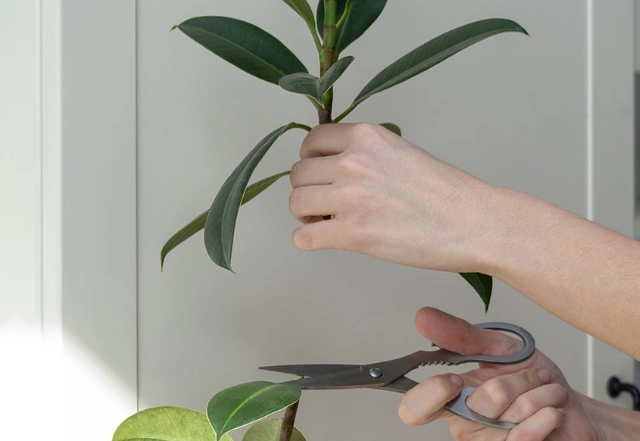
Dust blocks light. Wipe large leaves with a damp cloth every month. Snip off any yellow or brown leaves at the base with clean shears. It's not just cosmetic; it helps the plant focus energy on healthy growth.
Troubleshooting: Reading Your Plant's Signals
Your plant talks to you through its leaves.
- Yellowing lower leaves: Usually normal aging. If many are yellowing quickly, it's often overwatering.
- Brown, crispy leaf tips: Low humidity or inconsistent watering (letting it get too dry, then flooding it).
- Drooping leaves: Can be underwatering OR overwatering. Check the soil moisture to know which.
- Leggy growth, small new leaves: Not enough light. The plant is stretching to find it.
Pests happen. Isolate the plant immediately if you see sticky residue (scale), fine webbing (spider mites), or tiny white flies (whiteflies). A spray of insecticidal soap or neem oil solution, applied weekly for a month, usually solves it.

Comments